

"Can We Make the Villain a White Guy?"
Why you're probably a little bored with progressive storytelling.

Anticipation and Uncertainty
A feature film or television series has at its core only a handful of key parts.
The Protagonist - the person who the central problem, “agon,” or struggle happens to, and who succeeds or fails at solving it. The classic example is Chief Brody in Jaws. The shark appears, he tries to stop it, eventually succeeds, movie over.
The Antagonist - the person on the other side of the struggle, who opposes the protagonist, forcing them to change and grow in order to win, or fail to, in order to lose (tragedy). Hans Gruber in Die Hard is a classic example; his terror attack forces Bruce Willis to not only kill a bunch of bad guys, but to acknowledge that he’s been self-centered and foolish in his marriage.
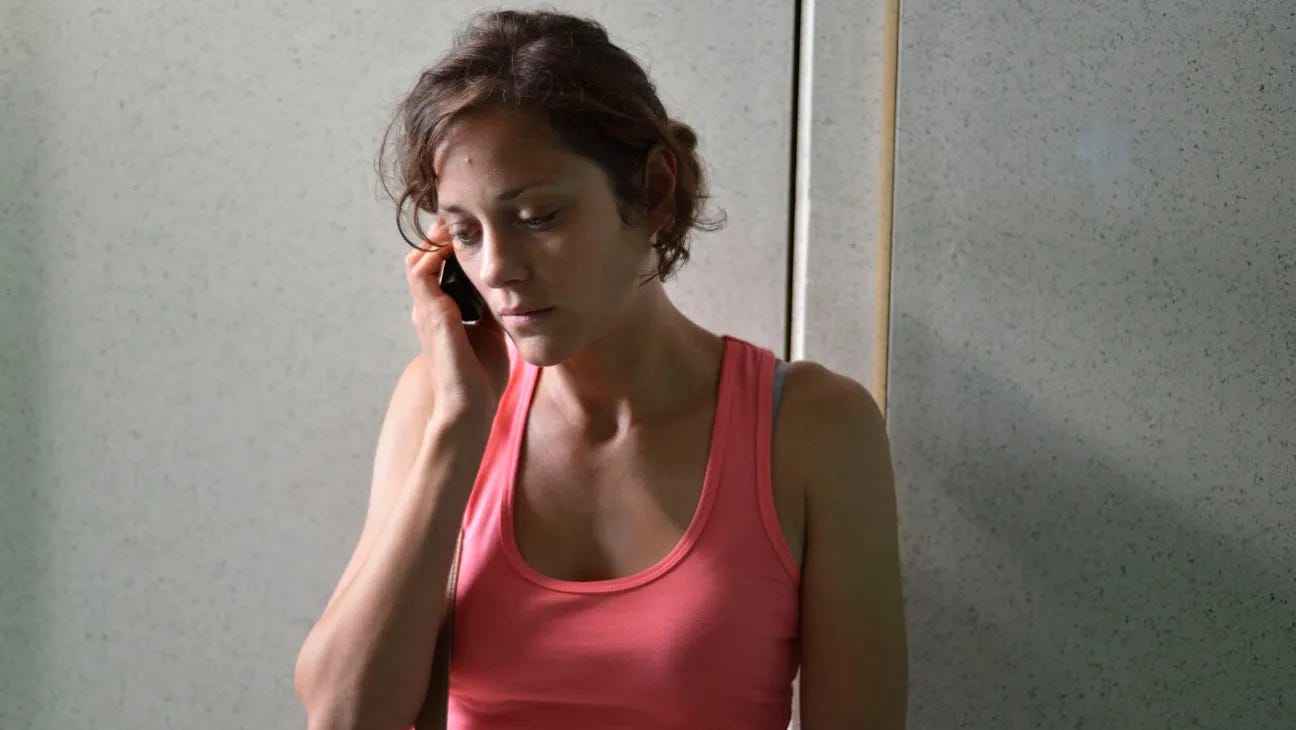
A slew of supporting characters, who generally line up on one side or the other, delivering exposition, offering support, occasionally switching sides in dramatic betrayals. I really like the Belgian movie 2 Days, 1 Night where a depressed office worker has to convince her coworkers to give up their bonuses instead of voting to fire her. Her husband is an indefatigable ally and source of support, pushing her to fight to keep her job, which they desperately need.
Realistically, there are usually 2-3 really big parts in a movie, and 3-4 bigger supporting parts. You can tell by where they go on the poster.
The core game audiences play while watching stories is trying to guess what happens next. Narrative functions as a series of causes and effects, or setups and payoffs, that begins with a problem and escalates into a series of crises. The audience’s game is to identify and anticipate patterns, to guess how those causes make effects. If you’ve ever watched a movie with someone who says out loud “oh he’s the one who did it” or… “she shouldn’t sleep with him,” this is the mechanism at work.
A lot of the fun comes in guessing who among the subsidiary characters will be good or evil. The uncertainty tantalizes; who will betray or hinder the protagonist? Who’ll help them at the last minute? It’s an essential part of most good stories, and it’s a core part of why we engage with them; they’re experiments in living other lives.
But our pleasure is diminished when the guessing game is too easy.
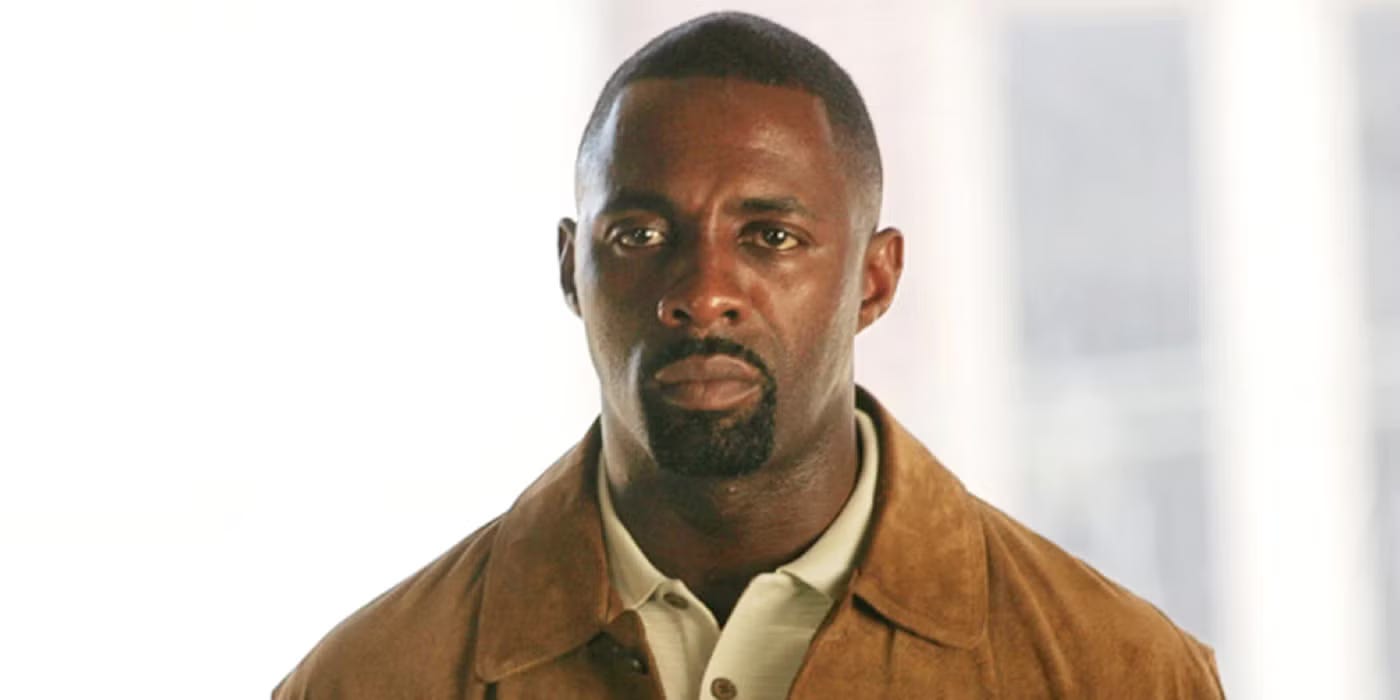
Many television shows structure their seasons around the battle with one or several antagonists; Avon Barksdale in the Wire season one (who’s defeated, while Stringer escapes), Livia Soprano and Uncle Junior in season one of the Sopranos. The season ends when these antagonists are defeated, killed, incapacitated, or their betrayal revealed. By the end of these shows’ season one, for example, Avon and Junior are arrested, Livia’s betrayal and true villainy is revealed.
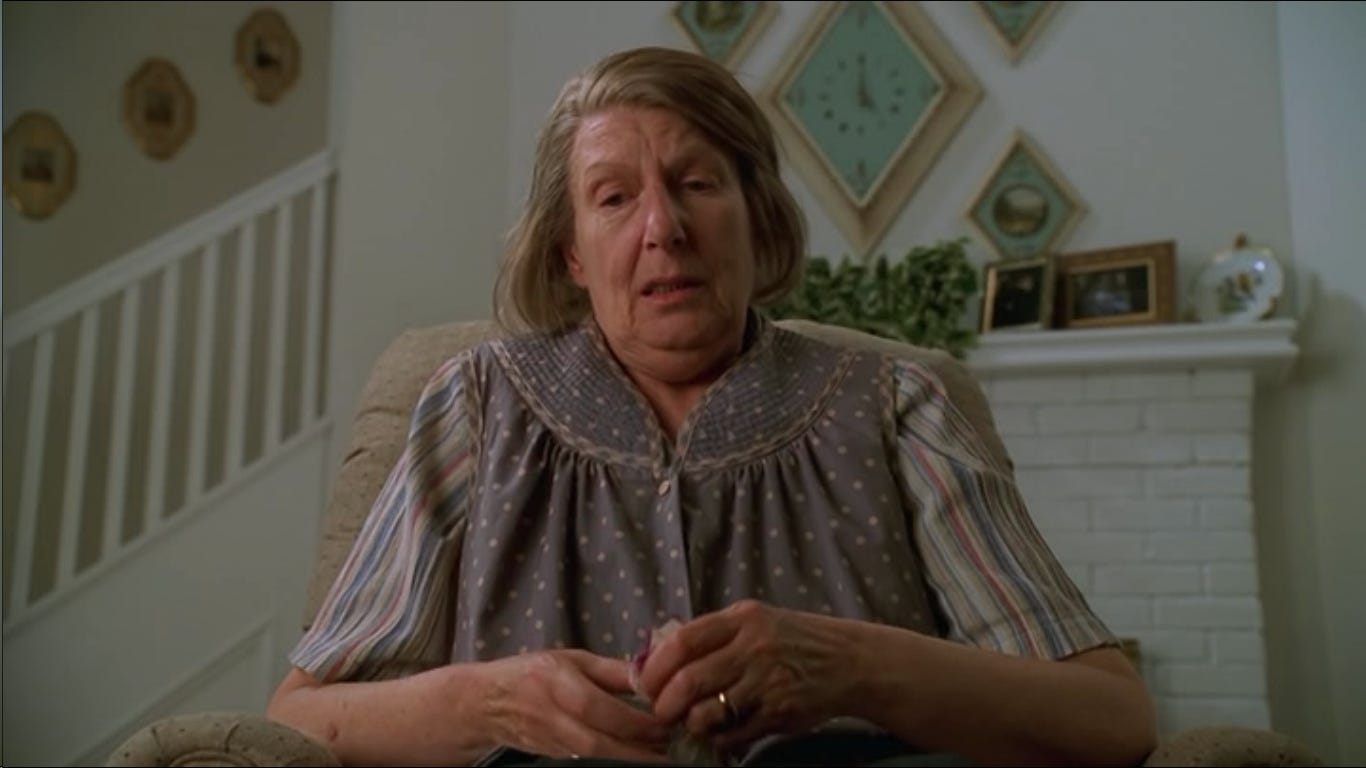
In most great narratives, there’s only one true conflict, a zero-sum agon, or struggle, around which a broad story arc revolves. In the Wire, Stringer and Avon want to stay out of prison, our hardy police officers want them in prison. In the Sopranos, Tony wants to stay boss, his uncle and mother want his power.
When that core struggle ends, the season or movie ends. The last two minutes of Jaws are two men kicking away through the ocean on a piece of flotsam. Nobody gives a shit after the shark’s dead; they came to see them kill the shark, risking death along the way, and are satisfied when it’s over.
I had a very smart screenwriting teacher who once called the core of drama “two dogs, one bone.” The dogs are the protagonist and antagonist, the bone is the thing both of them want, but only one can truly have. Identify the dogs, introduce the bone, have the dogs fight like hell over it, then make the protagonist’s win both surprising and inevitable. Inevitable because all the pieces add up, surprising because they did so in a way you didn’t expect. The joy is the ride along the way.
The great dramatist William Archer put it thus: drama is anticipation mingled with uncertainty.
Drama requires uncertainty.
Progressive Ideology
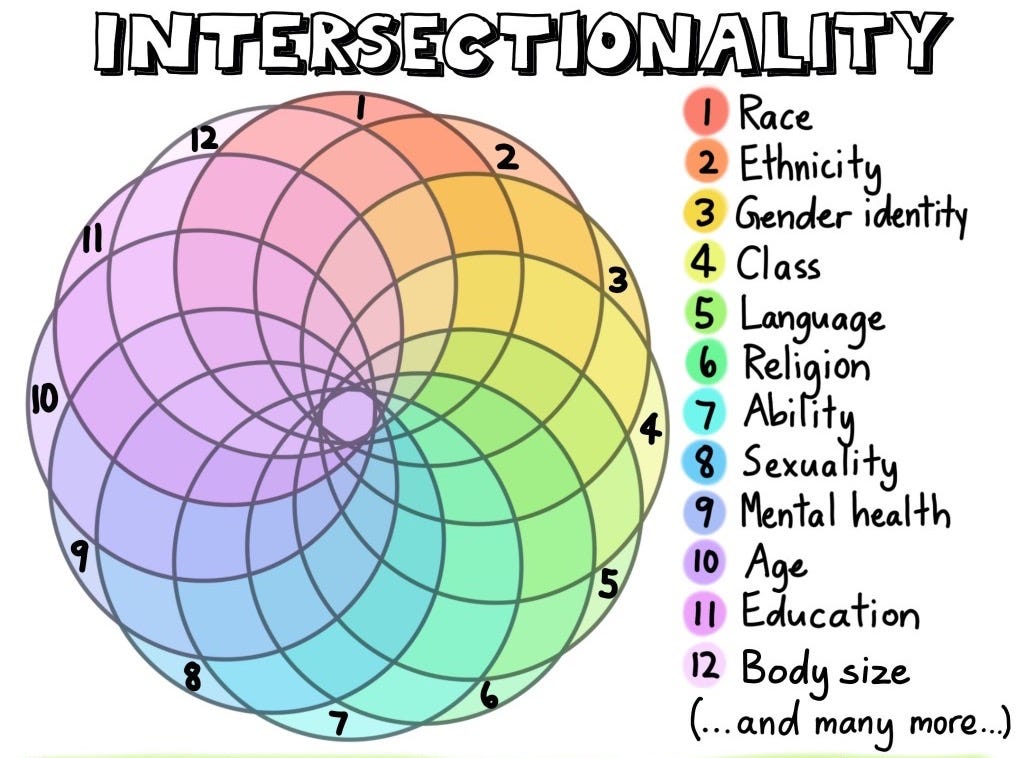
But there is a creeping challenge across our film and television dramaturgy; progressive ideology, in which we’re told that certain groups are inherently more oppressed, and thus more moral than others.
This sits uneasily with dramatic storytelling, particularly in mixed-race casts, for a simple reason:
Unlike drama, which requires uncertainty, progressive ideology requires moral certainty based around people’s identities.
We all know the moral totem pole that progressive ideology has constructed, with cis white hetero able bodied men at the bottom, and a trans black disabled woman at the top.
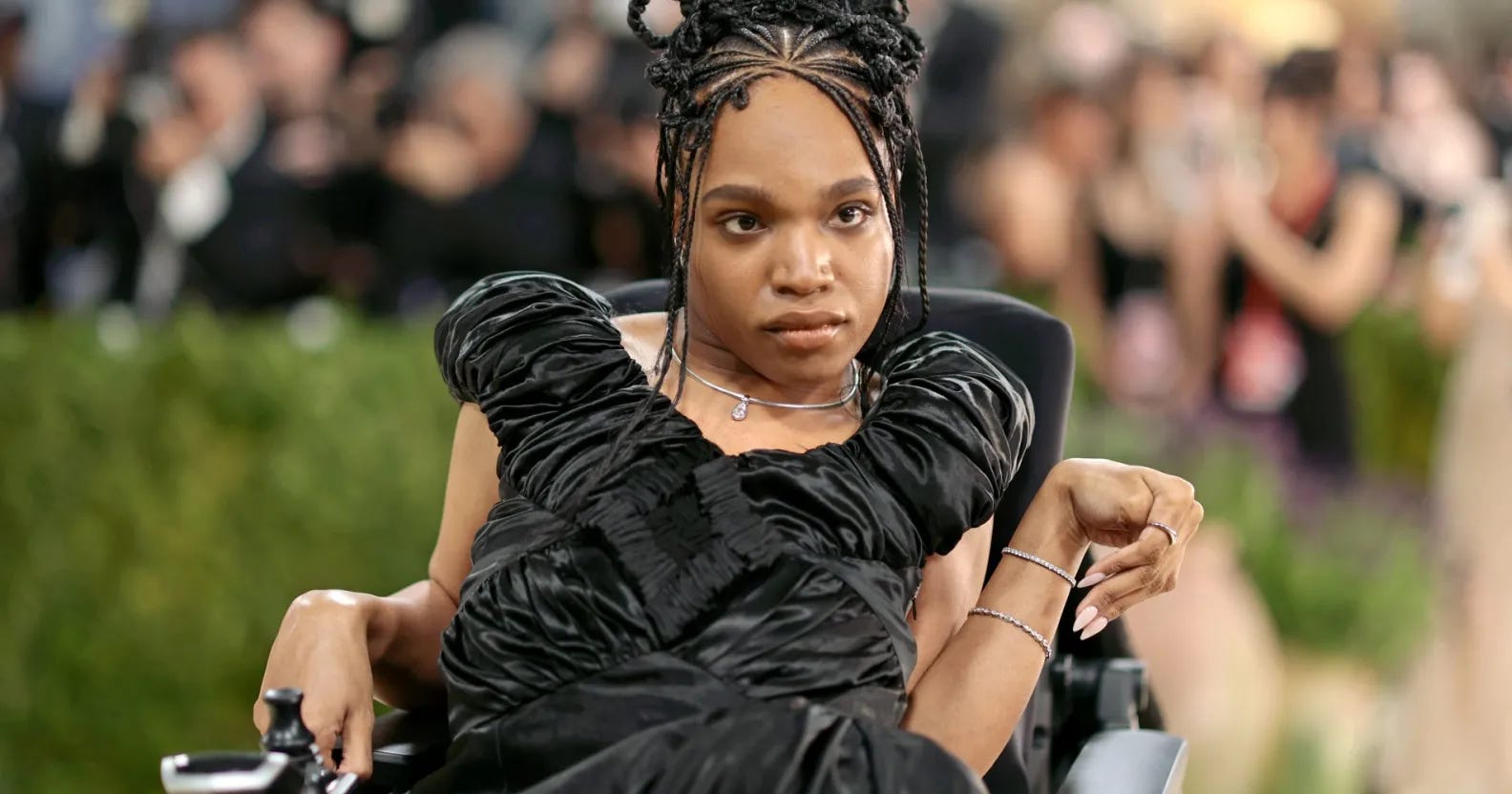
In the last decade, this inverted moral hierarchy became an unintentional guidebook for writing drama, with disastrous effects. You’ve all conducted this exercise before; you start a movie, and are presented with a group of characters. Who’s good, who’s evil, and why? Who should the protagonist trust? Who will betray them?
Have you ever immediately, unconsciously guessed the outcome solely on the character’s identity and a basic social justice template? You probably have, even if you’re unwilling to admit it. So…
Drama requires uncertainty. Progressive ideology rewards certainty. You can’t have certainty and an entertaining story.
Activist Incentives
After the activist waves of #Oscarssowhite and #Metoo, it was very easy to get accused of an “ism” for not including a lot of diverse characters in a movie or TV show. Activists soon discovered that they could criticize both the diversity of the characters in the show, and that of the people creating the show.
A sort of strange moral calculus began to take over Hollywood, which is still mostly white. We have to have more diverse characters, but can the gang leader be black? Should the muslim man be cheating on his wife? Can the black female entrepreneur be committing fraud?
Wouldn’t that screw up the moral totem pole? Will we get fired?
This activist-inspired risk management incentive pushed more and more Hollywood writers, particularly the white majority, toward caution. Each of those diverse characters might be perfectly valid dramatic creations. But they also carry a risk of being interpreted as a statement about the group rather than the individual. Faced with that possibility, many writers simply choose safer options.
If a story requires a villain, as a lot of genres do, casting a heterosexual white man is often perceived as the lowest-risk option.
This is another unintended consequence of the rise of nonprofit organizations as a key path into Hollywood. They often slowly whittle away the risk from projects, especially small independent ones that arguably should be risky.
Independent films are the startups of Hollywood. With tiny budgets and limited marketing resources at their disposal, risk, novelty, and transgression are often the only ways they can attract attention. Yet many of the institutions that support these projects want the opposite: a textbook moral universe, which reduces reputational risk.
The problem is that risk, uncertainty, and transgression are core ingredients of great drama.
Great stories are surprising and inevitable. Right now many are just the inevitable part.
The Moral Math
This creates a problem dramatically: if we only have six main roles, AND half of them must be diverse, AND that diverse half needs to be fundamentally moral, well, the number of potential dramatic combinations becomes incredibly narrow.
Let’s say we have six characters, one protagonist (who we know is good) and one antagonist (who we know is evil). In between are 4 characters who can switch sides. If each of those characters has a full moral range, i.e. can be good or evil, there are 2^4 potential combinations, or 16 potential outcomes.
Now let’s say that two of those four characters are from marginalized groups and can only be represented as skilled, wise and good. That means we only have two characters who can flip, or 2^2, which gives us 4 potential outcomes.
Do you see why this is a problem? Especially for certain types of stories?
The important point is that this doesn’t require anyone to consciously believe that minority characters are morally superior. Most writers are simply responding to incentives. If one choice carries a substantial reputational risk and another doesn’t, people will naturally gravitate toward the safer option. The executives writing the checks certainly will.
Over thousands of development meetings, notes sessions, and greenlight decisions, those individual choices begin to produce recurring patterns. Certain characters retain a full moral range, while others gradually become protected from it.
Ranges of Representation: The Wire
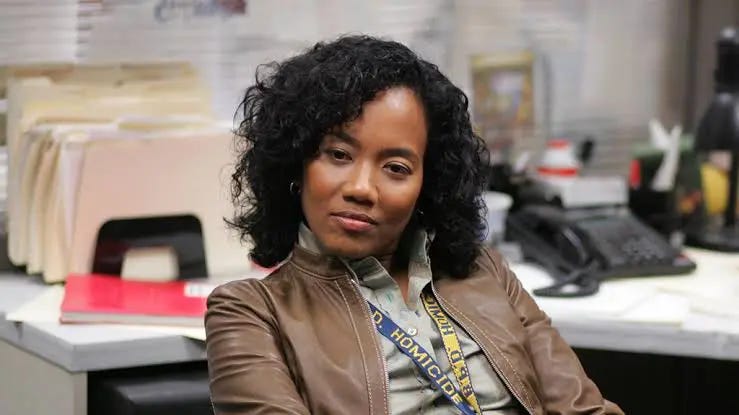
Now a brilliant, pre-woke show like The Wire can have a whole moral range of black characters, from Bunk Moreland, McNulty’s philandering but lovable and competent partner, to his colleague Kima Greggs, an equally intelligent but philandering lesbian. We know these characters have a spectrum of moral behavior, that they are flawed, just like McNulty, also a philanderer, but they are trying to do good in the world, and reduce the horrors of the drug trade.
There are many good and bad black characters, with the harder edges defined by the gang leader Marlo, a true psychopath. Since he becomes the main antagonist after Stringer and Avon, he of course has to be crazier to satisfy the problem of dramatic escalation.
I once attended a lecture by a brilliant black professor on the power of the Wire, one of the most diverse shows in history at the time. She said that the great achievement of the Wire was that there was a broad range of black characters, so no one character carried the moral weight of representing blackness. That always stuck with me; there are all kinds of black people in the real world, just as there are all kinds of white people.
This is why it’s so easy to have a black villain in a nearly monoracial world like that of Black Panther; Killmonger the villain is not standing in for all black people, who are heavily represented in all kinds of roles and thus not forced to stand in for their entire race. It’s also not a realistic universe, which can help too sometimes.
Beef is another interesting example; because the central conflict is between two asians, they can be more morally flawed than they would be in a more mixed world.
The Challenge of Mixed Casts
As the activist waves of the mid 2010s rolled on, our media diversified in new and unexpected ways. Mixed casts soon became the default, which makes sense; entertainment properties want to appeal to the largest number of people, and avoid activist criticism, so why not go as diverse as possible?
Fantasy, for one, was an extremely white world. So they diversified it, why not? Some shows, like House of the Dragon, did it better than others, like the new Lord of the Rings (at least in this humble writer’s opinion).
The challenge with bringing diversity to Game of Thrones wasn’t finding talented black actors, there are hundreds of them. The challenge was that Game of Thrones exists in a fundamentally violent, flawed and evil moral universe, filled with betrayal and vengeance. That works well when the majority of the characters are white, but it becomes a problem when half the characters need to be diverse, and those same characters also have to be morally good or… racism.
Fantasy in general operates on a very Manichean moral spectrum of light and dark, hence the evergreen racial criticisms of the Orcs in Lord of the Rings, which has inspired its own subgenre in right wing satirical pages like the Daily Gondor, which combine activist ideology with the obvious light and dark of the universe to comic effect.
Integrating diverse characters into morally flawed, or morally ambiguous white universes presented a problem; can the white character be good and the black one evil? Is that racist? Better to be avoided.
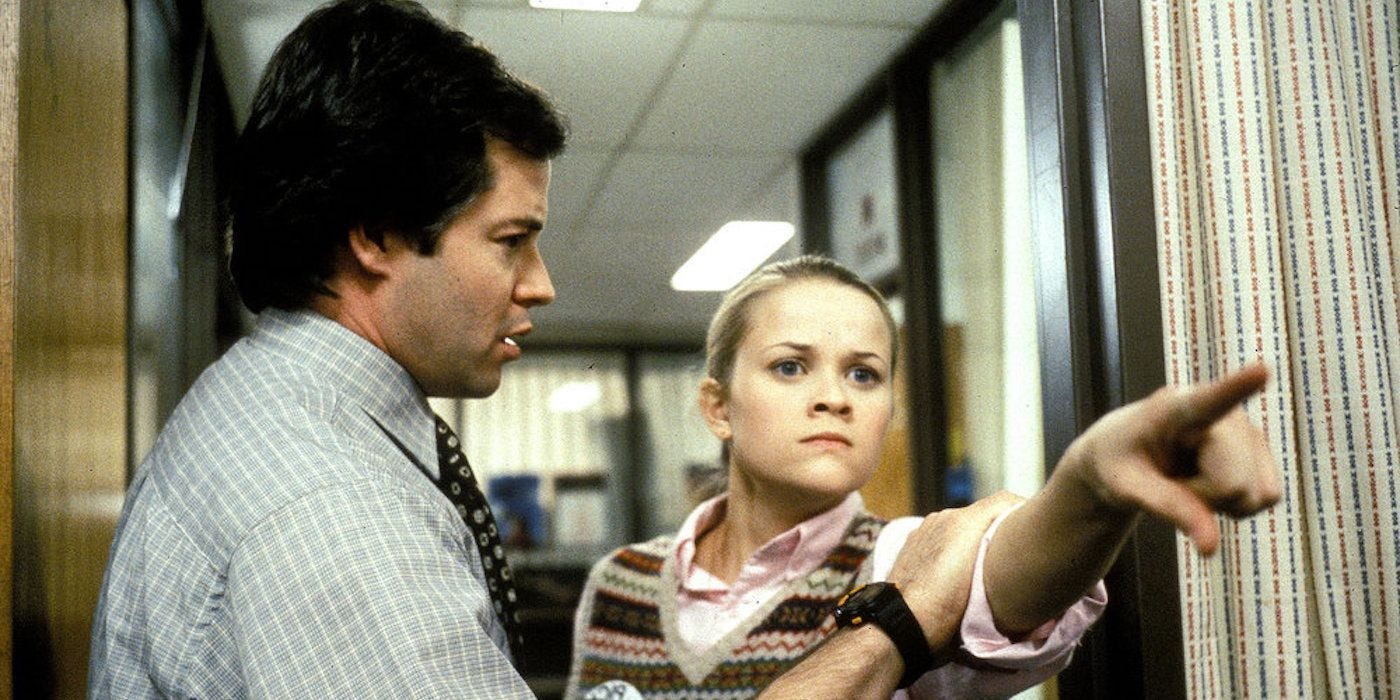
It also creates a lot of problems in satire and dark comedy. The characters in Alexander Payne’s early films are deeply flawed, and often stupid. It’s safer to have these characters be white.
Years ago as the activist waves crashed onto Hollywood, I was surprised at the lack of diversity in the work of the Coen Brothers. But I soon realized precisely why; beyond their very white locales, their stories operate in a fundamentally flawed moral universe. Like Payne’s the characters are immoral, and often stupid. Bringing black characters into this kind of moral universe would invite accusations of racism. Better to leave them out.
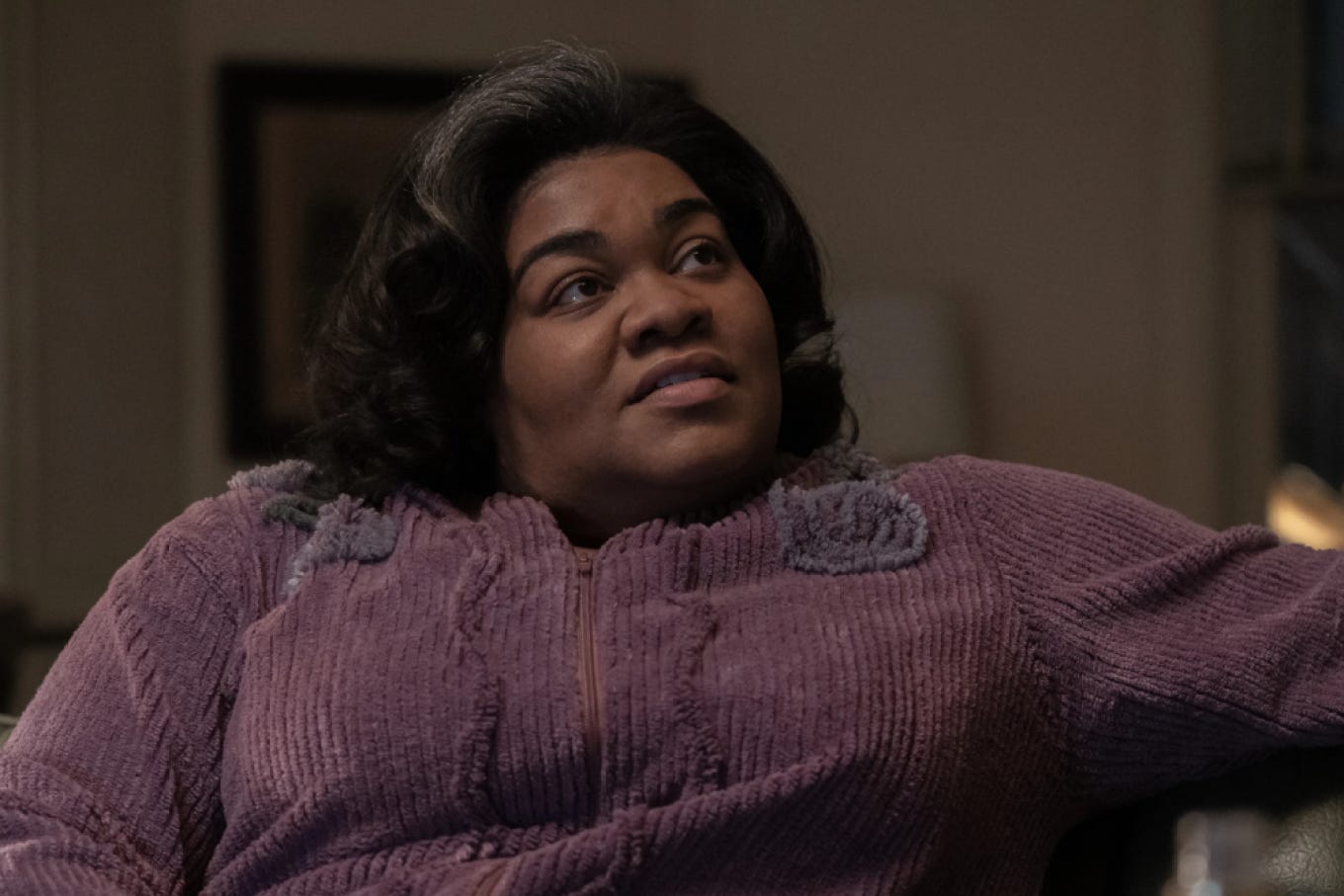
These mixed casts are where the seams on this ideology, and its predictability, really start to show. In situations where the conflict is racially coded, the calculation essentially disappears.
Sinners creates a moral world where the black and asian characters align against the white vampires and KKK members. The Choctaw, introduced as vampire hunters, never get slotted into the racial lineup at all - the binary simply doesn't know what to do with them. It’s still an entertaining movie, which is a testament to Coogler’s talent, but the Manichean universe does wear a bit thin, especially in the last gunning-down scene.
I’m all for killing KKK members, just make them challenging to kill, or to morally predict at least, otherwise it’s just too easy for the main character, and a little dull to watch.
It’s a bit like if the shark in Jaws was only five feet long, and wearing a confederate flag.
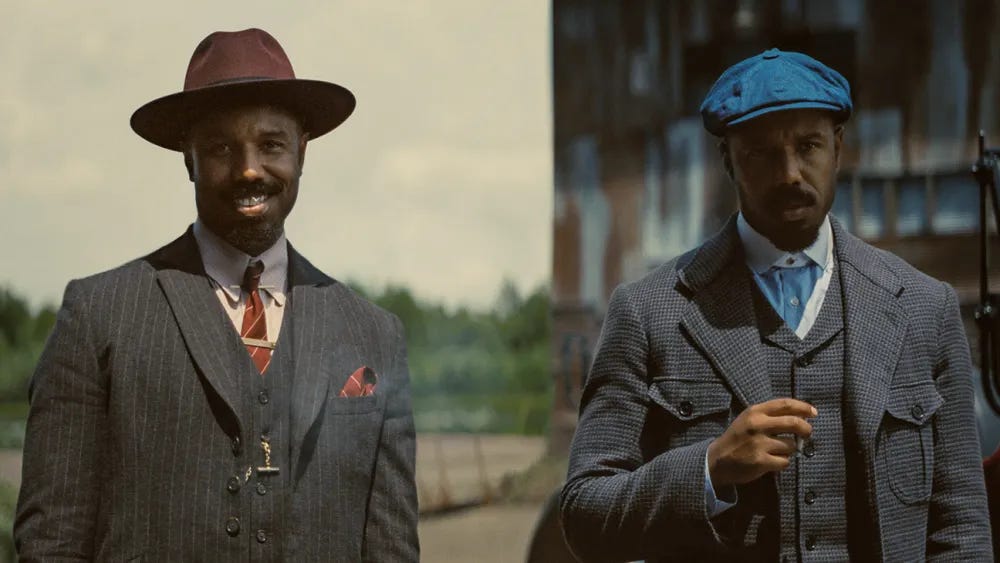
Of course, nobody in their right mind thinks one of the KKK members is suddenly going to have a change of heart. That would follow the much-condemned pattern of Green Book and The Help, which activists demolished for their themes of racial reconciliation. Viola Davis, for one, publicly expressed regret for her role in The Help.
The maligned racial reconciliation movie, despite its predictability, did have a good social utility; try to understand one another, and don’t be racist. These movies, to a degree, had to have white protagonists, because those are the people these movies are trying to reach. Nobody in their right mind thinks The Help or Green Book were trying to explicitly make the black population more accepting of whites.
Regardless, racial redemption movies also became off limits after Green Book, further restricting the moral math. Suddenly the guessing game, who’s good and who’s bad which, let’s be honest, is at least half the fun of watching this stuff, becomes even more formulaic. Again, in our admittedly primitive example, there are four times fewer dramatic options than before mixed casts entered the picture.
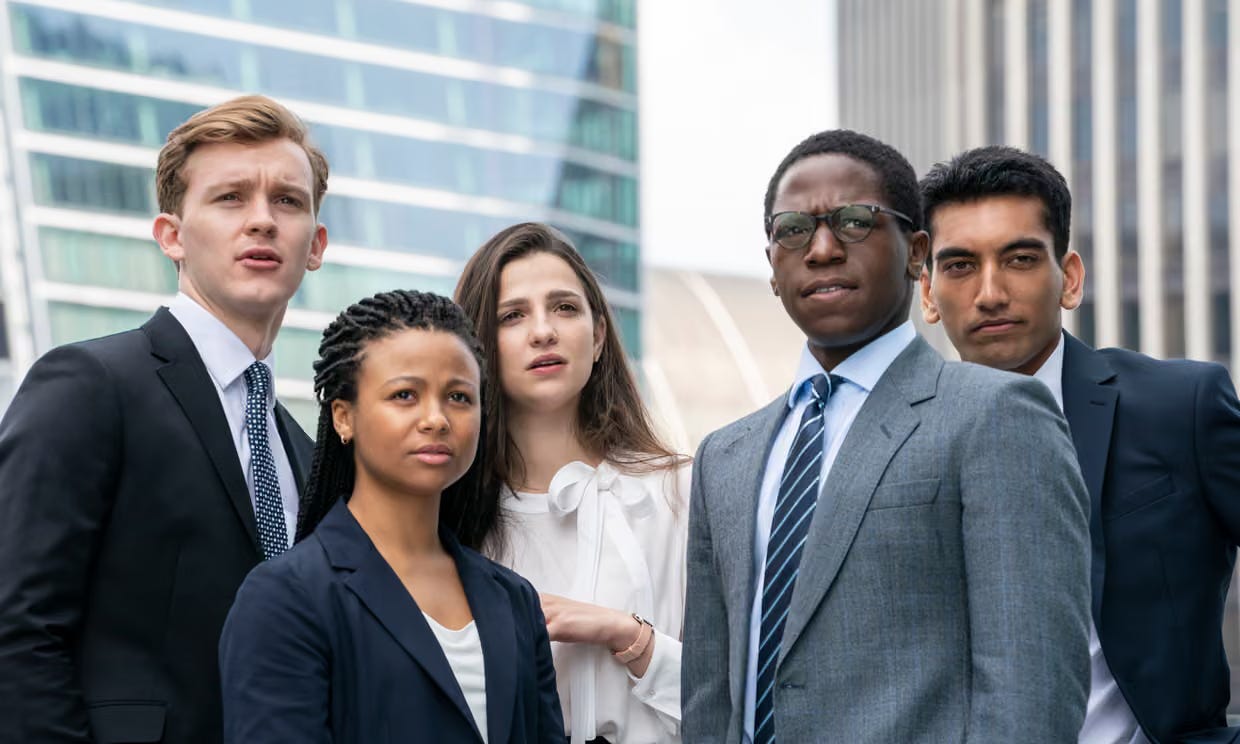
A notable exception to this system of moral hierarchies is HBO’s excellent Industry, which has a fascinating, morally ambiguous lead in Harper Stern, played with aplomb by Myha’la.
All Good and No Bad Makes Jack A Dull Boy
By now audiences have become familiar with a recurring pattern: some characters, by virtue of their identities, are granted a wider moral range than others. In mixed casts, writers and executives often appear more comfortable giving white characters the ugliest traits - cowardice, cruelty, corruption, betrayal - while treating minority characters more cautiously.
Again, this Manicheanism is most present in mixed race worlds, where progressive ideology requires the inverted pyramid. The thing that’s fascinating about this is that it’s also fundamentally racist and sexist, just in a left-coded way. We all know right wing racists who ascribe profound, universal negative traits to minority groups. The progressive simply inverts the right winger’s worldview.
The Real Sin: Predictability
Don’t get me wrong; there are plenty of foaming at the mouth racists; these assholes appear all over the comments sections everywhere, and make life genuinely miserable for actors of color in major franchises. I would beat them all with a stick if I could.
But there are also everyday viewers who have no confederate flags in their living rooms. These people are no doubt troubled when they find the diverse characters in mixed casts a bit boring and predictable.
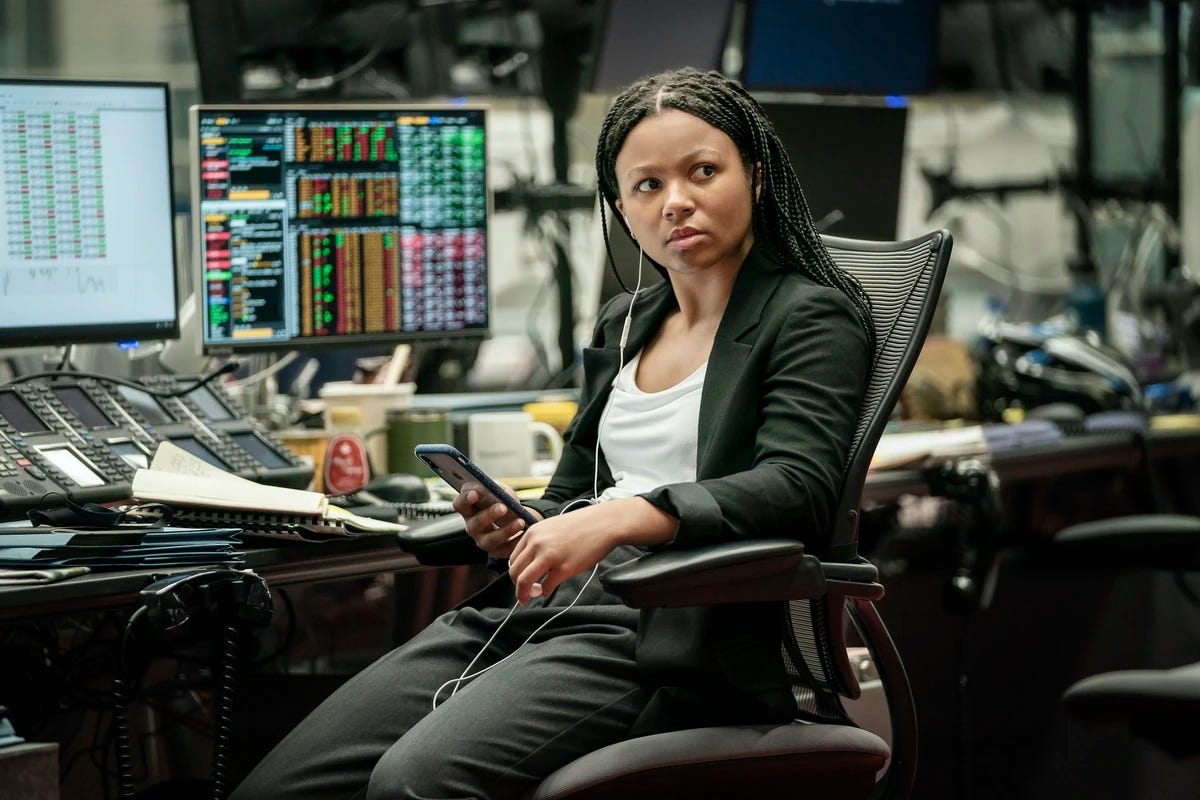
The reason Harper Stern from Industry feels so refreshing is that the audience never quite knows whether she is the hero, the villain, or both. She lies, betrays friends, manipulates colleagues, and occasionally behaves nobly. The uncertainty is the point, and the pleasure.
That is the real sin of this whole progressive storytelling worldview, just as its right wing equivalent would be; it just ruins the fun, i.e. the surprise of watching things. The political calculus is currently too simple; a black character is almost never going to be morally evil if a bald white dude is available for the job.
While there are the occasional villains of color, there are virtually no stacked identity ones, say a black trans woman in a wheelchair; this would be unbelievably politically toxic. It means that if a black woman in a wheelchair shows up, you know exactly what role she’ll play; the supportive best friend, but never the lying, betraying femme fatale. Her presence is thus often predictable and, dare I say, a bit boring.
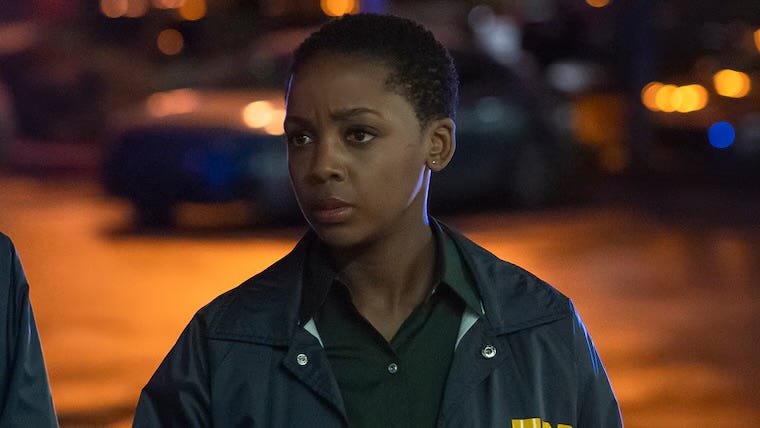
I recently watched HBO’s Task, a kind of peak mid-tv show about a task force trying to bring down some drug-house robbers in the working class Philly suburbs. Thuso Mbedu plays Aleah Clinton, the team’s only black officer. Clinton is a progressive poster child; good at her job, a domestic abuse survivor, and the team’s best shot.
But this ultimately makes her dull; we know that in any situation, she will be both extremely skilled and morally pure. This again limits the number of possible outcomes her storylines can have, making her appearances in the show feel just slightly more boring. It’s a disservice to what could have been an interesting and complex role.
I think this is a big, unconscious part of the backlash against diversity; it’s not that it’s inherently unpleasant to watch diverse characters. It’s that the restrictions on their moral range eliminate a large set of dramatic possibilities in a medium already beholden to a series of tropes, and is thus even further strained to produce what David Mamet memorably called “cleansing awe.”
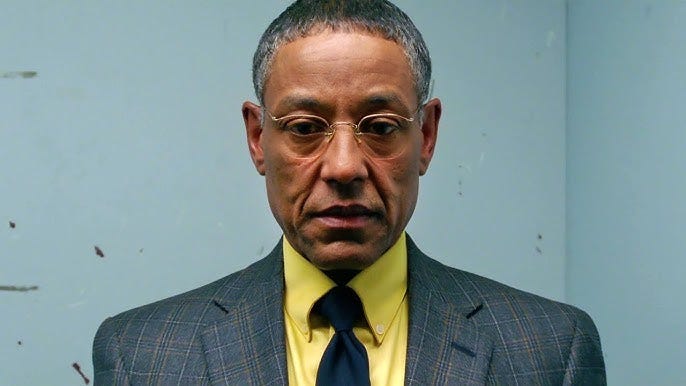
Gus Fring, grandfathered in from the prewoke era, is a core part of why Breaking Bad works: his intelligence, ruthlessness and deception keep us guessing, and the show's willingness to portray him as evil makes us lean in. It’s provocative, and unexpected.
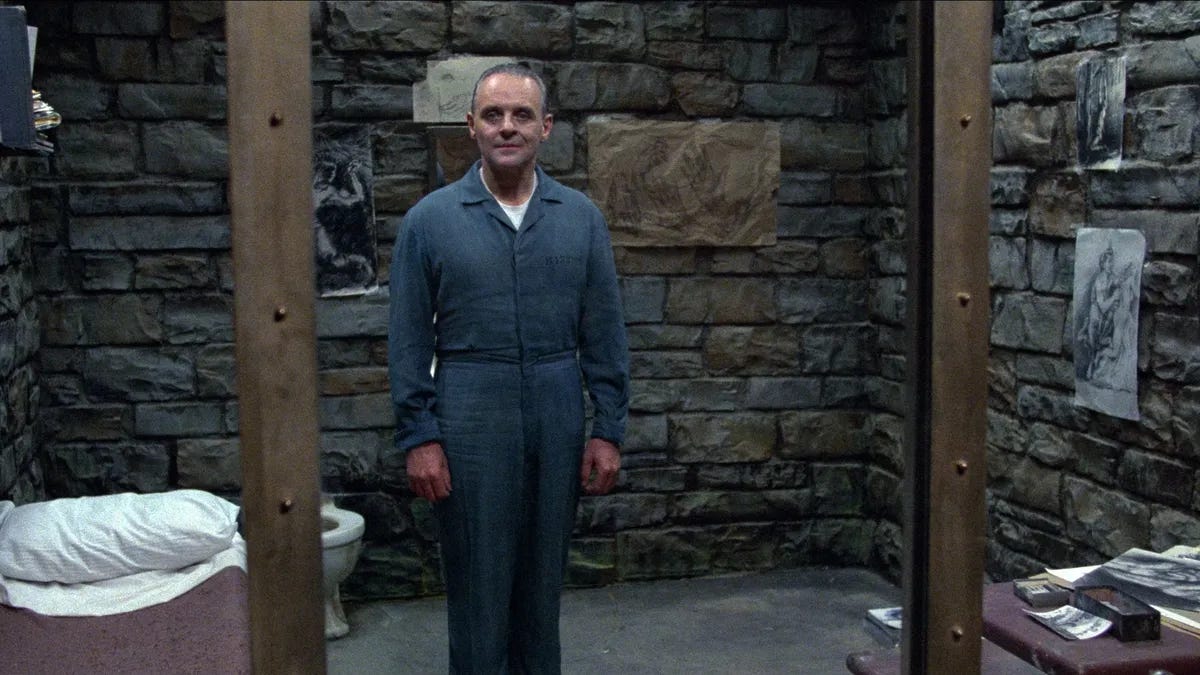
A great irony of reducing the number of villains of color is that, like Mister Lecter above, some of the most memorable characters in cinematic history are the villains: The Joker, Amon Goeth, Anton Chigurh. If the villain is good at what they do, they automatically make the hero more interesting. While they’re dangerous to cast, they’re also often the best roles for actors.
The reality is it’s really fucking hard to write a story that works, that doesn’t feel predictable, and that feels both surprising and inevitable. Forced inclusion without a full moral range for those same inclusive characters simply narrows dramatic possibility and makes them less fun to watch.
In many mainstream stories, this means that the more diverse characters show up, the more predictable the story becomes, which is a real shame.
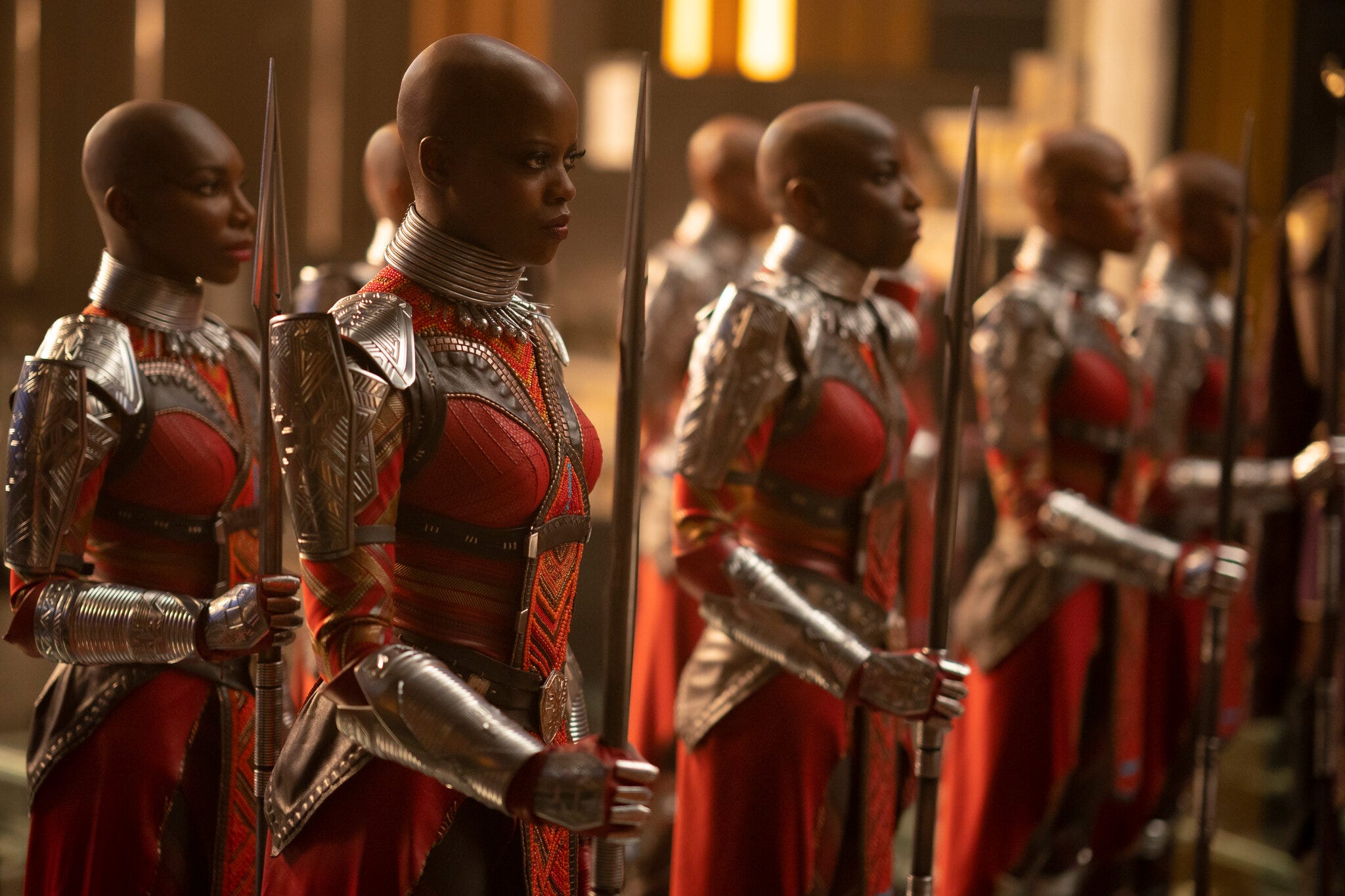
I also suspect this violates our suspension of disbelief. We know that outside of our little screen, people of all races are human, and thus contain the capacity for good and evil. But while watching, we also sense that they aren’t all human inside of our little box; this tension undermines several other challenges of believability, like if the population of Wakanda suddenly became half Asian, and starts to sink the whole ship.
Millennial Antiracism Is Boring
So we are at a weird crossroads; we can give diverse characters in mixed casts a full moral range, knowing that sometimes this will be upsetting, maybe even seem racist. A lot of what’s perceived as racism/sexism is simply bad writing, and there are a lot of bad writers out there. Anyone who’s taught a film school class full of eager progressive students knows how many unintentional stereotypes emerge in their writing.
I understand the hesitance of black media elites to allow open season on representation; a strict policing of representation can prevent some of the worst offenses. But what I would call “millennial antiracism” has made our media quite dull, risk averse and predictable. Festivals that used to program bold, controversial, provocative work, and weather the inevitable storms that resulted, have become, in some ways, a sort of progressive censorship board.
The last memorable Sundance controversy was for the (admittedly awkwardly titled) documentary Jihad Rehab, since retitled to The Unredacted. Filmmaker Meg Smaker was cancelled via open letter by a group of Muslim-American filmmakers who hadn’t even seen the film yet.
The festival and financiers apologized immediately, and the festival pulled the film. The film itself is a very straightforward humanitarian, slightly PBS-style investigative doc about prisoners released from Guantanamo trying to make a new life in Saudi Arabia. I was able to attend a screening.
While some significant changes were made to the edit I eventually saw, I was of course titillated by the scandal and actively looked for controversy or hidden racism while watching it. There really was very little to be upset by, outside of the filmmaker’s identity, which was, in my opinion, used in somewhat bad faith.
There was a version of this scandal where the upset Muslim filmmakers had a private screening and conversation with her, gave her their feedback and concerns, and the film was gently refocused and still screened. That’s a society in dialogue with itself, improving itself, which I do think their feedback did.
There hasn’t been a Sundance controversy since. Which probably means that any risky film is getting killed in the womb. Dynamic, challenging art is going to push boundaries, and annoy the hell out of people on both sides of the political spectrum.
Art that regurgitates progressive pieties to the audience like a mother bird to its chicks is inherently predictable and boring.
We shouldn’t be surprised if the audience runs away. The army of development and festival executives trying to chase every possible “ism” out of storytelling to morally educate the audience may end up actually having the opposite effect; they make stories that violate those obvious strictures seem edgy and innovative, because we know it’s taboo and titillating.
This is another obvious reason horror, which allows us to engage with the taboo, is exploding right now.
The censorship board will invariably design the tools of its own destruction.
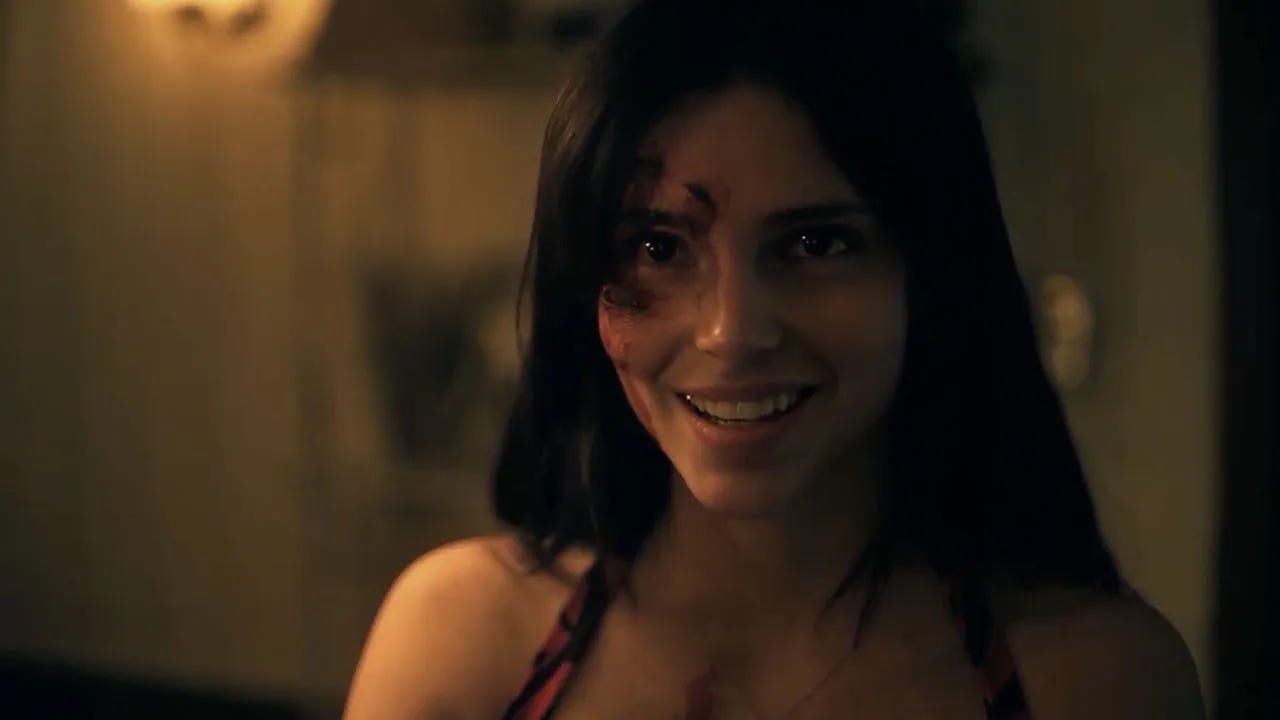
Vide the dozens of posts calling Obsession sexist; would that movie have been greenlit by a big studio with lots of sensitivity readers and well-meaning progressive development executives along the way, sanding off the edges?
Isn’t the sexism, the sense of breaking a taboo, after a decade of predictable girlboss feminism, even a just a little bit of the fun?
Reality Is Politically Multivalent
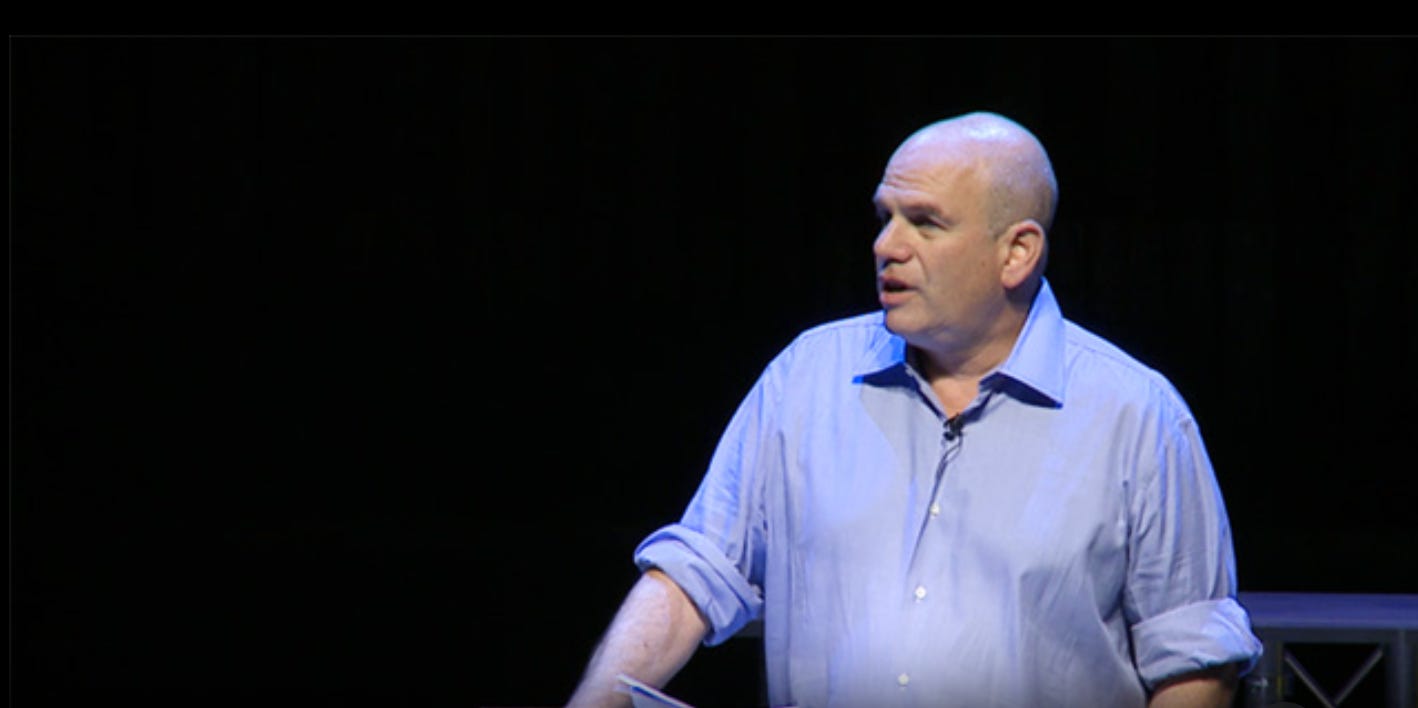
Perhaps my favorite speech ever given about politics and storytelling came from David Simon, creator of the god-like television show The Wire, at the 2014 Observer Ideas Festival. The part I particularly love comes early in the speech:
The proof that we had some success at not being completely polemical is that everybody: liberals, conservatives, libertarians, marxists, free market capitalists, they all eventually got to the Wire and found something that validated… their preexisting notions. They could point to it and say, ‘what’s going on there is exactly what I’m talking about’ … and I’m very gratified by that.
As a young progressive I used to be really annoyed when conservatives I knew would praise the Wire. ‘That’s not for them, those evil bastards’ I would think, “that’s for me, I’m one of the good bastards.’
As I’ve gotten a bit older, and seen just how goddamn complex our world can be, I look back on the Wire with nostalgia. Imagine a show that would have the Fox News people and the NYTimes people and the Jacobin people and the Reason Magazine people all sitting at the table, fighting furiously about what a just and good society is.
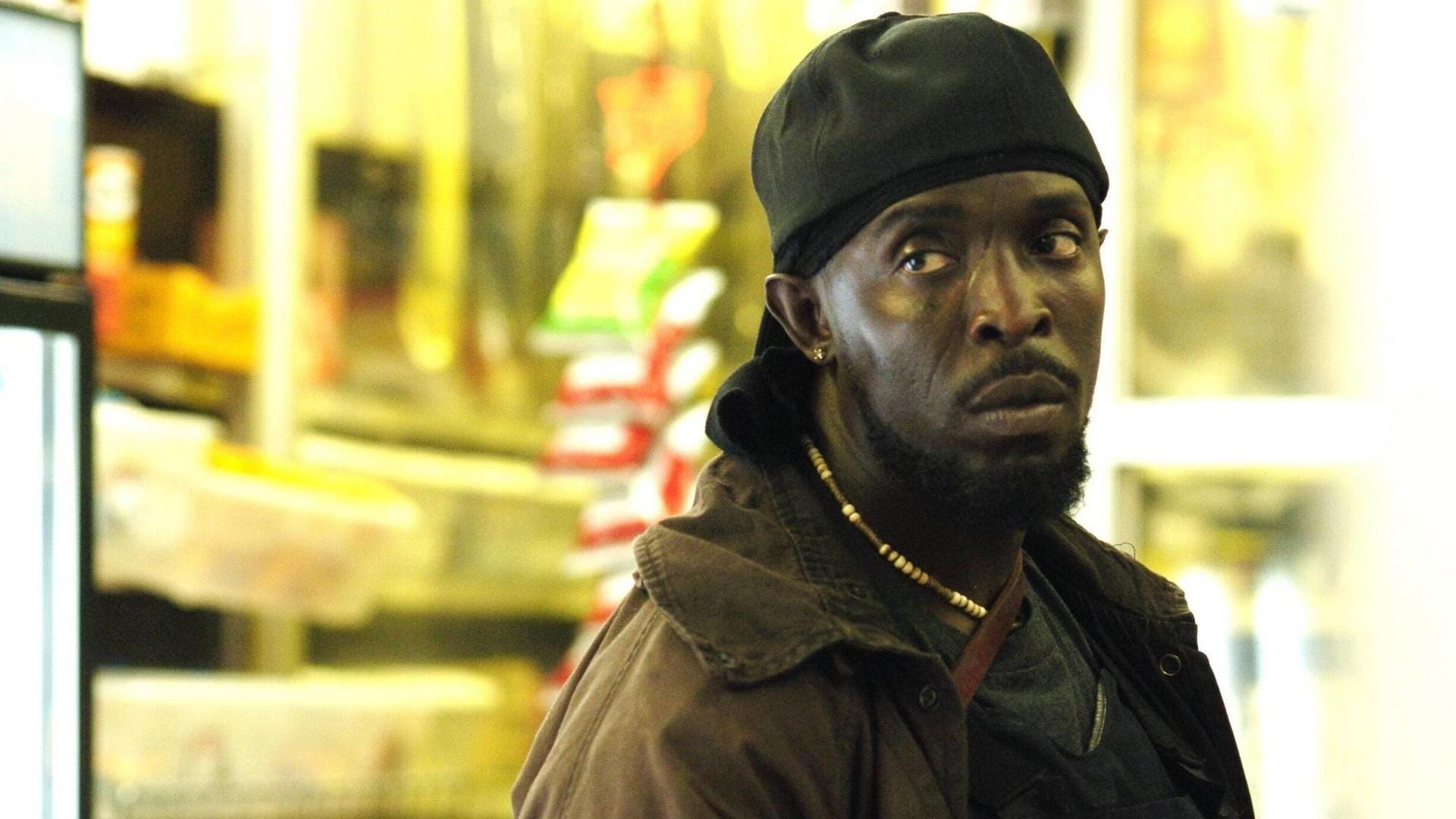
It would sound like a healthy and functioning democracy, engaged in a meaningful dialogue with itself. Progressives are an important part of our society; they keep the center left, among others, in check. But their dominance over the last decade has made our storytelling predictable, and our societal conversation ever more one-sided and polarized.
Stories teach us how to think from other people’s points of view, a skill that is in ever more urgent demand right now.
Educated, film-snobby type people will always tend to the left, and that’s fine. But they need to look around them, to the whole, delightful world we have out there, and let everybody share in the joy and sorrow, the good and evil, the contradictions that each of us encapsulates, regardless of our identities.
Otherwise people are going to keep changing the channel.
Overall I agree with this article’s premise, but there are a few lines at the end that I have to push back on.
“Progressives are an important part of our society; they keep the center left, among others, in check.”
I’d argue it’s the opposite; progressives are pretty much just far leftists who tend to support extremist far left causes and be intolerant to every and all other viewpoints. They are no different than far right confederates, so I see them as radicalising the center left.
“Educated, film-snobby type people will always tend to the left, and that’s fine.”
That’s a pretty reductive and untrue fact. In the past, artists (not just filmmakers) tended to be politically disparate; there were left-leaning artists and right-leaning artists. The idea that artists are inherently left-leaning is a rather recent idea shaped by the sort of institutions that you called out.
I’m open to being proven wrong, but based on my observations I believe it’s more complicated than how you’re framing them. Anyway, congrats on your growing success.
Well, at least this impulse to pre‑assign who can be good, who can be evil, and who must always stand in for a whole group isn’t bleeding into how we argue about actual real‑life tragedies or anything…