The Cost of Speed
Hollywood's radical demographic experiment.

In the previous two parts of this series, I documented how major festival pipelines have been systematically corrected in favor of female filmmakers since 2013, and how that cohort has performed commercially once it reached the industry’s upper tiers.
In this final part, I want to project those trends forward - and make a case that we are not looking at a gradual correction, but at something more structural and potentially irreversible.
The Pipeline, Revisited
The film industry’s current diversity mandates are influenced by three main factors:
Studios and networks hate risk; they thus need experienced people making their expensive programs to offset it. For festivals, their business models rely on filmmakers established enough to attract stars to stand in front of their sponsors’ ads. These experienced people are currently nearly all older white men.
Those same players also hate being accused of sexism and racism for having low diversity numbers, which were historically quite bad.
The solution? Keep older, more experienced white men, but replace younger men with women and diverse candidates. This began to ramp up significantly at the 2013 Sundance Film Festival, its first time achieving gender parity in competition, and spread more broadly across the world by the late 2010s.
We’ve seen this trend at talent programs like the Sundance Labs (which has taken almost zero white men since 2018) and Sundance’s Competition Section (which does the same). Berlin’s competition section went from 21% female directors in 2018 to 42% in 2019 - more than doubling in a single year.
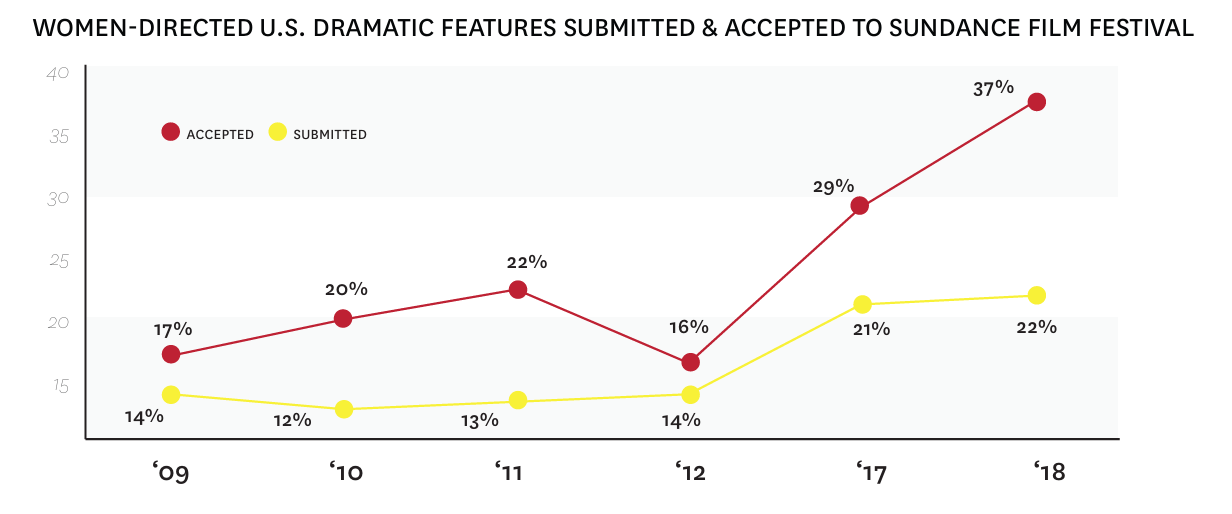
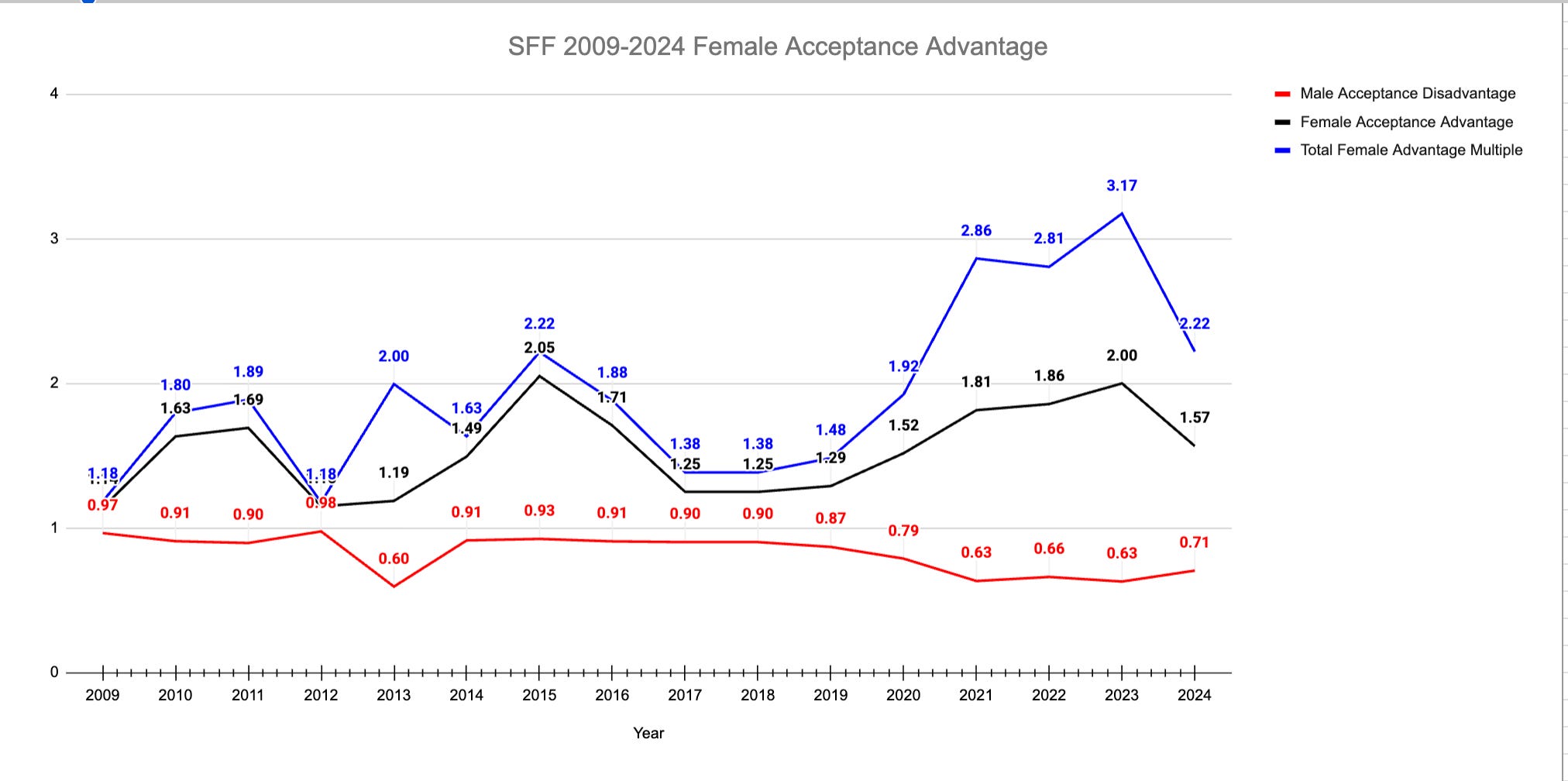
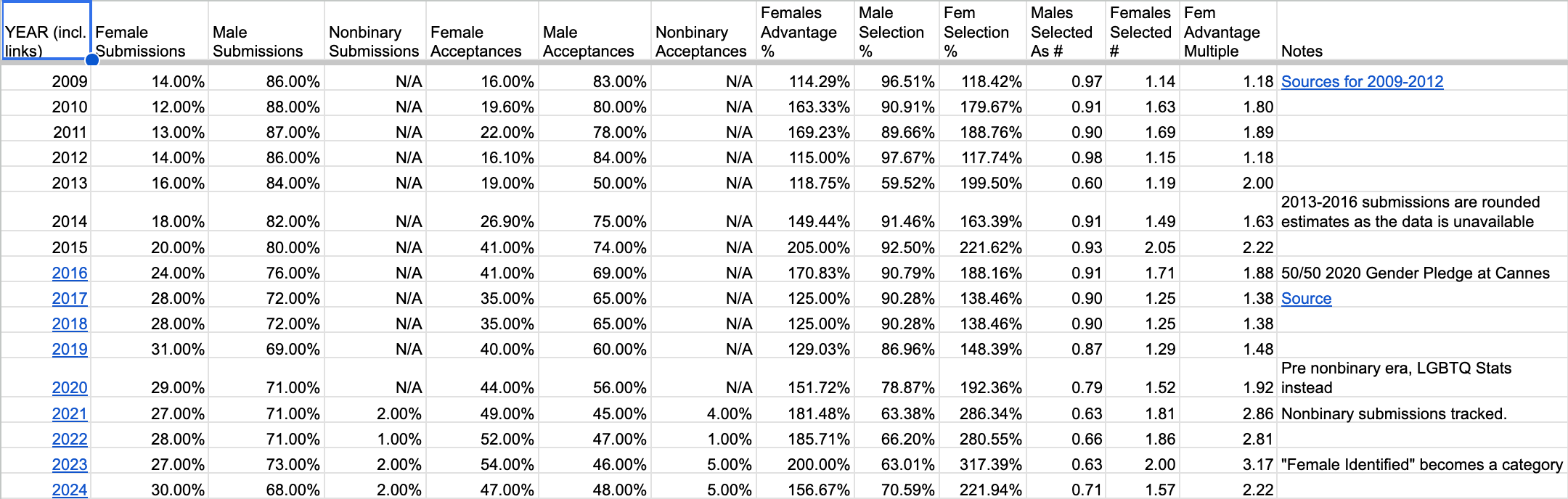
As we can see above, Sundance actually increased its discrimination beyond 50% as the 2020s began, with virtually no white male filmmakers in competition in several years, including 2023 (only one white male codirected film) and 2026 (only one white male solo directed film). All this in spite of the fact that white male submissions remained around 50% of all submissions.

Festivals like Cannes and Venice do not discriminate at the level of Sundance and Berlin. They have withstood feminist criticism and still maintain roughly proportional representation in their sections, i.e. 25% female submissions and 25% female acceptances. Cannes compensates for their male-heavy competition section by skewing the Un Certain Regard and other sections more female.
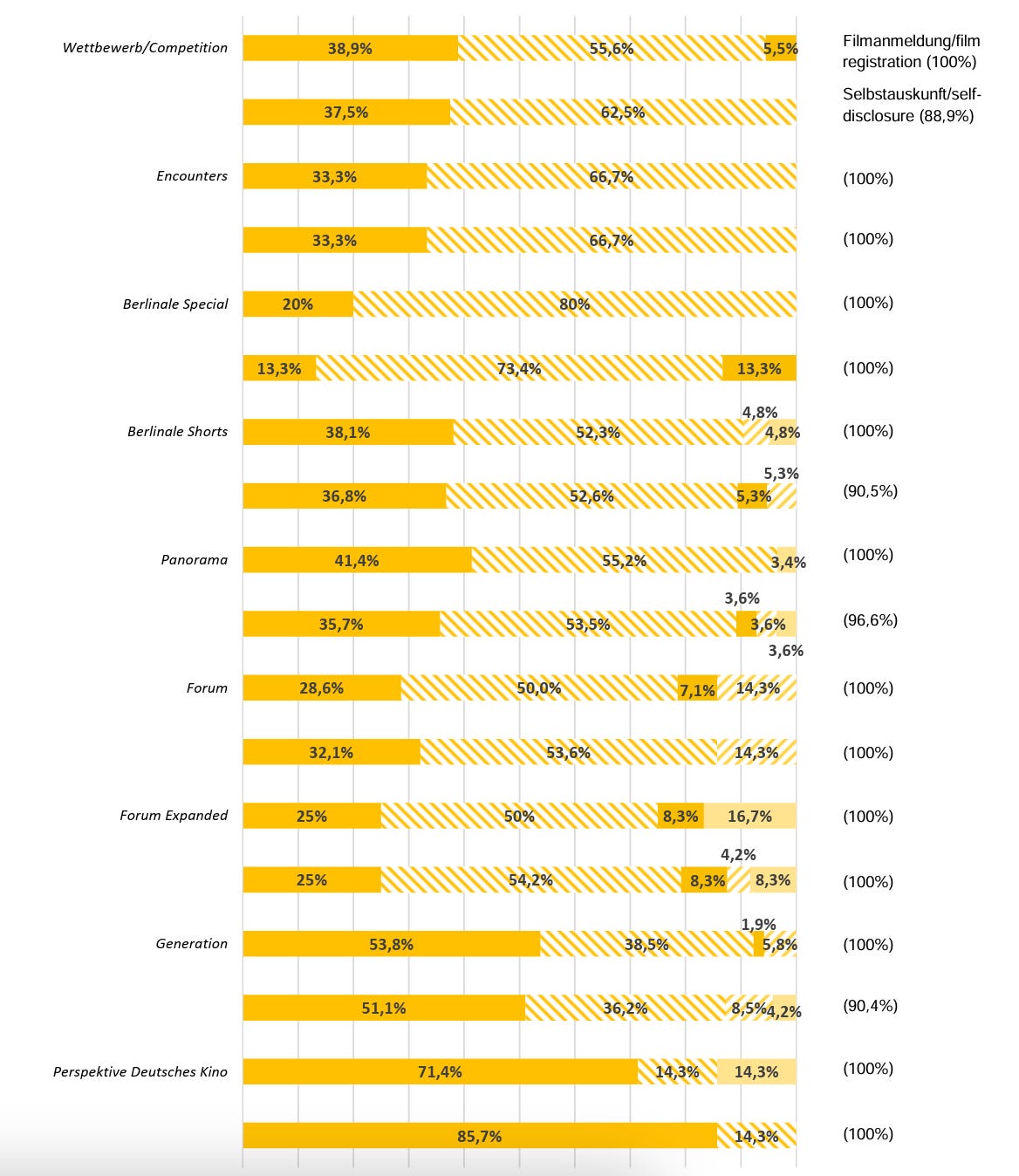
The lower sections, especially some European ones, tell an even starker story. Before it was cancelled, the Perspektive Deutsches Kino section of the Berlinale - reserved for emerging German feature filmmakers - counted 85% female submissions in 2022. The Generation section, also oriented toward younger filmmakers, had majority female submissions that same year. By 2022, four years ago, women were already dominant in several emerging feature film tiers.
Ironically, the Berlinale cancelled its only female dominated section the next year. At least in Germany, emerging male feature filmmakers had become the minority that women occupied a decade earlier.