

Obsession Doesn’t Prove the System Is Rigged Against Women
A critique of the 2016 Slated “study.”

As some of you have probably figured out by now, I suffer from Obsessive Compulsive Disorder (OCD), which is part of why I have such a hard time letting things go, including, perhaps ironically, a movie called Obsession.
For the past few weeks I’ve been puzzling over a post by Raquelle David, a Hollywood manager, called “Obsession Is 2026’s Biggest Box Office Story. A 20-Year Diversity Study Explains Why It Could Only Happen To A Man.”
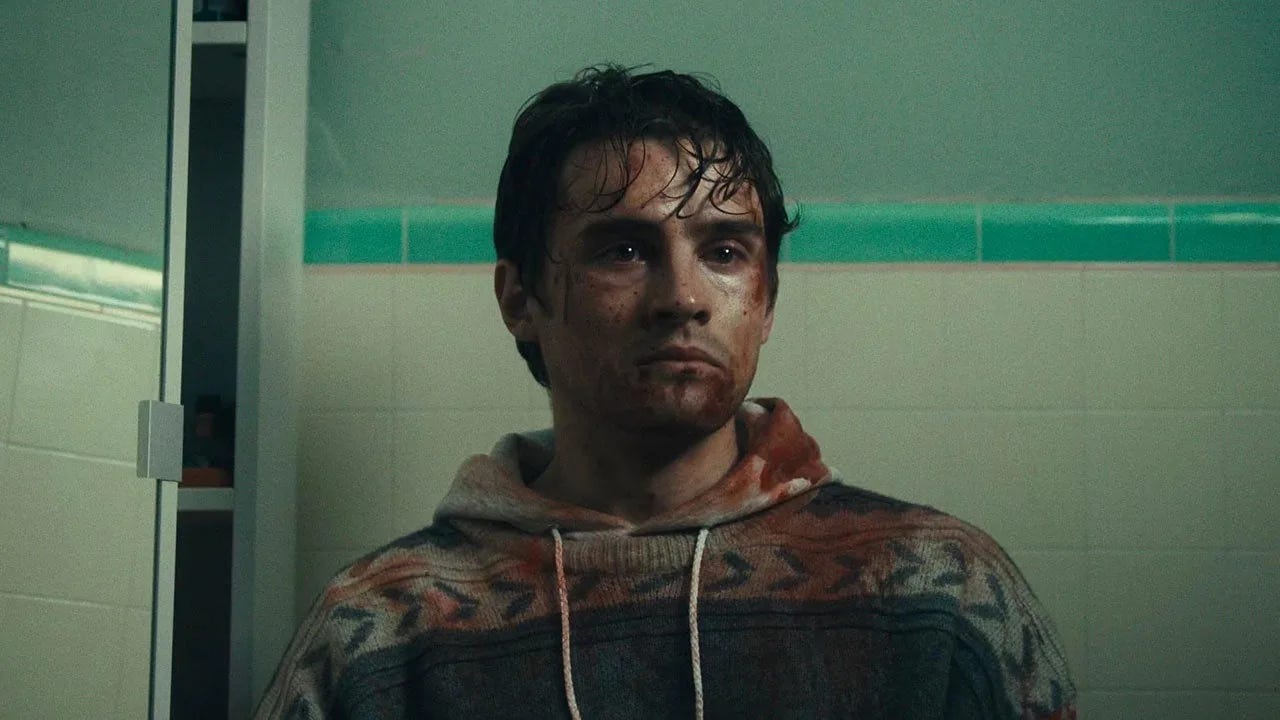
To quickly recap for the people living on the moon, Obsession is a $750k horror movie that has grossed over $300m worldwide. It’s so successful it’s already outgrossed all 68 Sundance Dramatic Competition films this decade combined.
My response to David’s piece became too big for my other essay on the sizable flaws in the Annenberg Directors Study, the twenty year diversity study from David’s title, so I’m going to include my critique here as a separate post, as it makes separate arguments.

I’m critiquing this piece so hard, and the Annenberg study it uses, because it does several things I feel we need to stop doing; heavy pessimism about female directors, citing flawed data that makes women look less successful than they actually are, and feeding an endless narrative of female failure that is ultimately counterproductive.
Women, in spite of severe underrepresentation and significant obstacles, are making real progress at the highest levels of commercial filmmaking. According to Annenberg’s own numbers, they tripled from 2007-2025, no small feat. Directors of color nearly doubled.
That needs to be just as clear, and studied, as the obstacles they face. They need better studies, and better pipelines, if they want to keep advancing.
When a woman reads a piece like the one above, which implies her success is a structural impossibility, it could read as defeatist, like the game is rigged, and I sincerely don’t believe it is, at least not in the way these flawed studies describe.
One could call this “activist-pessimism.” It’s great as a tool for activists to try and get change NOW, but not so much for representing reality.
And it wouldn’t be true anyways. The reality is, as I discussed at length in my Annenberg piece, that activist studies systematically describe women as less successful and less empowered than the data actually suggests.
If that’s the case, then any explanation of the industry must account for that success, not just the remaining gap.
That’s the question I think these studies increasingly struggle to answer.
David’s Headline Argument:
David’s headline argument is this:
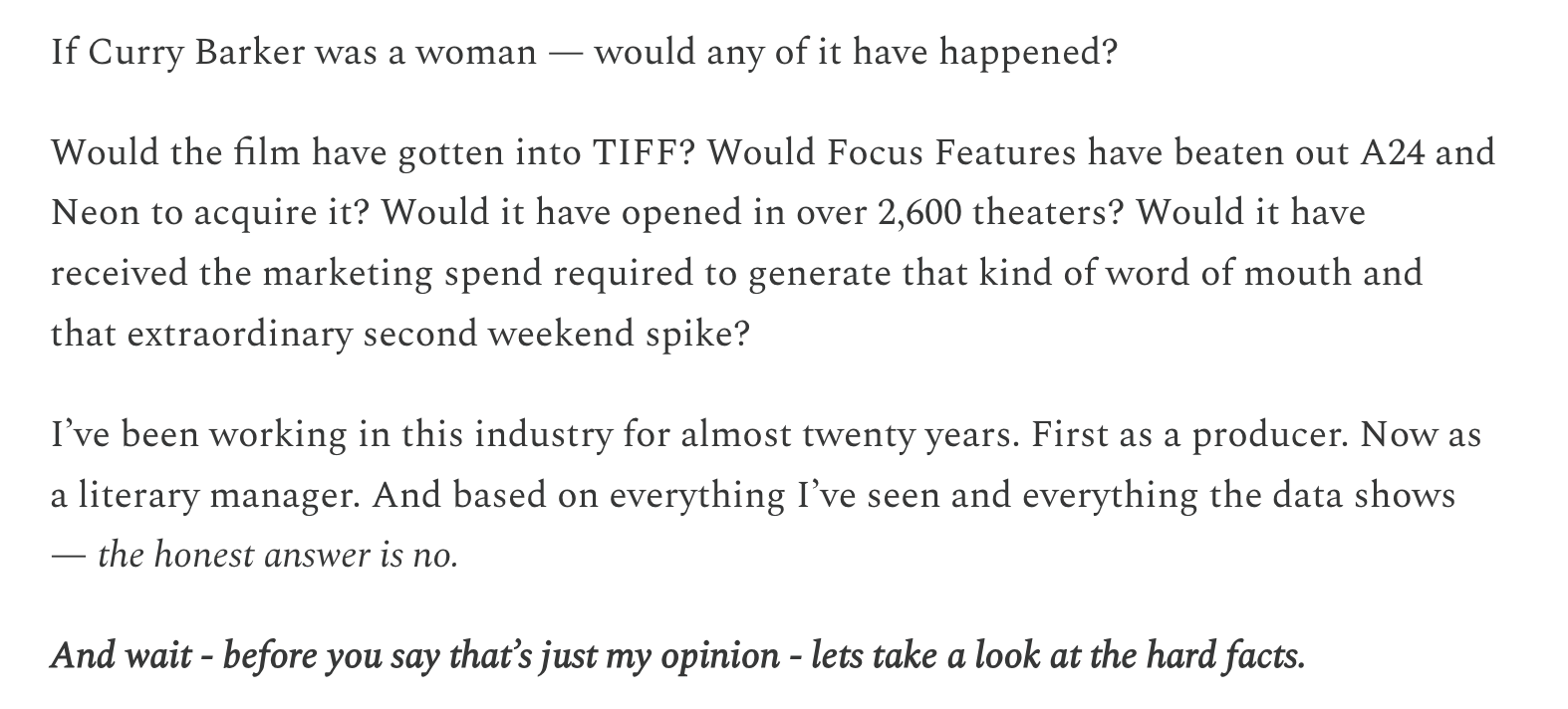
But the facts are far softer than they look.
David’s “Smoking Gun”
David opens with what she calls a “smoking gun”: a 2016 study from the film-finance firm Slated.
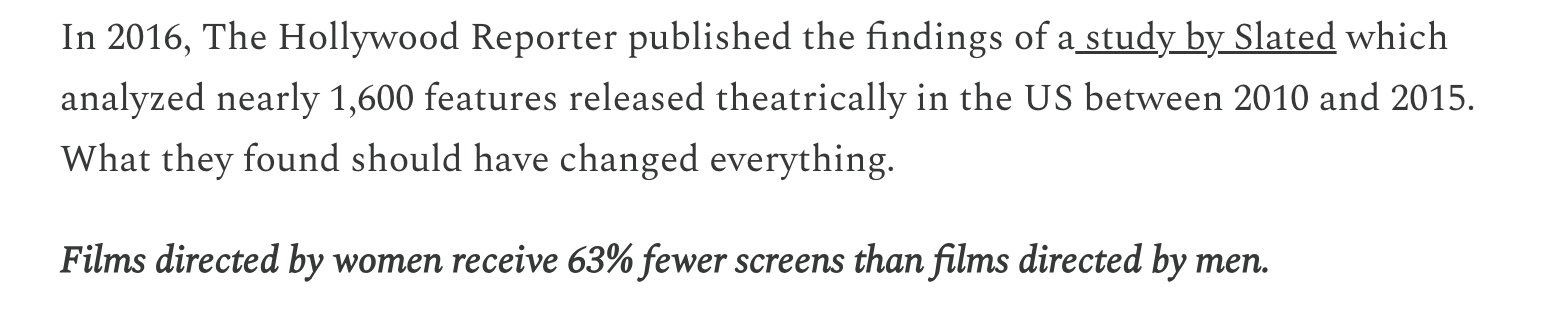
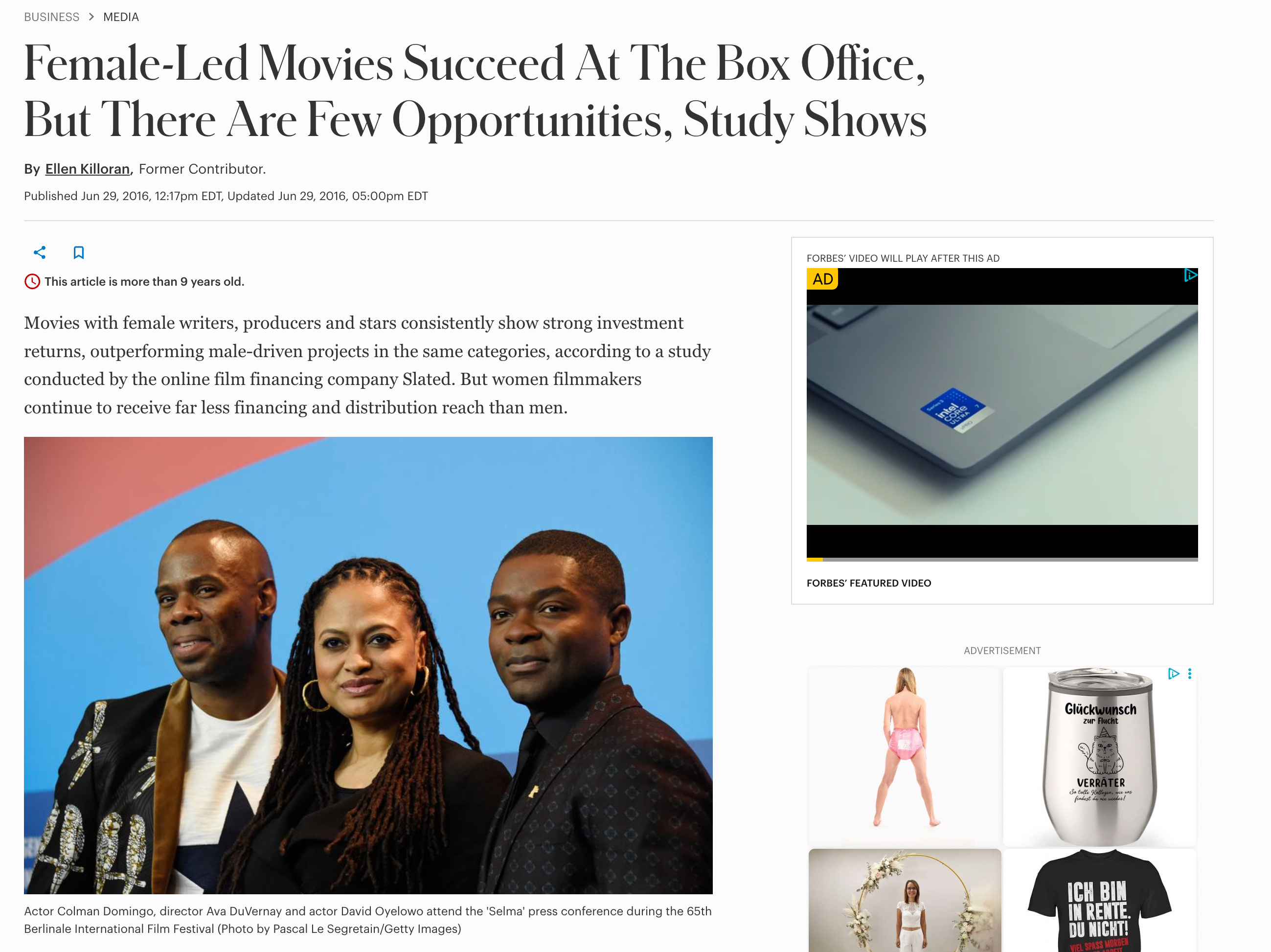
The line she’s quoting is correct; the Slated study found that low-budget films directed by women went out on roughly a third as many screens as men’s - 242 to 646. But David obscures the fact that it was only low budget films that received less distribution, which makes sense, because the trades also reported it in that same confusing way:
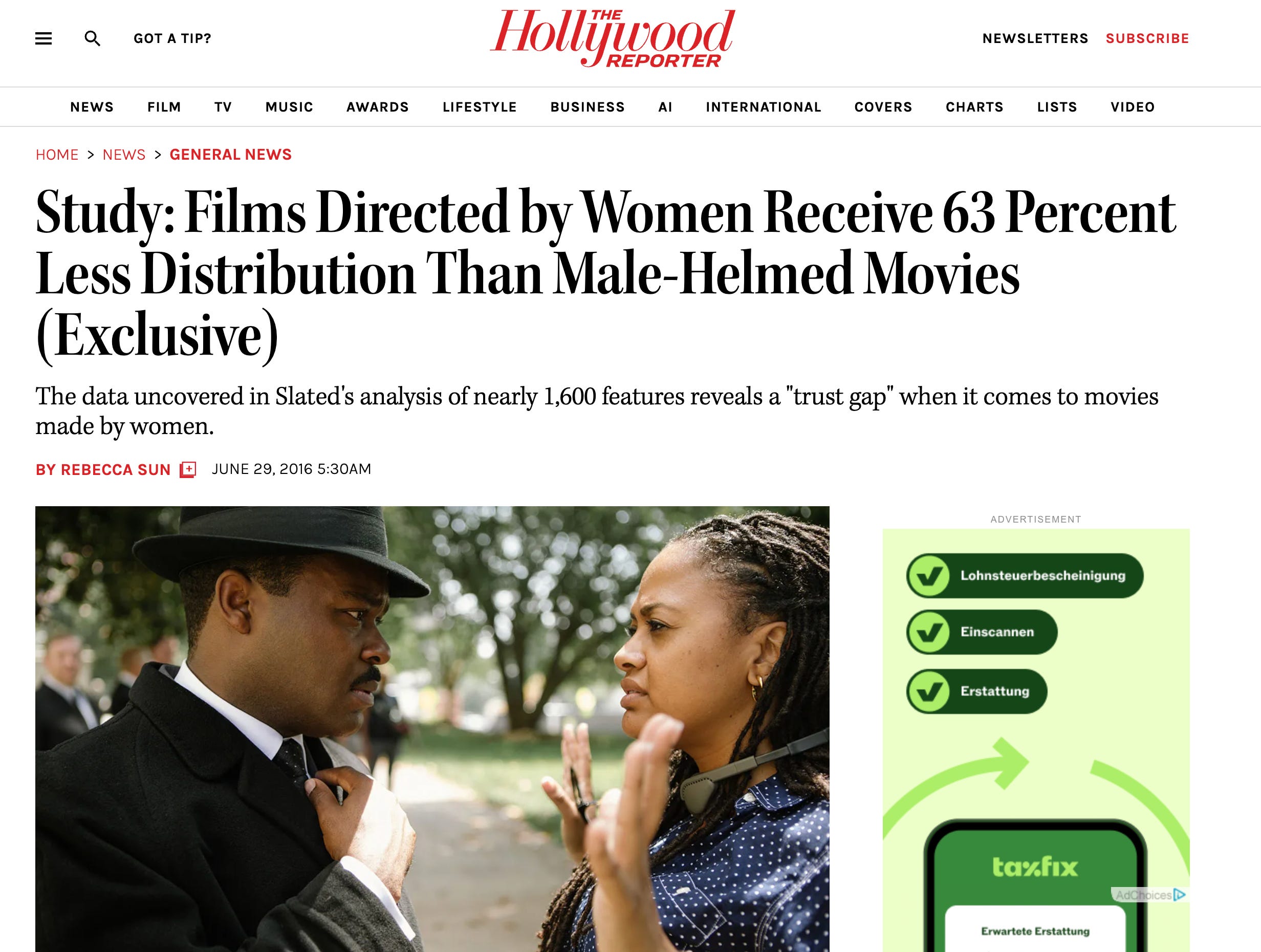
I went looking for the study itself - methodology, controls, underlying data. It was never released. Ultimately, without those pieces available, it wasn’t really a study, it was an infographic, which is exactly what they call it.
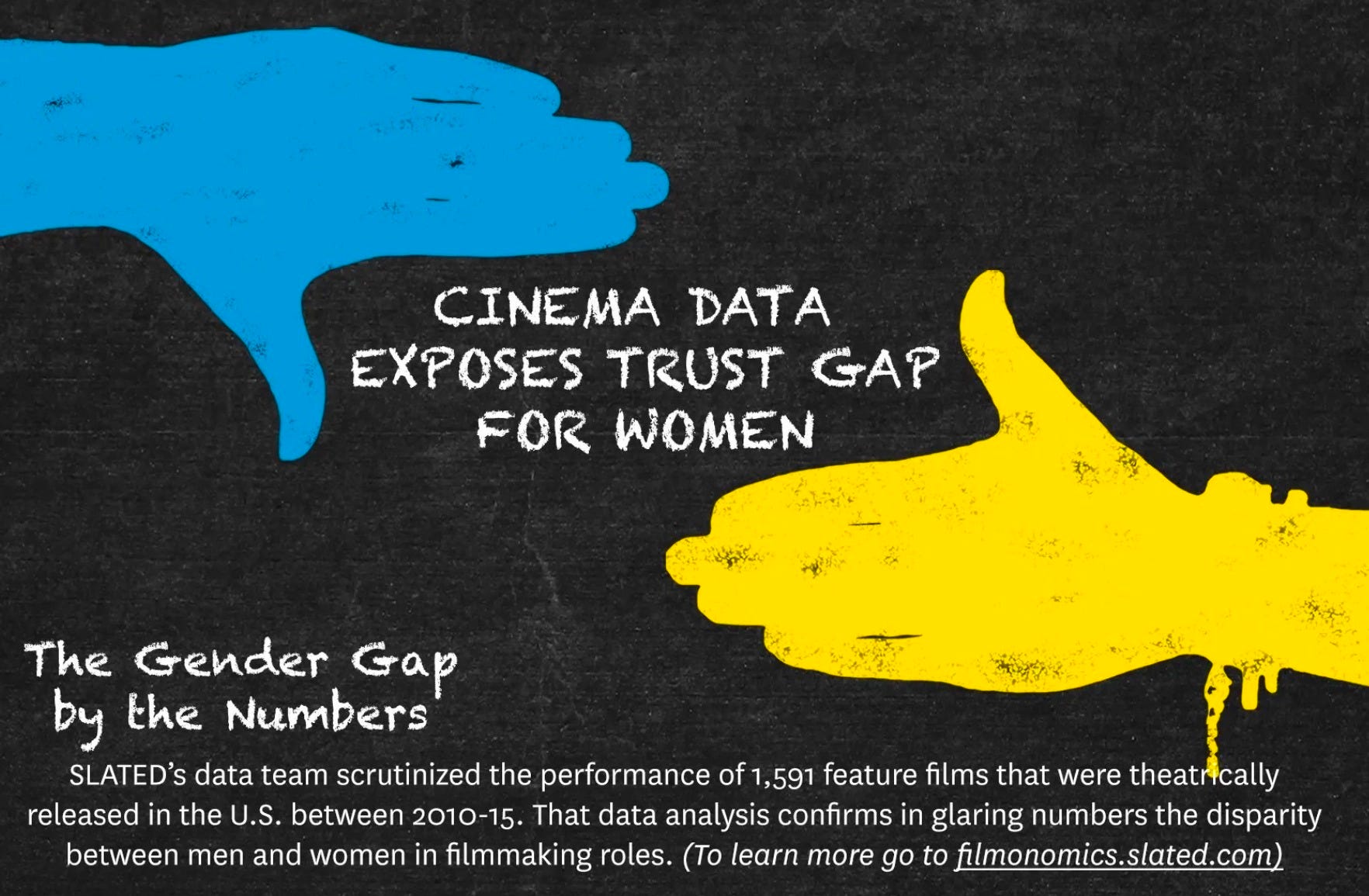
What’s public is the handful of headline numbers in THR and Forbes, alongside the Medium Post. I can’t verify how the infographic was built, and neither can anyone citing them. But I can read what’s reported - so let’s read all of it, not just the one stat.
Start with what the study actually isolates by director. There’s exactly one such finding: that low-budget, 242-to-646 screen gap, a decade ago. At the studio level - films over $25 million, the tier my entire Annenberg essay is about - it doesn’t report a director number at all.
It switches to films “led” by women (produced, written, or starring) and finds distribution there roughly equal. Likely there were simply too few women directing $25M-plus films in 2010–2015 to compare, because that was the nadir of female blockbuster directors, as I’ll show later.
Either way, as David says, the documented gap against female directors is a purely low-budget phenomenon. The smoking gun never fires at the blockbuster level; it fires in the sub-$25M indie tier I’ve already argued is a different animal.
Slated’s Budget Range is Comically Large
Slated’s low budget feature numbers have a very odd skew: under $25m.
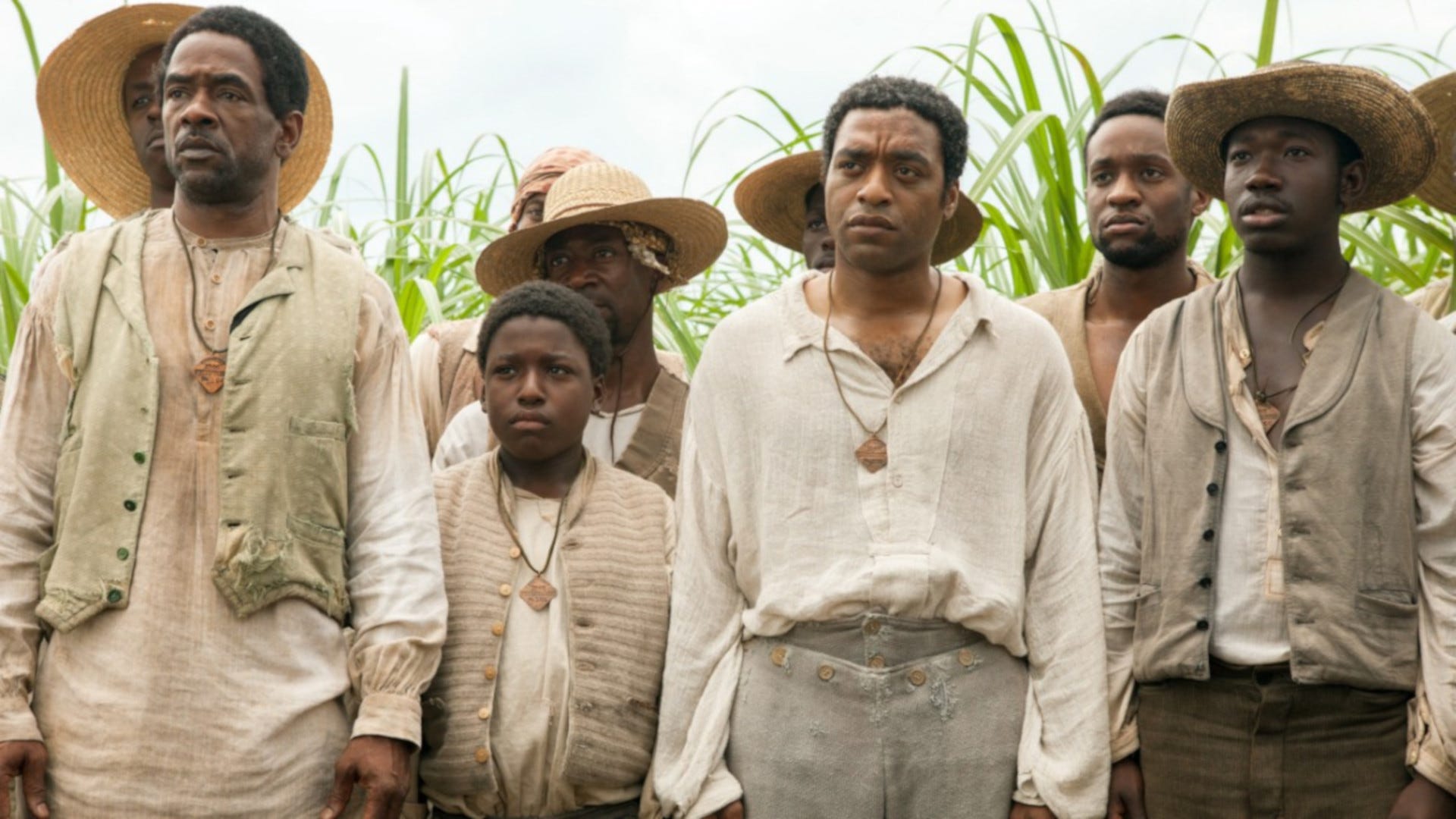
But sub $25m is a comically large range: it would include 2010’s Tiny Furniture (roughly $50k) and 2013’s 12 Years a Slave ($20m budget, Best Picture Winner).

The study itself says women get 25% smaller budgets, so if their films sit lower in that range, part of the 242-to-646 gap is budget size showing up as screen count, not gender. Without the methodology, you can’t pull the two apart.
Now the part that never gets quoted next to the screen gap: that same low-budget tier was the only category in the entire study to lose money - female-directed films there averaged a 0.66 ROI. So the one place women got fewer screens is also the one place the films, on average, didn’t earn back their cost.
Which leaves the causation wide open. Did 242 screens cause the losses - good films starved of a real release? Or did distributors put those films on 242 screens because they viewed them as uncommercial, and the 34% average loss proved them right? Screen counts and box office can’t tell you. The smoking-gun reading assumes the first. The data fits the second just as well.
But also, are we really comparing the release of the fifty thousand dollar movie to the $20m one? In what world does that make sense?
Because Slated never released its methodology, we cannot know whether budget differences, genre differences, release strategy, or other variables explain the gap. The infographic raises questions, but it cannot answer them.
The Slated Infographic Was Published At the Worst Possible Time for Female Blockbuster Directors
In a strange coincidence, as the Annenberg data shows, the period of 2010-2015 was probably the worst in the last 20 years for female blockbuster directors, with two years in a row, 2013 and 2014, that were even worse than 2007, the previous all time low.
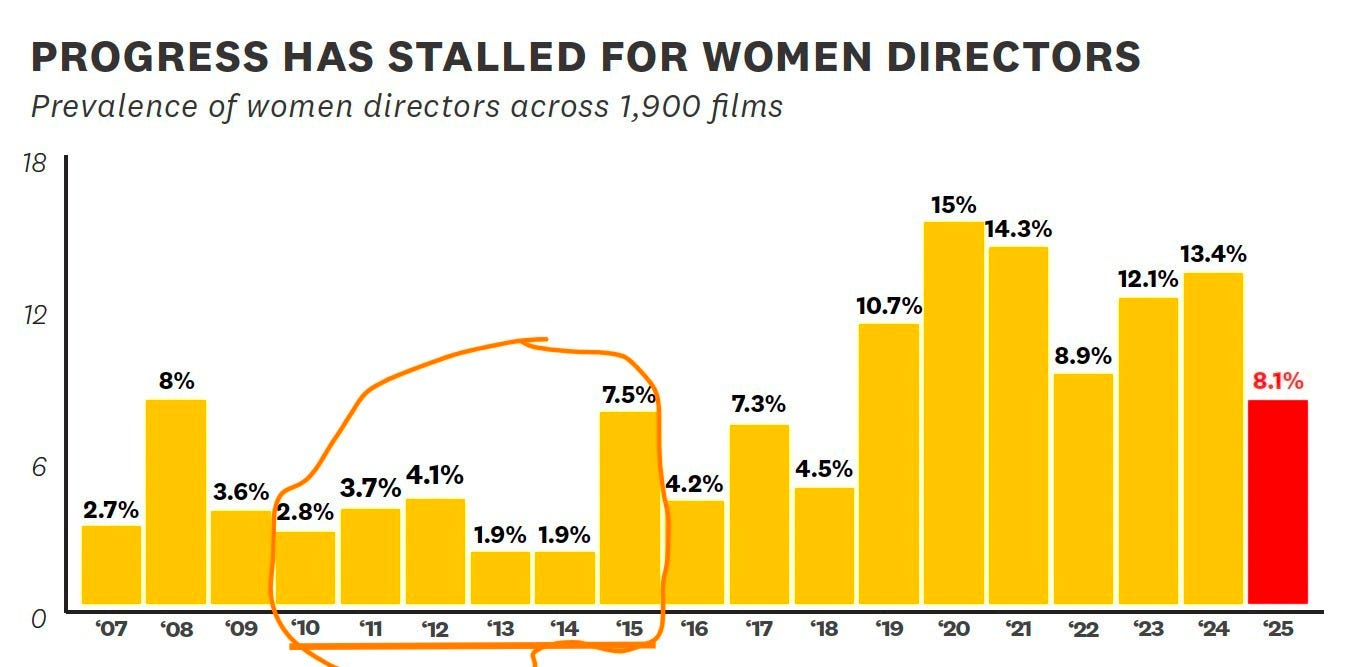
Starting in 2015, things started to slowly tick up, perhaps even in response to studies like Slated’s, perhaps as a regression toward a higher underlying rate, perhaps for factors we don’t fully understand.
This study is over ten years old now, and in no way relates to modern trends. Look at 2010-2015, the six-year period the Slated study covers, the average is a paltry 3.65%. Then look at the last 6 years: the average number is 11.97%.
That means that, in spite of the doom and gloom chart on the headline, the average number of female blockbuster directors more than tripled from 2020-2025 over the Slated period’s study.
“A Steep Fiscal Cliff”
David goes on to say that…

I’m going to reproduce just a little bit of my critique of Annenberg here. This is no doubt based on their bizarre infographic from their “Inclusion in the Director’s Chair,” the 20 year study David references in her piece.
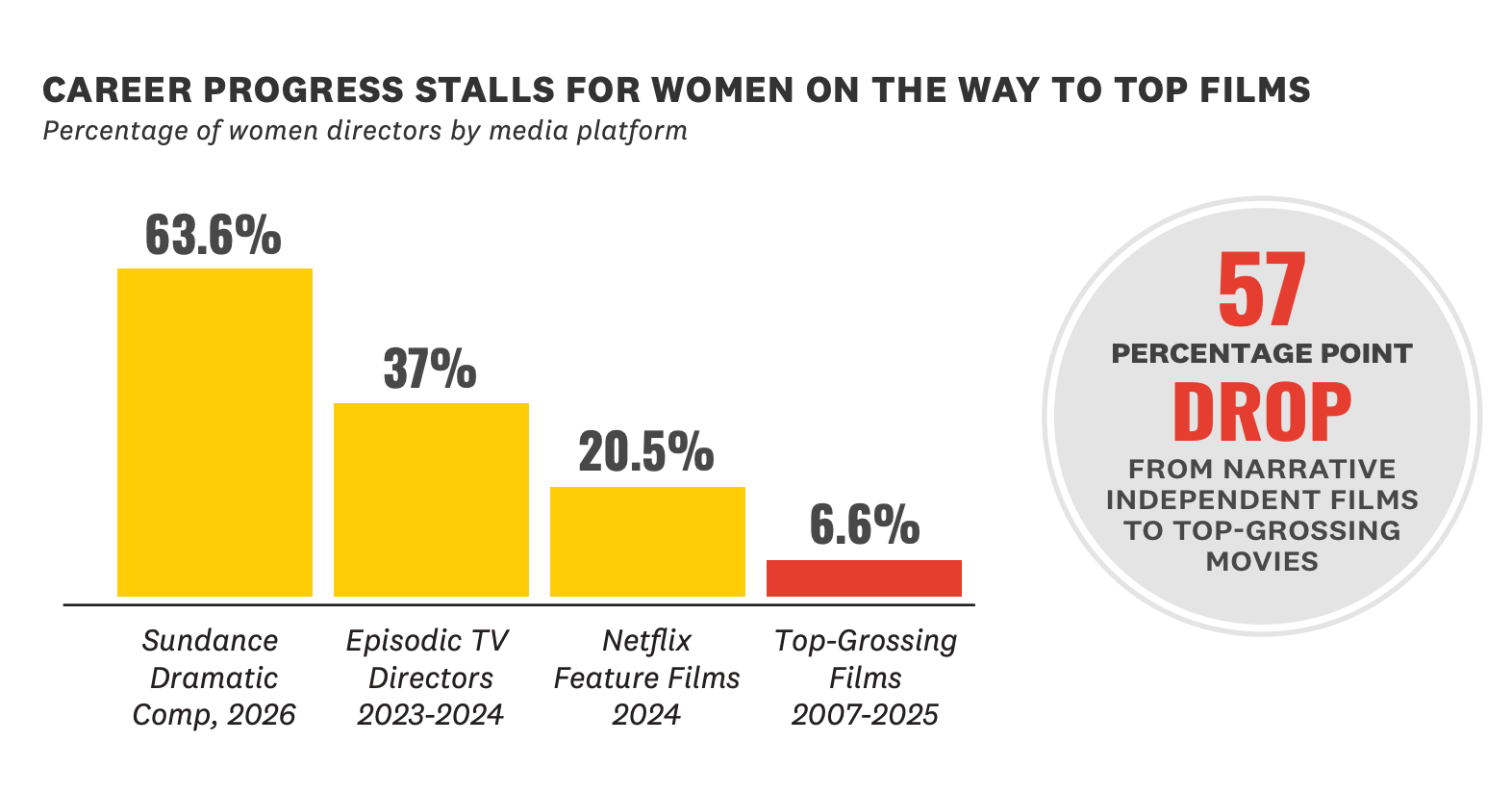
At various points in the Annenberg study, they use the Sundance dramatic competition as a one to one proxy for talent and future commercial success, then imply that those directors not transitioning into Hollywood blockbusters is proof of discrimination.
In a truly bizarre chart, the study moves in reverse chronological order from Sundance Dramatic Competition 2026, to 2023 TV Directors, to 2024 Netflix feature films, to the top-grossing films from 2007-2025.
Just from a basic sense of logic, shouldn’t we start in say, 2020 and follow a cohort chronologically through these perceived natural steps into top-grossing movies?
Wouldn’t that be better evidence for this as an actual pipeline at all? Is there any evidence that this pipeline is real? That it works for men and not women?
Even stranger: only one of the women in the top 100 last year has even had a film in Sundance competition; Chloé Zhao with Songs My Brothers Taught Me, a small film that flopped commercially over a decade ago.
The numbers are real: women do cluster in the lower-budget, lower-risk tiers - 63.6% of Sundance dramatic, 37% of TV, 20.5% of Netflix - and go scarce at the top.
What’s invented is the arrow between them. Calling those tiers a “pipeline” and the top-grossing gap a “drop” implies they’re sequential rungs a director climbs, so the scarcity at the top reads as leakage — qualified women lost along the way. But nobody climbs these rungs in order.
Greta Gerwig didn’t touch Sundance Competition, TV, or Netflix before Barbie; Chloé Zhao never directed television; not one of last year’s top-100 women climbed the ladder step for step. These aren’t four stages of one career. They’re four different populations, chosen by four different gatekeepers on four different criteria - and a non-commercial showcase feeding a commercial box-office endgame is a simple category error.
Annenberg published an even stranger “pipeline for women directors” in their 2019 study, this time going from the Sundance directors lab, to short films, to dramatic features, to episodic tv, to top-grossing films:
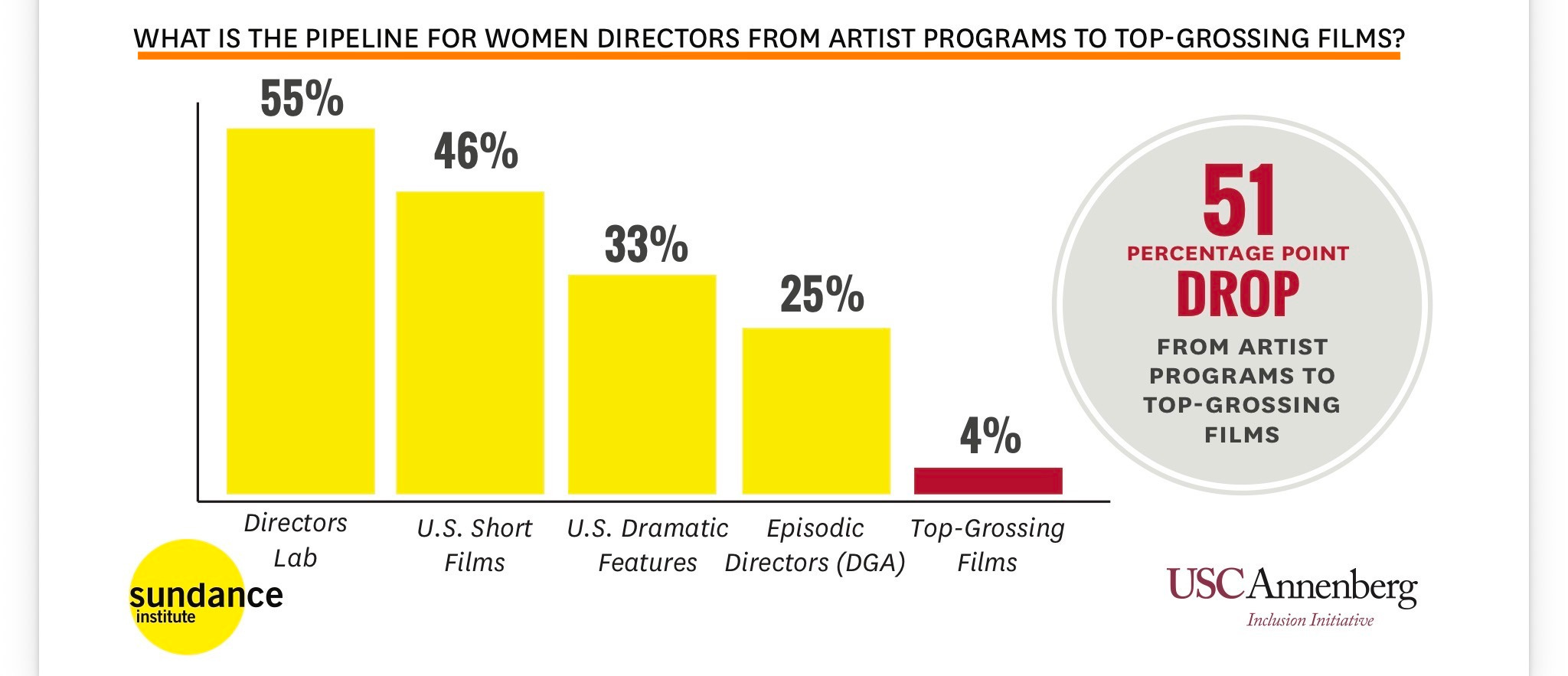
This is what they call a pipeline? The Sundance directors’ lab is the natural jumping off point for commercial-minded filmmaking? Before you make short films? It’s bizarre.
The “fiscal cliff” David refers to is directly lifted from the Annenberg study based on these strange charts.

They assert again that women’s opportunities shrink simply because of their identity. But how? And why? And where in the pipeline? They present no real evidence for this.
As I mentioned in the other piece, the top-grossing films are the only part of this pipeline that aren’t controlled by institutions, and that have significant, verifiable financial risk. So they will naturally take far longer to diversify.
Festivals Overselect for Female Filmmakers
David questions whether Barker would have been selected for Toronto if he was a woman, which is also strange.
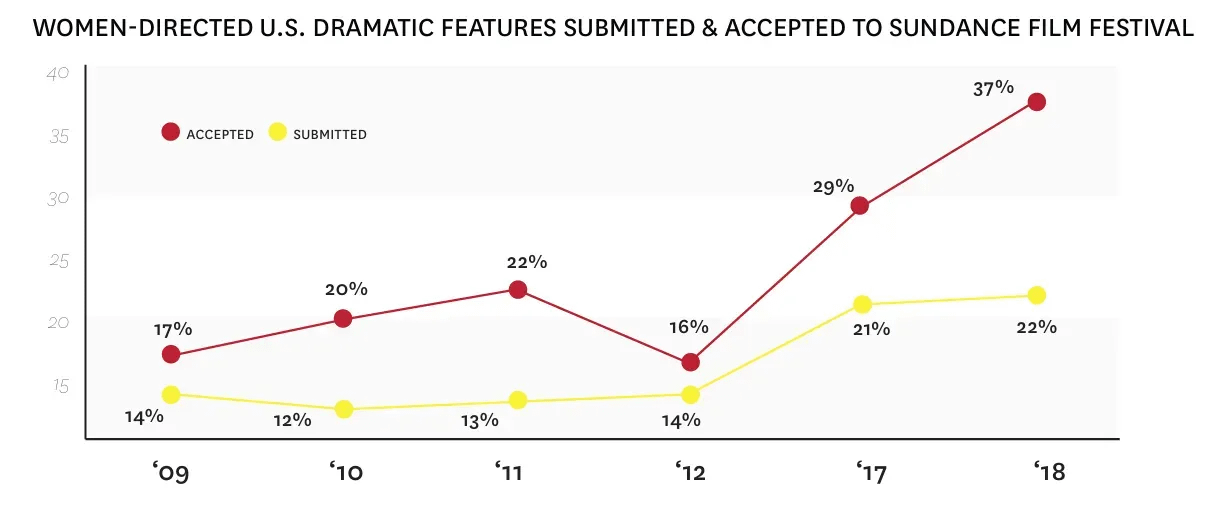
As I wrote in Festivals vs Activists, festivals have been actively overselecting for female filmmakers for a decade. Here’s one obvious example, from Annenberg itself:
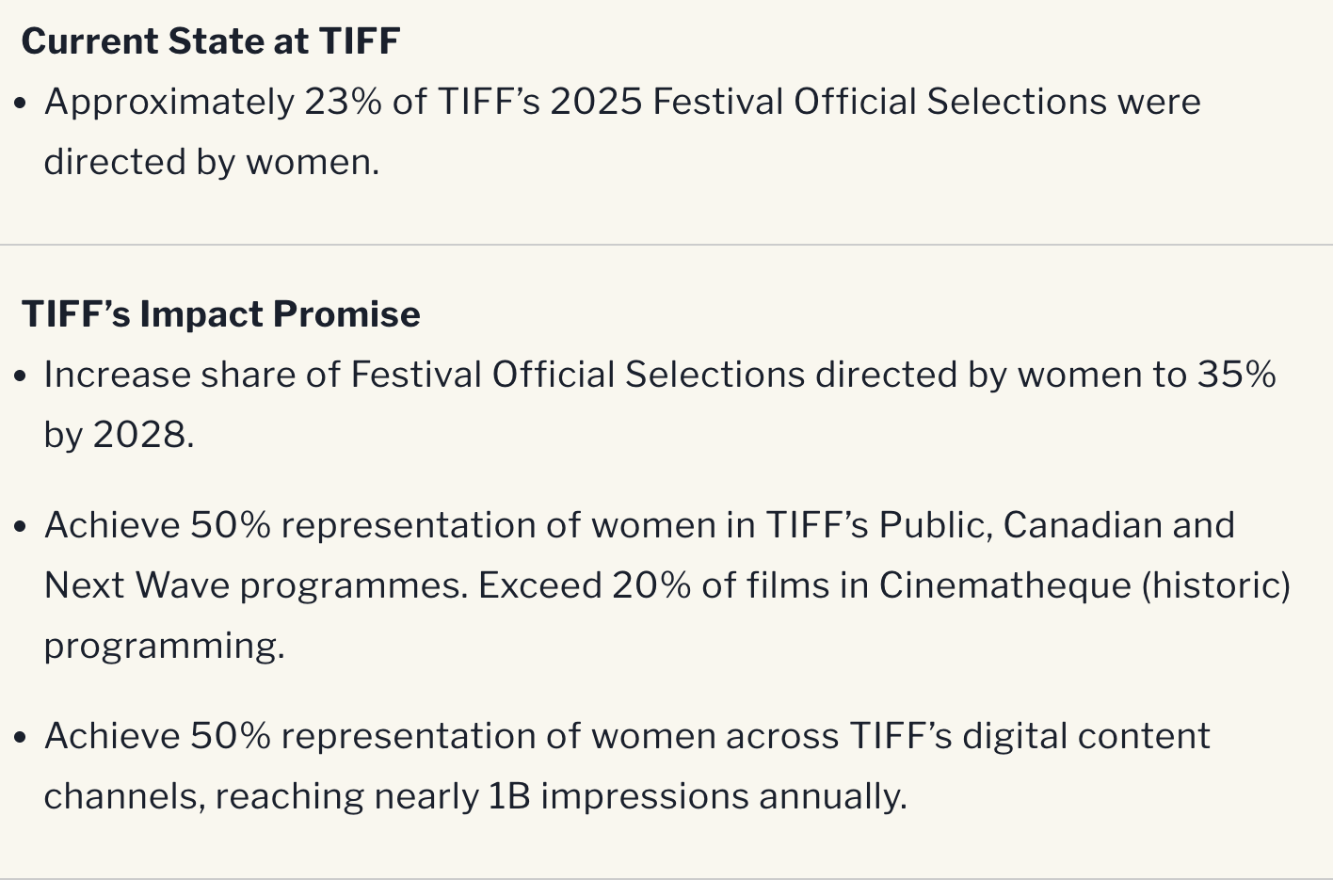
Toronto, where Barker premiered, is the clearest case: it launched "Share Her Journey" with an explicit commitment to increase the number of female directors from 23% (likely parity with submissions), to 35% (a 52% increase overall), as they explicitly say on their website:
It's the same playbook across most of the major festivals - Berlin signed the 50/50 pledge in 2019 and doubled its competition section’s female share from 17% to 35% in one year; Sundance has held U.S. Dramatic Competition above 50% female since 2015 while dramatic submissions sit around 18–20%. Venice signed the 20/20 pledge and just seemed to ignire it after that. When selection runs at several times the submission rate by announced design, the directors on the wrong side of that math are generally emerging men without an established name and relationships to shield them. (Full numbers in Festivals vs Activists.)
I’m not going to dwell on this point too much, as I made it at length in the piece, but if anything, Curry Barker is less likely to get into Toronto, because he is an emerging male filmmaker. Because the older, established auteurs are mostly male, festivals have to make cuts to emerging men to meet these diversity goals while still competing for the buzziest titles.
You cannot pass on the Denis Villeneuve film, with the movie stars who stand in front of your sponsor’s billboards, so you pass on the Curry Barker film, unless it’s absolutely impossible not to.
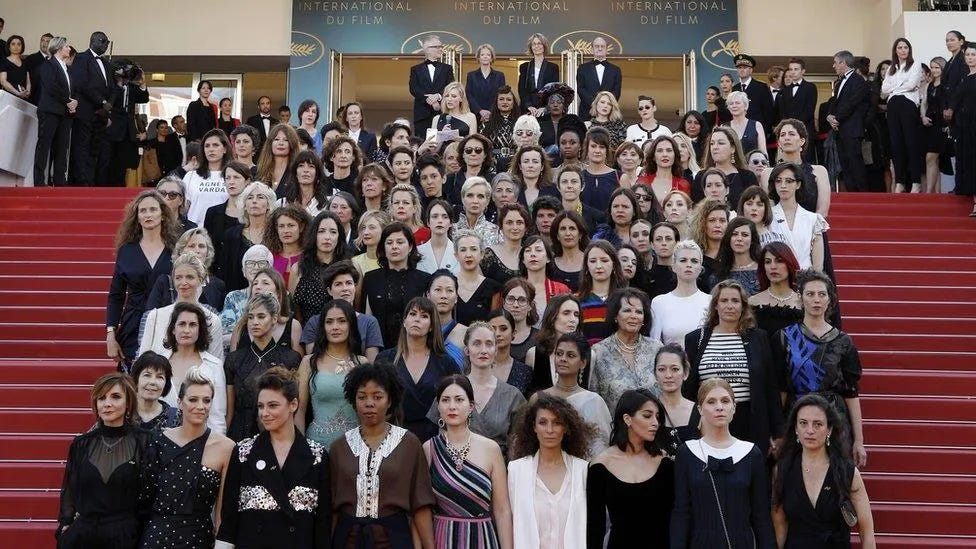
So yes, the bar is likely a bit higher for Curry Barker, whose first feature Milk & Serial (budget $800) premiered, for the record, on YouTube, to get into even a sidebar section like midnight at Toronto with Obsession, his second feature.
David cites The Substance as an example of a female-helmed movie that could have broken out at a similar level with the same opportunity. But did its director, Coralie Fargeat, really have less opportunity?
Her first feature Revenge (budget $3m), quite a fun movie, premiered in the same Toronto midnight section as Obsession, before her second film moved on to competition at Cannes, the most prestigious festival premiere in the world.
The Substance is a Very Bad Metaphor:
David’s core argument relies on The Substance, a female-directed horror film, as a counterfactual to Obsession:
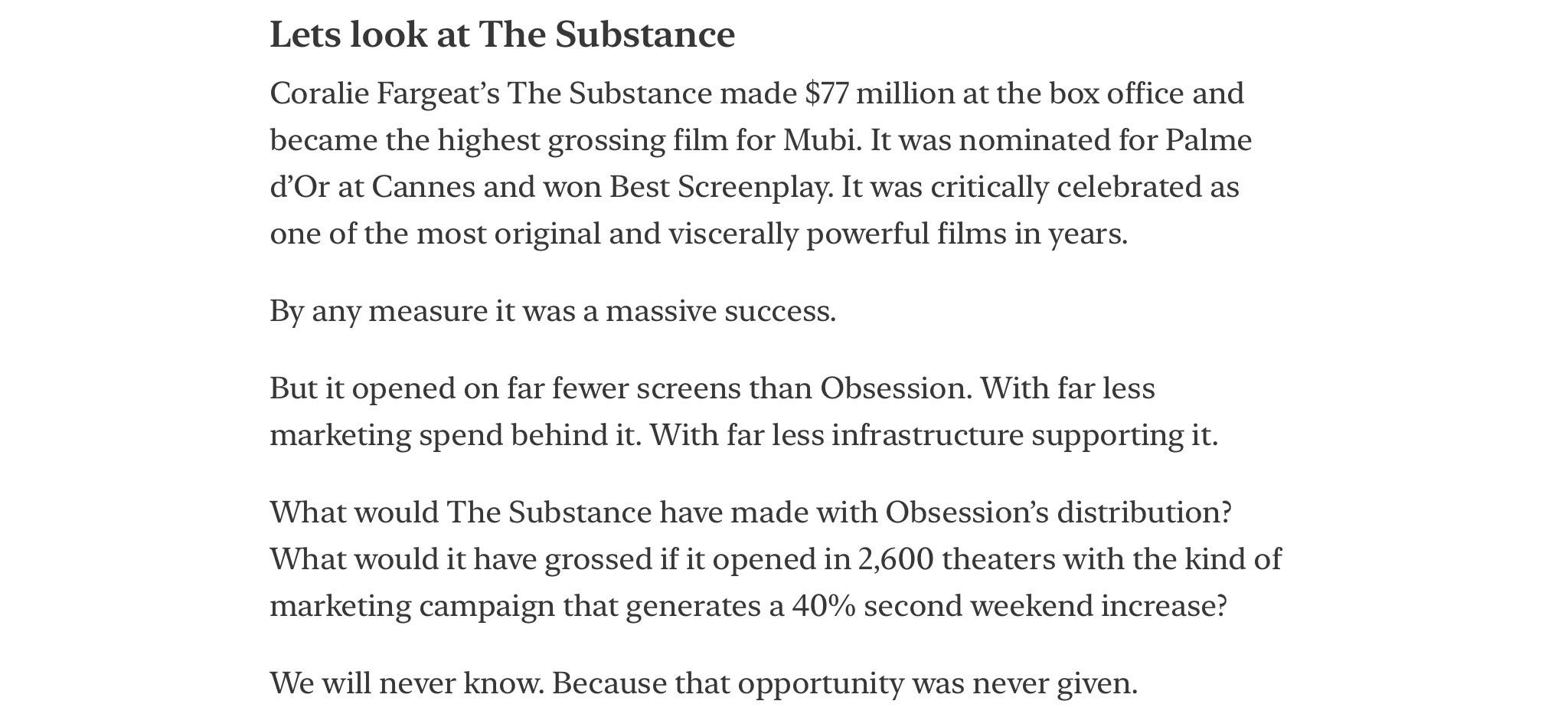
I think the Obsession comparison and the screen-count mechanism under it don’t hold up, and the numbers are worth walking through.
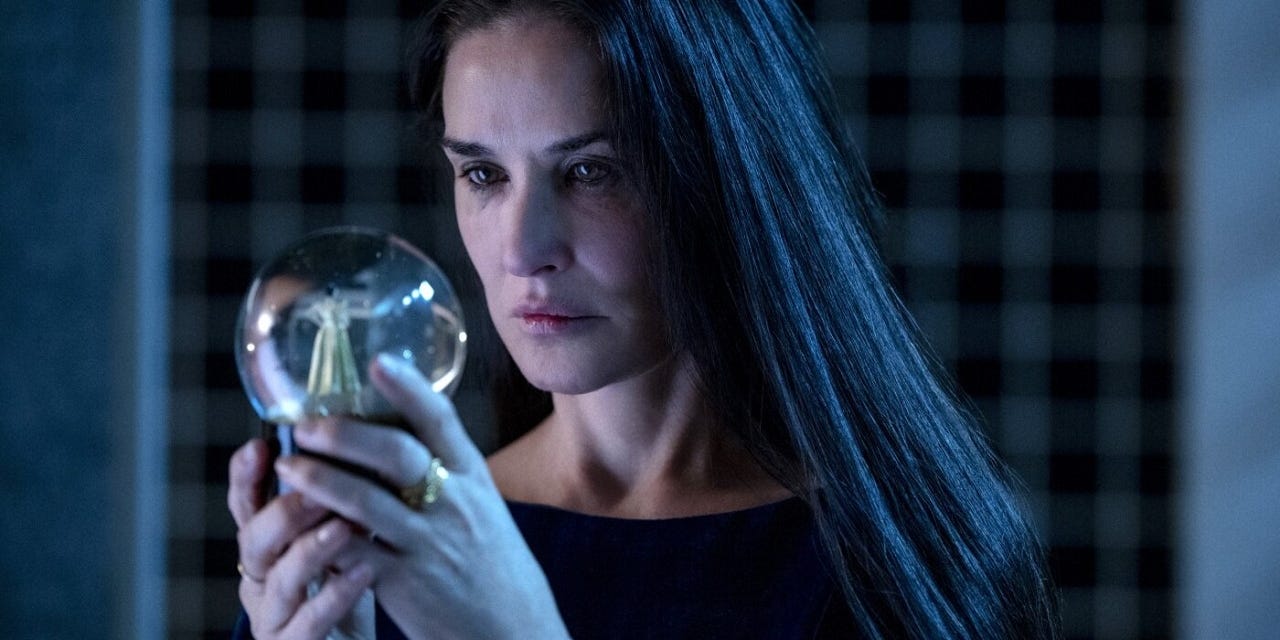
The Substance wasn’t a film the system starved and ignored - Collider reported its production budget at $17m, which means it had 22x the budget of Obsession. It also had an Oscar-caliber star in Demi Moore, and a Cannes competition premiere, where it won Best Screenplay. It’s a female-directed film the industry handed real money, a star, and the most prestigious launch on earth. Mubi also pushed hard for it at the Oscars, with five nominations including Actress, Director (rare for a horror film), Screenplay and Picture, with a win for Makeup.
David uses the Slated piece to defend the idea that The Substance got a smaller screen count, and with the screen count and marketing budget Obsession got, who knows how far it could have gone?
But screen count is where the math really turns against the thesis.
The Substance opened to $3.2M on 1,949 theaters: about $1,645 per screen. Obsession opened to $17.2M on 2,615: about $6,577 per screen. Per screen, Obsession beat it nearly 4 to 1. So if I run the counterfactual the other way - give The Substance Obsession’s 2,615 screens at its own per-screen demand and it opens to about $4.3M, still a quarter of Obsession’s opening weekend. More screens don’t close that gap, because the gap is audience demand.
Take Nia DaCosta's Candyman, one of the highest-grossing female-directed horror films ever made (she was 31 when it was released). It opened on more than 3,500 screens — nearly 900 more than Obsession — and it opened bigger, too: $22 million to Obsession’s $17 million. It had everything the distribution-gap story says women's films are denied: a wide release, an established horror franchise, Jordan Peele's name attached, and a $25 million studio budget, some thirty times what Obsession cost. And it finished at roughly $77 million worldwide - about a quarter of what Obsession has made so far. More screens, a bigger opening, a brand, a star producer, thirty times the budget, and a fraction of the result. The wide release was right there. What Candyman didn't have was Obsession's legs, and no screen count manufactures those.

And that demand was real, not bought: Obsession earned more in its second weekend than its first - roughly 39% more, a hold almost unheard of for horror. Crazier still, it rose again in its third weekend — the first non-Christmas wide release since E.T. in 1982 to post increases in both its second and third weekends.

Marketing front-loads an opening weekend; what it cannot manufacture is a positive second-weekend swing. That's word of mouth - audiences telling other audiences to go. The films with the most money behind them are the most front-loaded, not the least: as Comscore's Paul Dergarabedian puts it, the biggest openers tend to drop hardest - “the bigger they are, the harder they fall.” A second-weekend gain, let alone a third one, is the one thing a marketing budget can't buy, and hasn’t since 1982.
None of this means there's no problem. I think there is one. But Obsession is a $750,000 movie that beat The Substance nearly 4 to 1 per screen, tied Candyman per screen on 900 fewer theaters, and made back more than twenty times its budget in a single weekend. Whatever that proves, it isn’t that a lack of distribution is what’s holding women’s films back.
None of that makes David a bad-faith reader; for the fuller pro-distribution case, read her piece and subscribe to her Substack, it's genuinely good.
But a decade-old, unsourced infographic can't carry a 'could only happen to a man' headline.
Things Have Actually Improved for Female Directors:
David goes on to cite the Annenberg study:
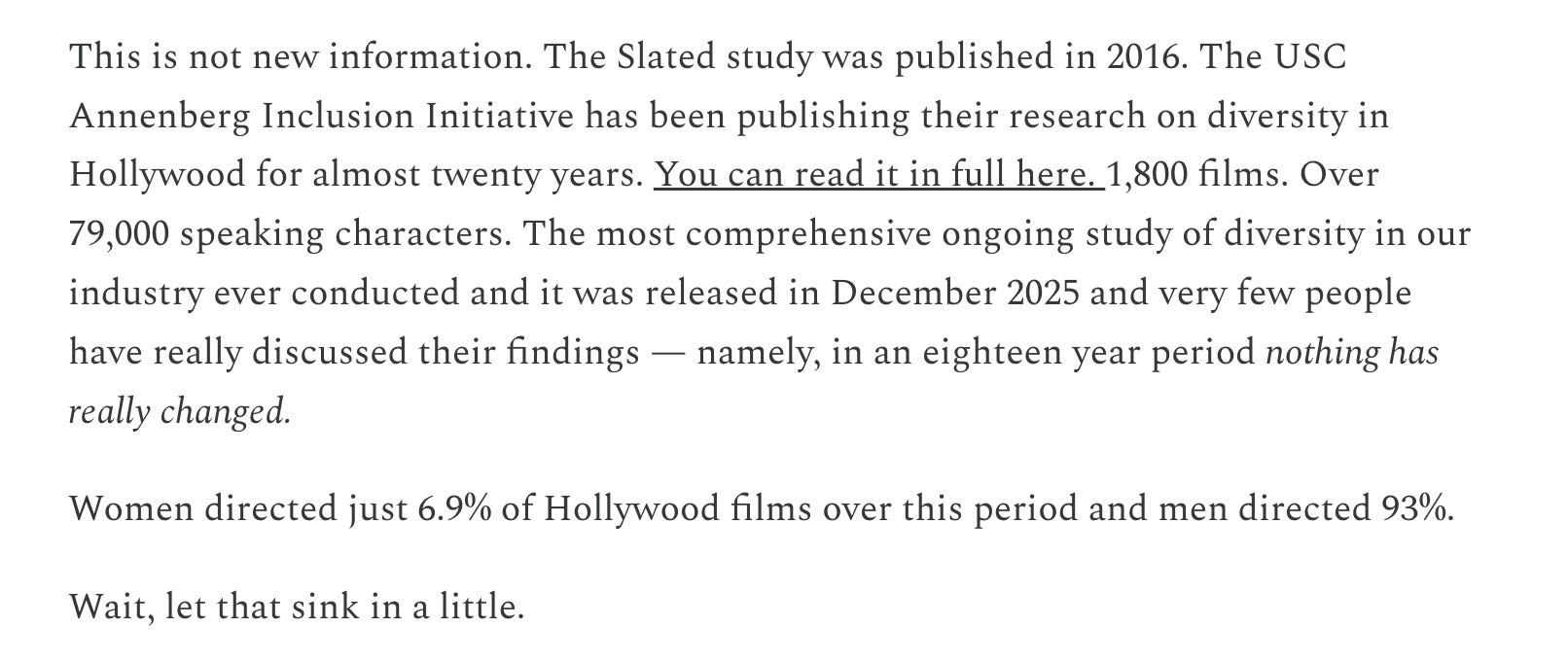
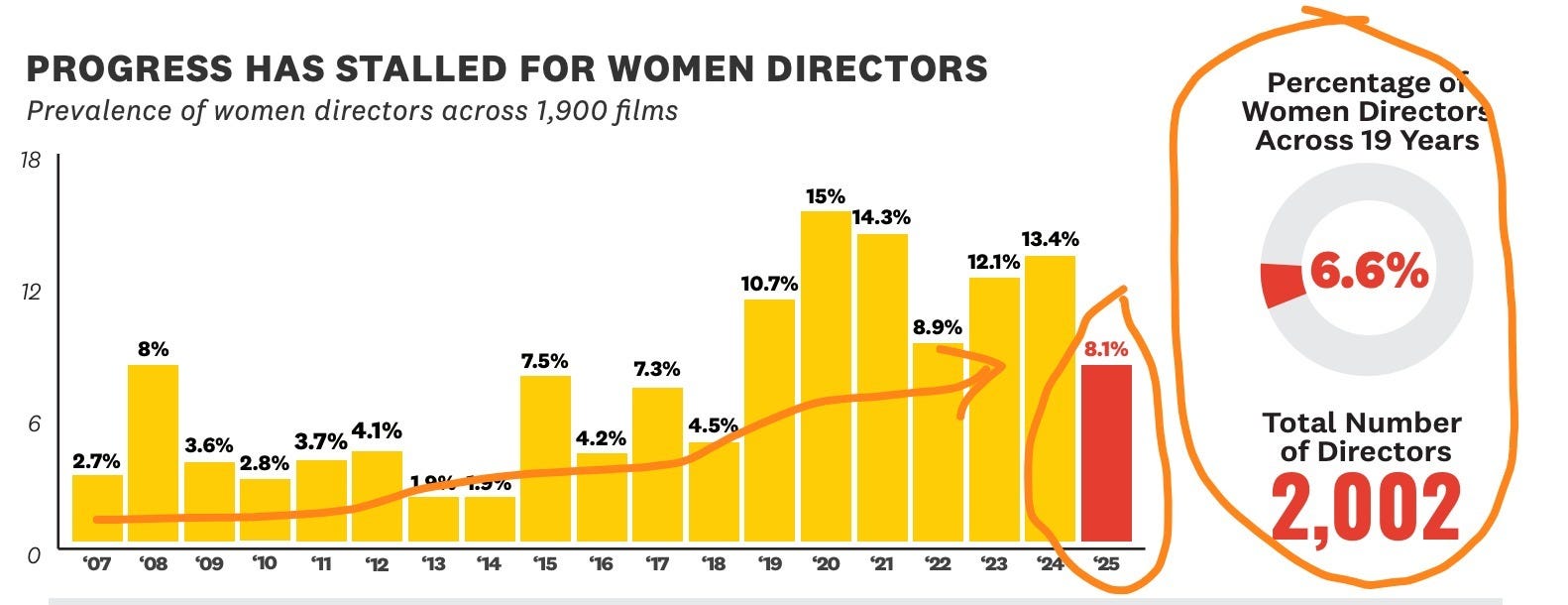
Again, from my Annenberg piece:
The right way to read a series this jumpy is to stop reading single years at all. A one-year move - up or down - is mostly noise; the signal only emerges over multiple years. Like all data you can read it several ways, but a more meaningful way is to look by decade:
2000s: ~4.8% female | though this is only 2007–2009 (2.7, 8, 3.6), and adding the earlier years would likely drag it down.
2010s: ~4.9% | almost zero progress.
2020s: ~12.0% | holy crap! More than double the decade before! Hallelujah!
That’s the signal: a decade of stagnation, then a genuine boost.
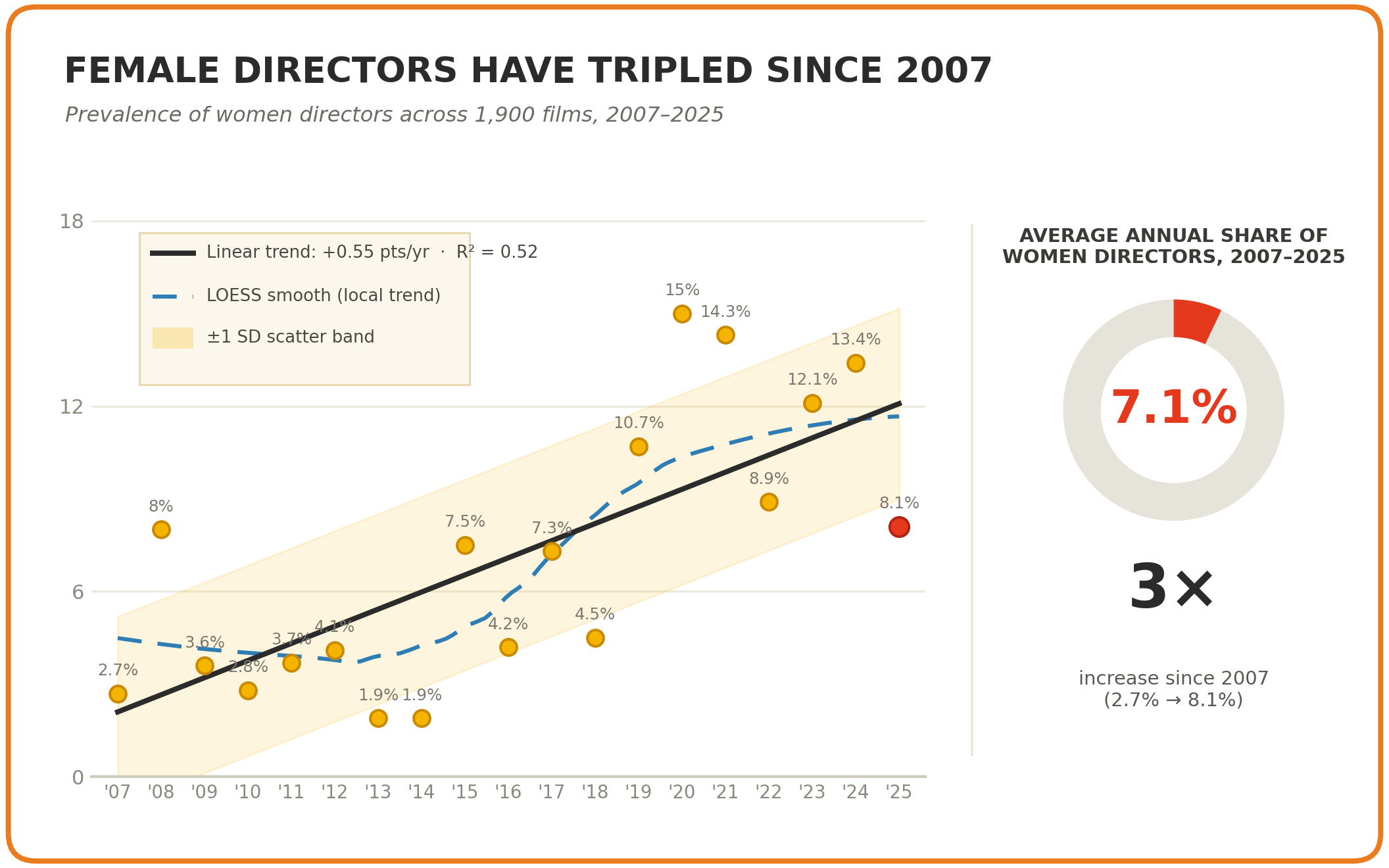
Even if you insist on the cruder, single-year endpoint version - 2.7% in 2007 to 8.1% in 2025 - the number of female directors still TRIPLES. Amazing!
Year over year it’s about 0.3% growth. And 2025 was a weak year, so that 3x is a conservative read.
Which is what makes that 6.6% Annenberg chose to highlight so strange - the one number they lead with on the right. It’s a nineteen-year pooled lump that blends a 2.7% world and a 15% world into a single figure describing no single year on the chart and no direction the data is moving.
Here’s what the same chart looks like, interpreted more honestly:
David, like Annenberg, also mistakes noise for signal:


But blockbusters take an absolute minimum of two to three years to make. This year’s count reflects greenlights from years ago, which Annenberg itself concedes were locked in before the 2024 election. So the “backslide” reflects bets placed years ago, not some fresh wave of discrimination anyone could plausibly pin on the current moment.
And none of the top directors, men included, make a massive movie every year anyway. It’s physically impossible, and even if they could, they’d drop dead.

So why does Annenberg treat these one year variations as catastrophes? Well, one explanation might be that the study is published every year, and thus needs new headline findings.
Gradual, statistically noisy progress (what’s actually happening) is far less catchy than catastrophic headlines.
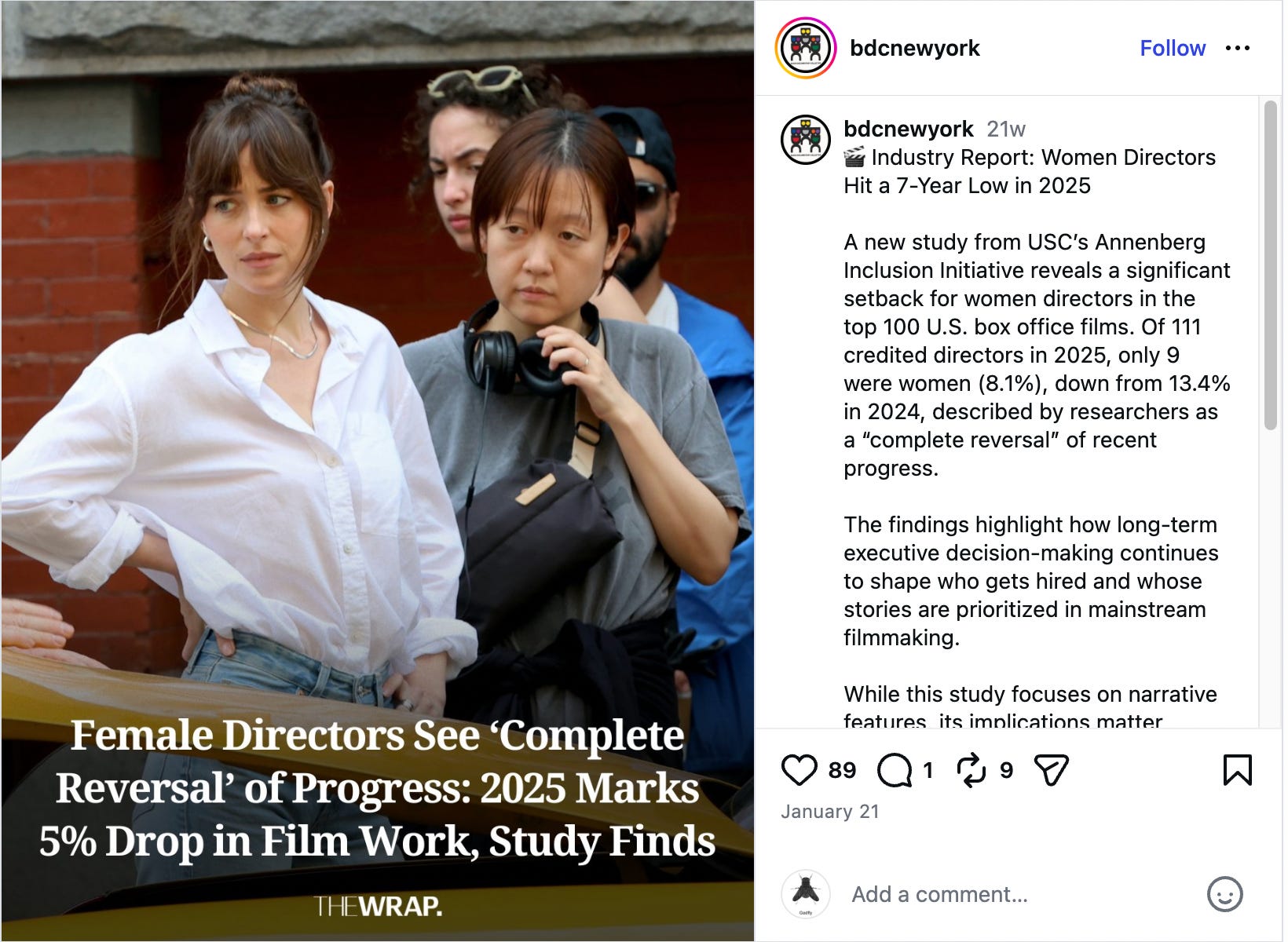
Imagine the truthful headline: “things are gradually improving for female directors, but in a lumpy way, on the order of around a quarter to a half a percent a year.”
Is that going to generate clicks for the trades? Probably not.
The Performance Argument is Far From Settled
David cites a series of anecdotal successes to prove that women can perform at the box office:
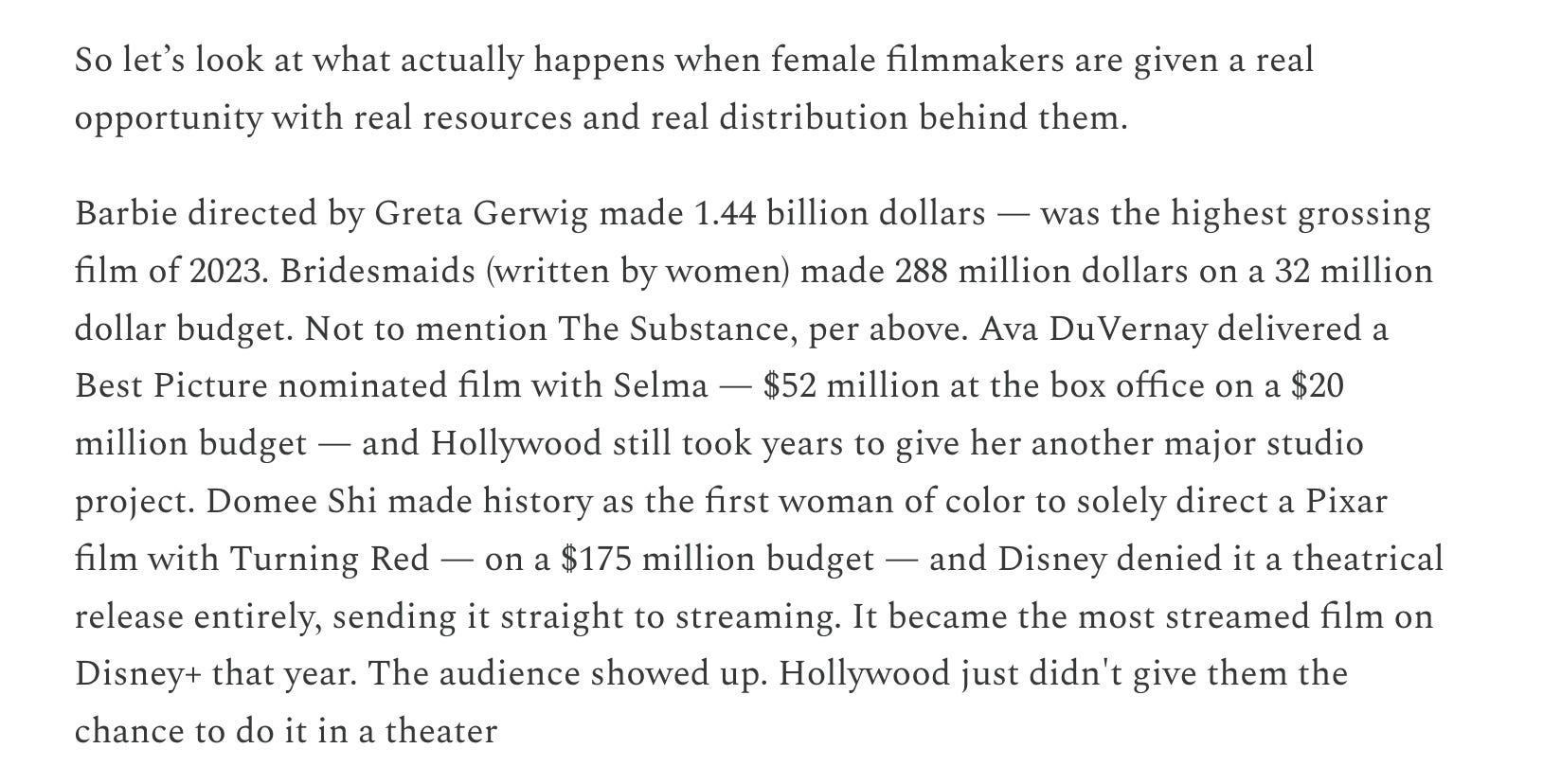
I could nitpick a lot: DuVernay directed 13th, a documentary, between Selma and A Wrinkle in Time, which was released only four years after Selma and bombed, likely losing Disney around $70m. Turning Red was denied a theatrical release because of Omicron, not the director’s gender. Why would someone spend $175m on a movie, then deny it a money-making release because they suddenly realized the director they’d been working with for years was a woman?

There are equally prominent counterexamples. As I wrote in my piece “In Search of the Female Directed Blockbuster,” the three women who have solo-directed Marvel films - Nia DaCosta, Chloé Zhao, and Cate Shortland - each received budgets comparable to major Marvel productions. Yet The Marvels, Eternals, and Black Widow all performed substantially below the historical Marvel average, with The Marvels becoming the franchise’s lowest-grossing film.

There are important caveats here. Like Turning Red, Black Widow was released during COVID, Marvel’s overall performance has declined since Endgame, and individual films succeed or fail for many reasons unrelated to gender.
Which is exactly the point. David’s anecdotes and mine largely cancel each other out. A handful of successes or failures cannot tell us whether women are systematically treated differently by the market. We’d need broader, better data to answer that question. Fortunately, the number of female top-grossing directors is growing, however lumpily, and more of that data will soon be available.
We Need Better Data, and More Optimistic Narratives
Activist pessimism may have been helpful in the 2010s, but the data underlying it is poor, and its narrative is depressing.

Again, I’m criticizing these studies because I now firmly believe that bad data leads to bad assumptions leads to bad outcomes. I list several constructive ideas in my Annenberg Ouroboros piece for how to fix this broken system, and to build better pipelines for female directors.
To David's credit, the highest-ROI films ever made - Paranormal Activity, The Blair Witch Project, Halloween, Mad Max, Rocky - were all directed by men. I think that's a problem. But we need better research to understand why.
All this is to say that just because there hasn’t been a female Curry Barker yet, doesn’t mean there couldn’t be one. The data simply doesn’t say that. Nia Dacosta, Jennifer Kent, Julia Ducournau, Coralie Fargeat, Karyn Kusama, and Rose Glass have all made successful art house horror movies. Perhaps one of them, or another woman, will make a top-grossing Obsession-like movie in the coming years.
Hopefully, the lumbering infrastructure of nonprofits and Hollywood will start supporting more women who want to do that.
I think Obsession is overhyped. I’ve been a festival regular for years, and there’s always much stronger material in the Midnight Madness section, including films that don’t get distribution. And judging by the accounts that Curry Barker underpaid his crew and didn’t own it, he’s not getting another cent from me.
Back to the topic, I do think that most casual moviegoers don’t even know who made the movie, unless it’s already a famous figure and the marketing campaign leads with that. Otherwise, it’s really about financing and a prestige cast that gets the movie seen.
I’d be interested in the gender breakdown of people pursuing a career as a director at the *absolute beginning* of the pipeline, and how different selection points in the pipeline change the gender breakdown.
For example, how many men vs women want to become directors in the first place? Whether you measure that by film school applications, or people posting their first film to YouTube, etc.
Then, as the financial risks and opportunity costs mount for what else you could be doing with your prime earning years, how many men versus women still pursue careers as professional directors?
Men are vastly more likely to go into other risky professional careers like poker playing, Wall Street trading, and extreme sports. It would be logical that more men gamble their time and money trying to make a hit in Hollywood.
And that’s before you control for how much audiences like their films. People who make financially successful movies are more likely to get financing to make more successful movies. That may not be perfectly gender-balanced either.
None of this is to discourage individual women from going into filmmaking. People should pursue what they love! It just seems naive to expect men and women as *populations* to have perfectly balanced interests, risk tolerance, and so on, and for that not to have an outsized impact on their resulting career paths.