

Skip Institutions, Build Audiences
How the New Horror Filmmakers Sidestepped the Hollywood Gatekeepers

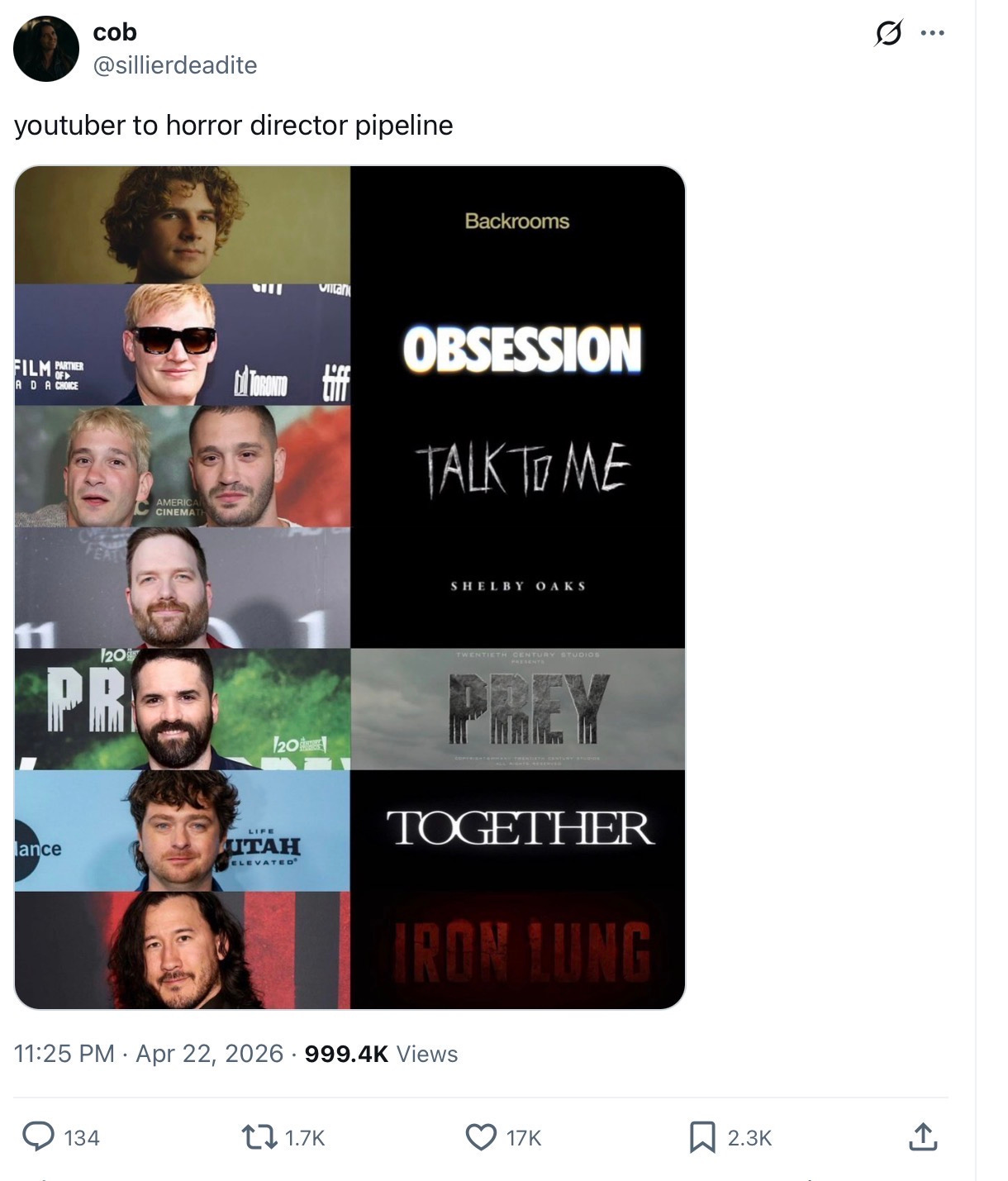
Recently, a meme circulated showing a group of young horror filmmakers breaking out through YouTube instead of traditional Hollywood gatekeepers. What stood out wasn’t just the image itself, but what it seemed to signal: a growing shift in 2026 toward audience-first filmmaking that bypasses film festivals, development labs, and other institutional entry points into the film industry.
The traditional path from independent film into Hollywood still runs through film festivals, markets and curated industry programs. These institutions often function as gatekeepers for emerging filmmakers, shaping which projects gain visibility and funding.
The image below seemed to challenge that entire framework.
The unintended consequence
The irony is that the same system that once functioned as the primary discovery layer for emerging filmmakers is now easier to bypass than to navigate.
Submission fees, long timelines, and low feedback rates are not new, but they matter more in a world where alternative discovery paths exist.
Because for the first time, a filmmaker can meaningfully answer:
“What happens if I skip this entirely?”
And the answer is no longer “nothing.”
So that leaves a second, pretty simple answer, that comes from the filmmakers above; skip the institutions at the early stages of your career altogether.
This is crucial because everyone needs a lot of time to learn their craft, and they should do so as cheaply as possible. Student films at major schools cost tens of thousands of dollars to learn lessons that you could get for 25 bucks: write a good script, cast the right people and direct them well, edit it into the best possible version, market hard and release. Along the way, you can be growing an audience, and learning from them, exactly like what I’m doing on this Substack.
Audience feedback is obvious; instead of going to a festival that you can list on your resume, you might get hundreds of thousands or millions of views, and the people who think they can make money off of your will contact you directly. Obviously this works less well with prestige films, which live off endless institutional validation.
Case study: Curry Barker and the audience-first loop
Curry Barker is the cleanest example of this strategy working, but it’s worth being clear about how it actually happened. He dropped out of New York Film Academy to make youtube videos.
I should say that it’s a near certainty that Barker tried to go the institutional route at least a few times. His films were almost certainly rejected by festivals and online platforms before he uploaded them to youtube, where he was discovered by the traditional Hollywood pipeline.
Old model:
institution → validation → audience
New model:
audience → validation → institution
After building a youtube audience, and making the viral short The Chair, which was rejected many places and then went viral online, where a producer on Obsession discovered it, Barker’s calling card was Milk & Serial, a 62-minute found-footage horror film he and Cooper Tomlinson shot for $800. After a year of working to land a distribution deal, he walked away, then put the entire movie on YouTube for free. It found an audience, UTA came calling, and within a year he’d directed his second feature, Obsession.
What didn’t Barker do to make Milk & Serial? (At least in theory, since we don’t know). Apply to the Sundance labs seven times. Spend $2,000 submitting to festivals. Wait out two years of rejections until the film aged out of eligibility, then wonder why his career was stuck. He didn’t spend a decade chasing the same project over and over and resubmitting. Remember, in the golden days, only 60% of Sundance Lab projects got made.
Sunk cost fallacy is an incredibly powerful force in filmmaking; the more expensive and difficult to make your early short films are, the more intense your desire will be to get some sort of validation. Yes, sometimes that comes through festivals, but you have to be careful investing years in what may end up a chimera.
Barker skipped the entire pay-to-play apparatus - the submission fees, the demographic checkboxes, the labs and fellowships that increasingly screen heavily for identities (there was only one white male codirector in competition at Sundance 2023, versus 50% of submissions) - and went straight to the only people who actually decide anything: an audience.
He iterated quickly and cheaply like a startup, not like a wealthy kid putting several hundred grand into NYU film school, then carefully tweaking their biography and project for maximum compatibility with ideological trends. The more expensive your early films are, the more punishing, both financially and emotionally, they are when they fail.
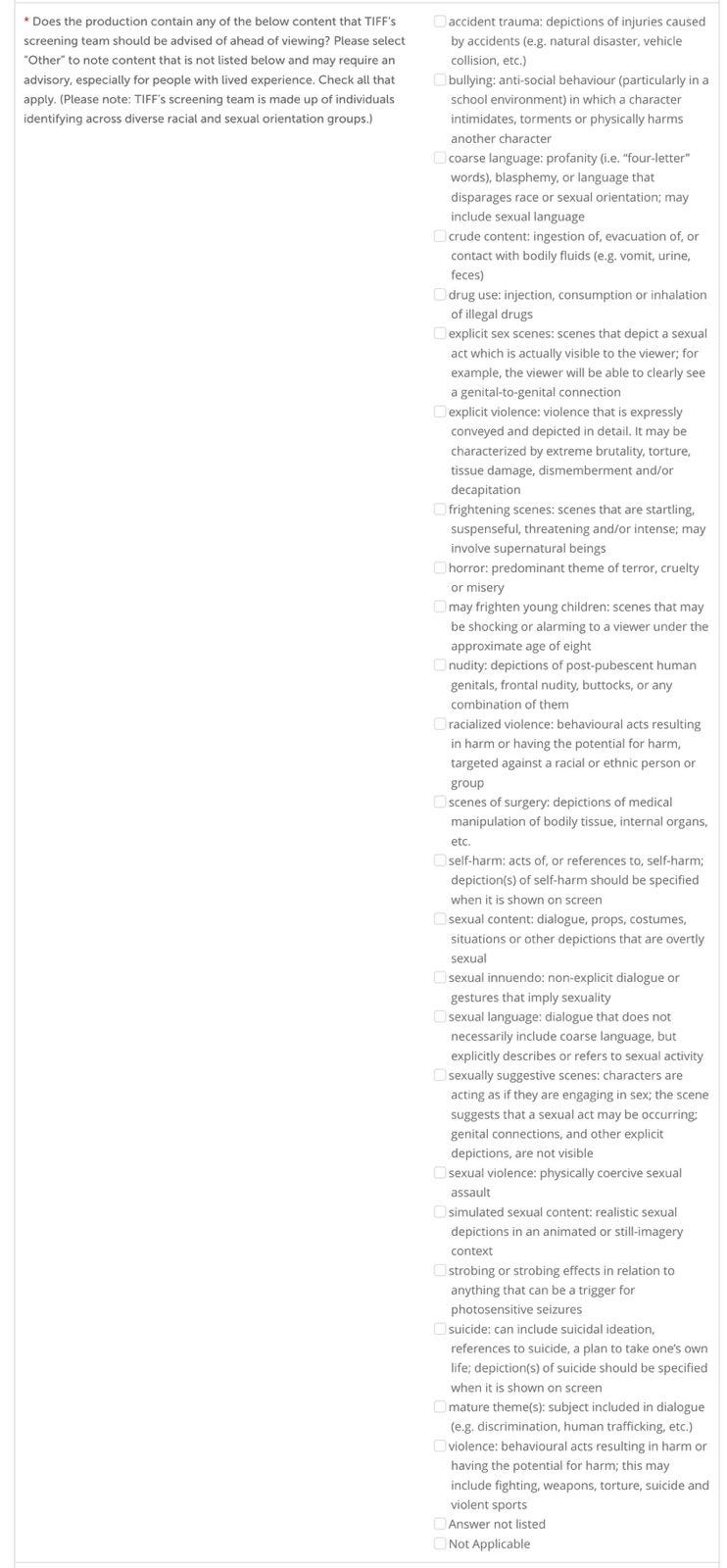
This is what they don’t tell you: festivals don’t program hardly at all from open submissions anyways. Years ago a person I know was at a panel with head programmers from several of the major festivals. Someone asked how many films came from open submissions.
Only one, Toronto, would even answer. What was that answer? 10%.
Here’s the part the gatekeepers don’t want you to internalize: discovery and distribution are two different problems, and only one of them requires their permission. Barker solved discovery for $0. Then, once he was already repped and financed, Obsession did premiere at a festival, TIFF, where it sold to Focus for a reported $15 million.
He didn’t pay $150 and tick a box hoping a programmer would deem him worthy. He walked into an A-list market with a finished film and a deal-making machine behind him, and the festival became a sales floor instead of a velvet rope.
That’s not the system I’m telling you to avoid. The system I’m telling you to avoid is the one that stands between you and your first audience and charges you for the privilege of being rejected by it.
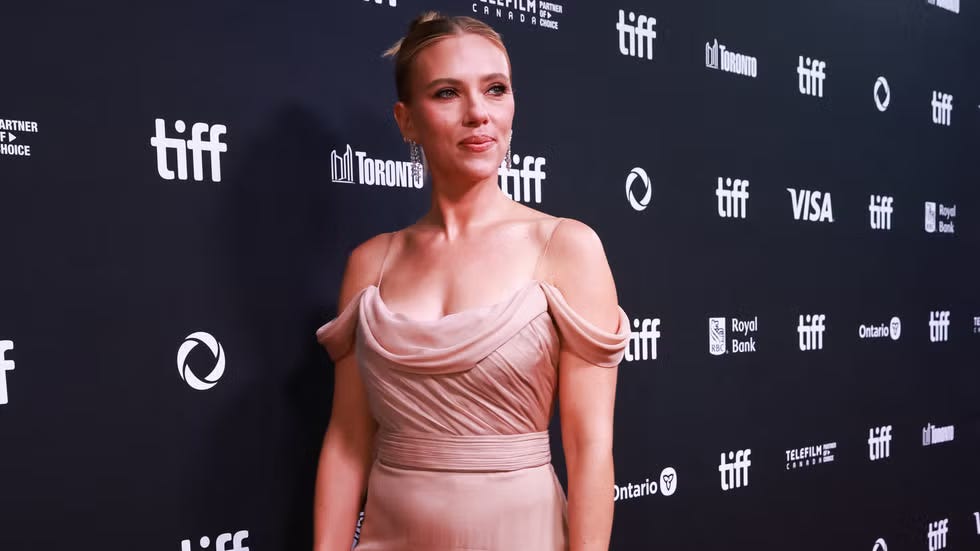
I doubt Barker even filled out a checklist to submit; Toronto took it because their festival needs successful, industry-connected movies to stay relevant. They needed him just as much as he needed them. That’s how his movie was able to compete with a Scarlett Johansson movie.
They take that movie because not taking it could hurt them, and they need Scarlett Johansson to stand in front of a Royal Bank ad or whoever else is giving them money to run the festival.
The important thing; Barker didn’t upload into a vacuum. He and Tomlinson already ran a sketch channel with hundreds of millions of views. The $800 was the production budget; the audience was the real asset, and they’d spent years building it. Which is exactly the lesson.
The festival circuit sells you the fantasy that a programmer’s blessing is the on-ramp to an audience. It isn’t, and it never was - the audience is the on-ramp. Build it directly, on whatever platform will have you, and the gatekeepers lose the only leverage they ever had. A staff pick or a festival selection is cool, but it’s a one time audience.
I’ve had many films play festivals, which cost me a small fortune in submission fees, travel, and therapy over the endless rejection emails. Want to have your morning ruined dozens of times a year? Apply to festivals, and go broke paying for them to reject you.
I now believe that my money should go to two things; my movies, and promoting those movies. A publicist does not have you fill out an extensive application, then wait for six months. Social media ads don’t either. They simply take your money, and, if the marketing and your movie are good, hopefully that translates into eyeballs.
The money you save can go into making another movie, or promoting the movie you’ve made. It’s that simple.
So yes, avoid the institutions. Use the money to build your career outside of them by going directly to audiences. Make cheap things. Iterate. Test. Repeat.
This means that you will have to focus on genres that do well online, and that do well with audiences. Your indie drama that requires stars and a festival premiere will have to be put down (it won’t make money anyways).
Your little crazy comedy or horror, genres that don;t require stars and produce clear, i tuitive responses (laughter and fear) will pick up the slack.
The festivals and labs will generally not give you feedback. The audience, either vocally or through their silence, will. If you find an audience, that is also valuable to festivals, who will then already know you. If you find an audience, that\ is something you can use to advance in the ranks of the gatekeepers.
A major festival selection never was, and is not now, a sudden path to a viable career. It’s validating, but it is not a business. Build a business, and you will have the skills and the income to sustain a career.
And, because this is a Gadfly, Here’s Your Dose of Controversy:
I’ve written extensively elsewhere about how the major film institutions, including festivals and talent development programs, have run a decade-long effort to rebalance away from the white male demographic in my first three posts (parts one, two and three).
My main beef with this is not trying to promote diversity within the industry, it’s not telling the nondiverse candidates that’s what they’re trying to do, and massively winnowing those nondiverse applications in the process. People’s money and time are finite. They deserve transparency around which opportunities are real, and which aren’t, so they can focus their time and money where it counts.
I do believe part of the drive to youtube was a response to this hidden institutional rebalancing effort, which everyone can see, but few can articulate. The irony here that these are all white men is thus multifold. The institutional system actively working to balance out against this demographic may have pushed them to discover a new, more lucrative way around it.
This has happened at various moments in history; Jewish investment bankers, famously excluded from white shoe investment banking firms, invented the roaring bond market of the 80s. Indians expelled from Uganda by Idi Amin built a massive motel empire in the depressed American real estate market of the 1970s.
So yes, these are all white guys, but their strategy can be adopted by anyone, especially those without a ton of money or the will to write 9000 personal statements.
It’s also, very possibly, the future.
Oh man, have I been there. I've never stretched my category in the hopes that I’d be given a chance by people who despised me, but I've definitely considered it. Ultimately, I decided against it. Maybe we both knew it was ultimately futile.
Back in the mid-2010s, when I still thought getting a job in academia was a distant possibility, my gf told me to check the gay box. After several years of sending applications into the void, she told me to check the non-binary box too.
I couldn't do it. Nothing wrong with being gay or non-binary, I just don't think I should have to pretend to be just to be given a chance.
It's insane that the social justice quota activists point to established baby boomers in industries, most of whom are senior citizens, as proof of preference toward the dreaded cis het white male category, and use that to keep out younger dudes looking for their first chance. Good for these dudes for bypassing that shit entirely. As an audience member, I can't wait to see Backrooms.
Thank you for writing this. Your points are well taken for someone (me) who can either wait out an agent wanting to rep my novel and a publisher who wants it - a process that could take another year to two if it succeeds - or can upload my novel and trailer, and and control my own destiny. It’s helpful to read not only success stories, but brave stories.