

The Annenberg Ouroboros
How Hollywood's favorite inclusion study creates a self-feeding outrage loop.


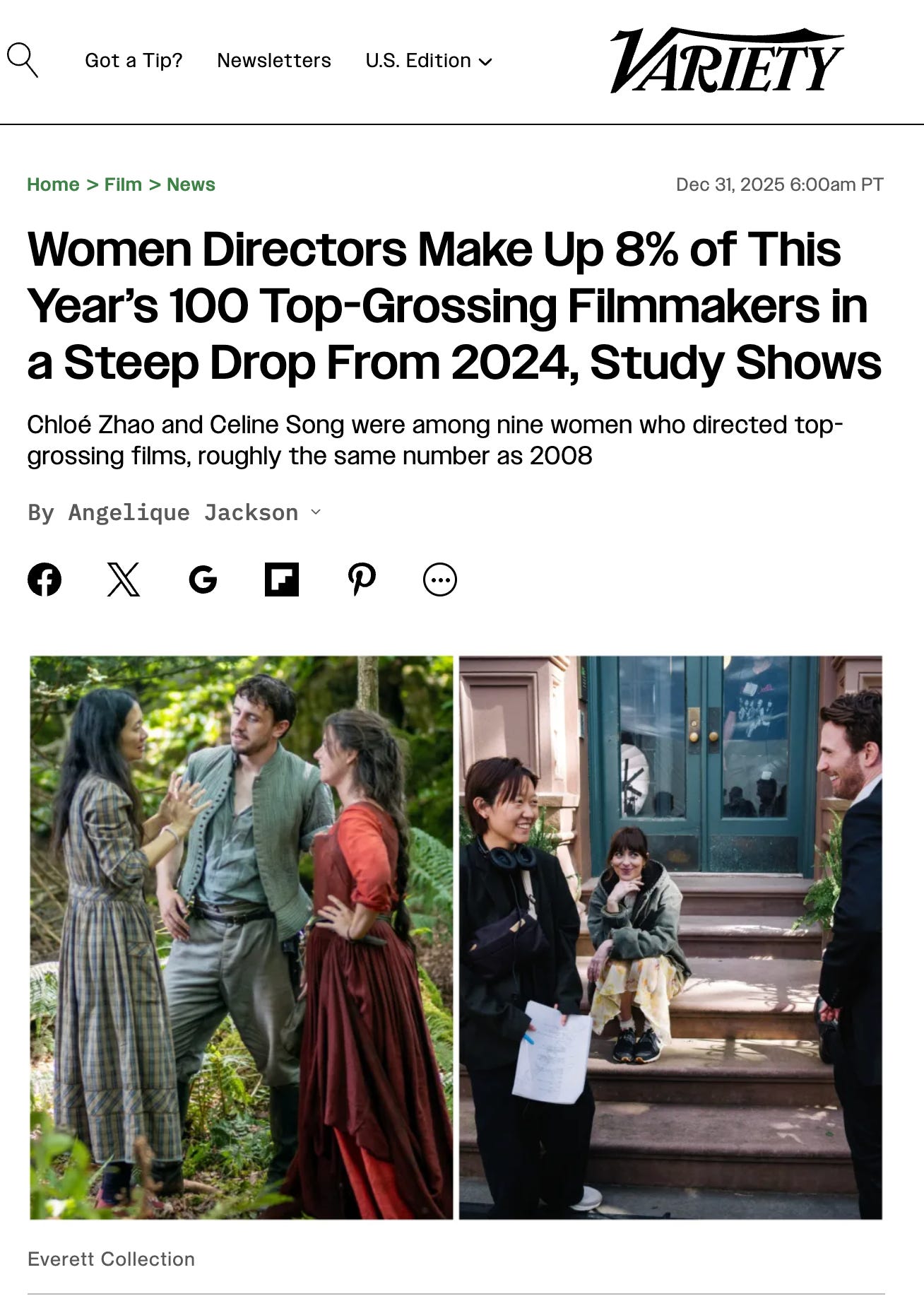
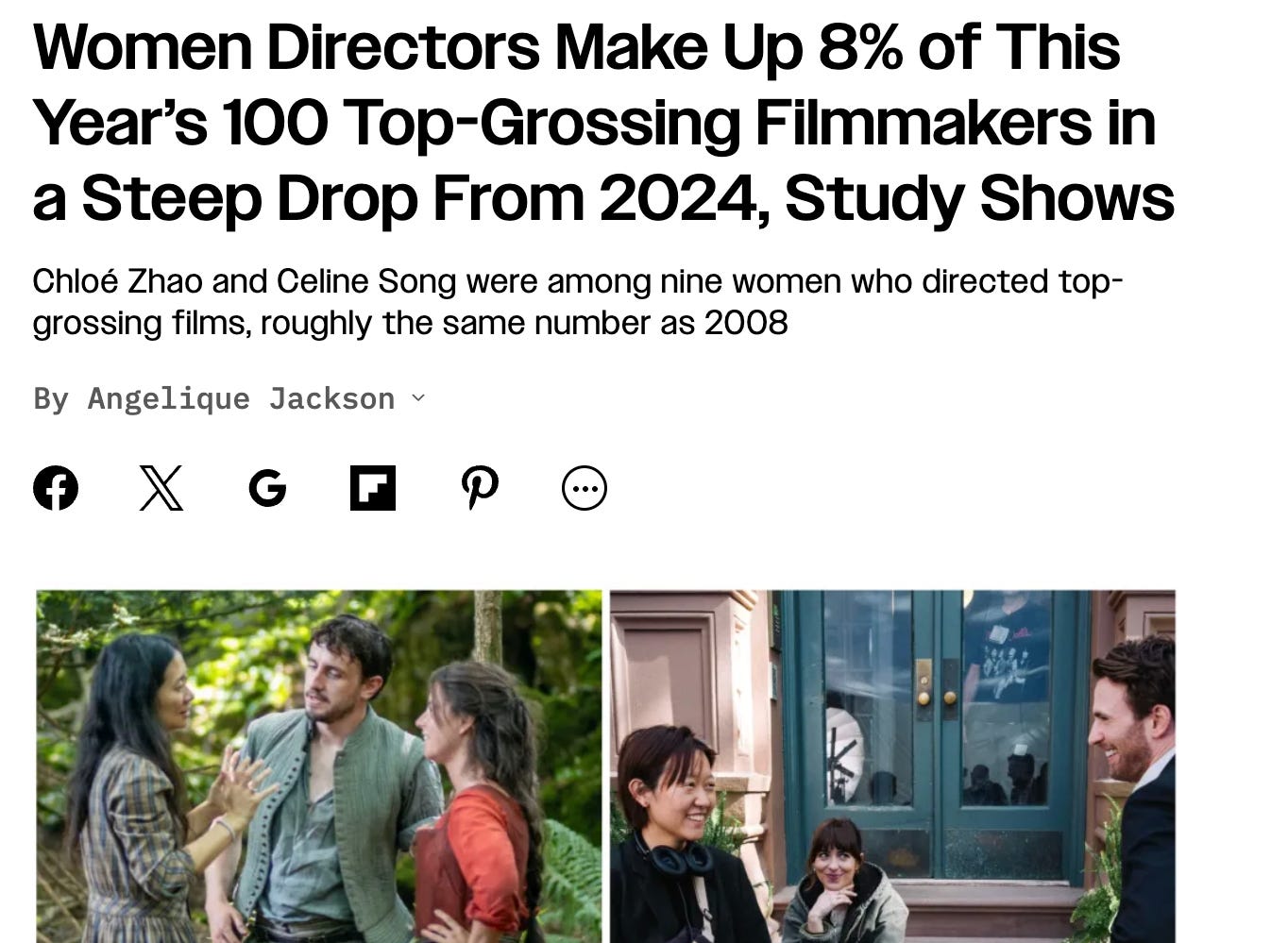
During the inevitable backlash to my unexpectedly viral Chloé Zhao piece, several people indignantly pointed me to the UCLA Hollywood Diversity Report and the USC Annenberg Inclusion Initiative’s yearly survey, which produces yearly headlines like this:
I obviously love data, and controversial subject matter, so I was excited to read them.
But what I found was far worse than I expected, especially for anyone who really cares about solving the issue of female under-representation among top-grossing directors.
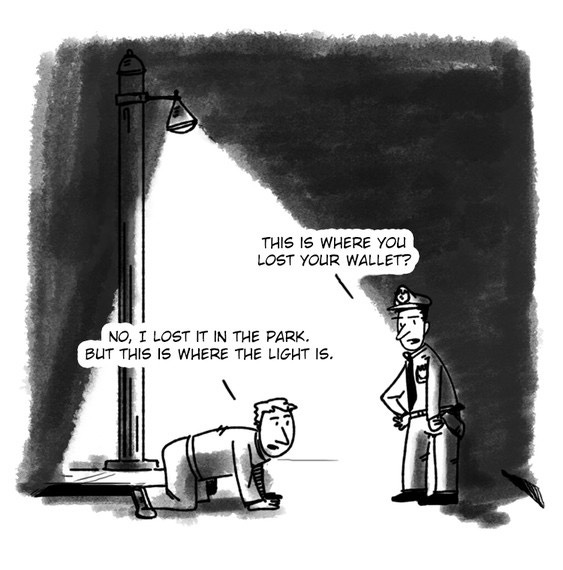
Put simply: IF more top-grossing women is the stated goal, the major Hollywood diversity studies ask the wrong questions, use weak proxies for commercial success, and therefore encourage interventions that do not actually produce more female blockbuster directors. They focus on outcomes, which are easy to measure, instead of processes, which are not. It’s like that old joke:
If we actually want more female top-grossing filmmakers, we likely need to radically redesign our current research. If we want gloom and doom headlines that make us feel self-righteous, then this is what we should keep doing.
The Studies:
The Annenberg Inclusion Initiative is part of USC’s Annenberg School of Communications. Its marquee product - the one that generates yearly headlines - is Inclusion in the Director’s Chair, which tracks the gender and ethnicity of the directors of the 100 top-grossing films each year. Separately, Annenberg partnered with Sundance on a 2019 report analyzing submissions and acceptances to the festival, built on applicant-reported data that Sundance supplied, but neither party verified.
“Inclusion in the Director’s Chair” is regularly cited as borderline God’s truth by activists, the trades, and just about everyone discussing the issue of female underrepresentation in Hollywood. A search on Google Scholar yields 5,660 results, a substantial figure most academics never reach.
The study is divided into three sections:
Hot button data and charts
Key findings.
Solutions for change.

Dr Stacy Smith, who coauthored 2026’s edition with Dr. Katherine Pieper, has been on the circuit with these findings for decades, including a 2016 TED Talk called “The Data Behind Hollywood’s Sexism.” Here’s how the insititute describes itself:
The Annenberg Inclusion Initiative, led by Dr. Stacy L. Smith, is the leading think tank in the world studying diversity and inclusion in entertainment through original research and sponsored projects. Beyond research, the Annenberg Inclusion Initiative develops targeted, research-based solutions to tackle inequality.

Annenberg has grown into dozens of studies, and now includes casting, music, and many other areas.
From TED: “Stacy Smith studies how women are represented in film… starting with a simple headcount.”
Just how simple that headcount really is, we’re about to find out.
The UCLA Hollywood Diversity Report is better organized than the Annenberg study. It actually has a table of contents for one, which is helpful. It’s also broader, including cast, directors, writers, and, crucially, actual box office grosses.
It also has a ton of issues, some of which overlap with Annenberg, some of which are its own. I may address the UCLA Study in more depth in another essay, but its research is less cited, so not today.
I chose to focus on Annenberg because it generates more headlines, and has a much larger, longitudinal dataset than UCLA, which makes it easier and more valuable to investigate its claims. I will focus primarily on its directing study, as that one generates the most impassioned debate.
Again, I think it is an issue how few top grossing female filmmakers there are. But I also think that the entire pipeline of film schools, nonprofits, and film festivals are profoundly flawed if their stated goal is to produce financially top-performing female directors like Greta Gerwig.
And so, so many of this pipeline’s assumptions originate in these studies.
The Annenberg Study
As Annenberg’s most recent study showed, only eight of the top one hundred films in 2025 were directed by women. With one codirected film, there are 9 women total out of 111 filmmakers, or 8.1% of the directors of 2025’s top 100 films.
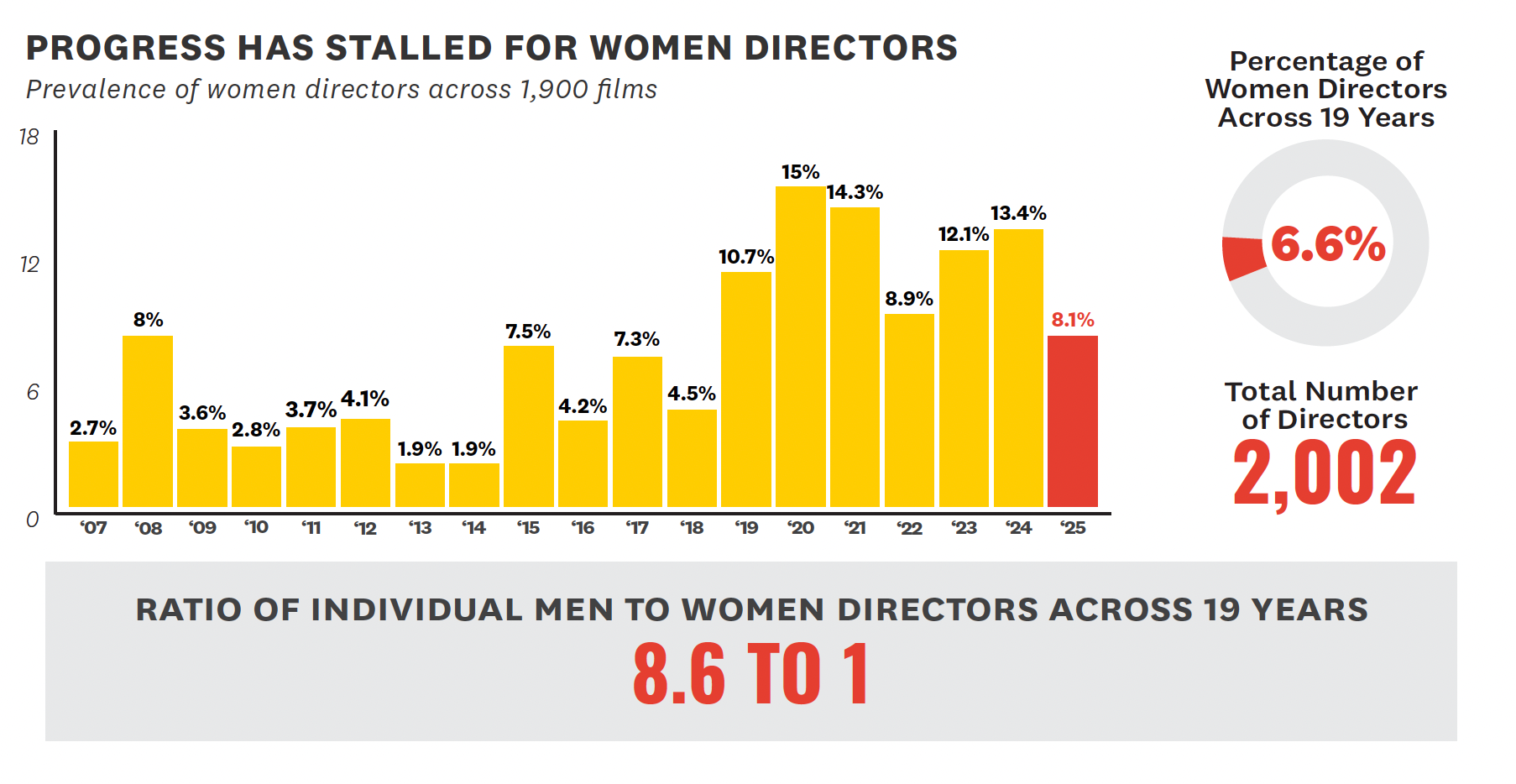
As you can see, they use highly inflammatory language like “progress has stalled” and elsewhere call it a “massive backslide.”
This study’s yearly publication is the beginning of a very unique, self-feeding outrage loop I like to call…
The Annenberg Ouroboros
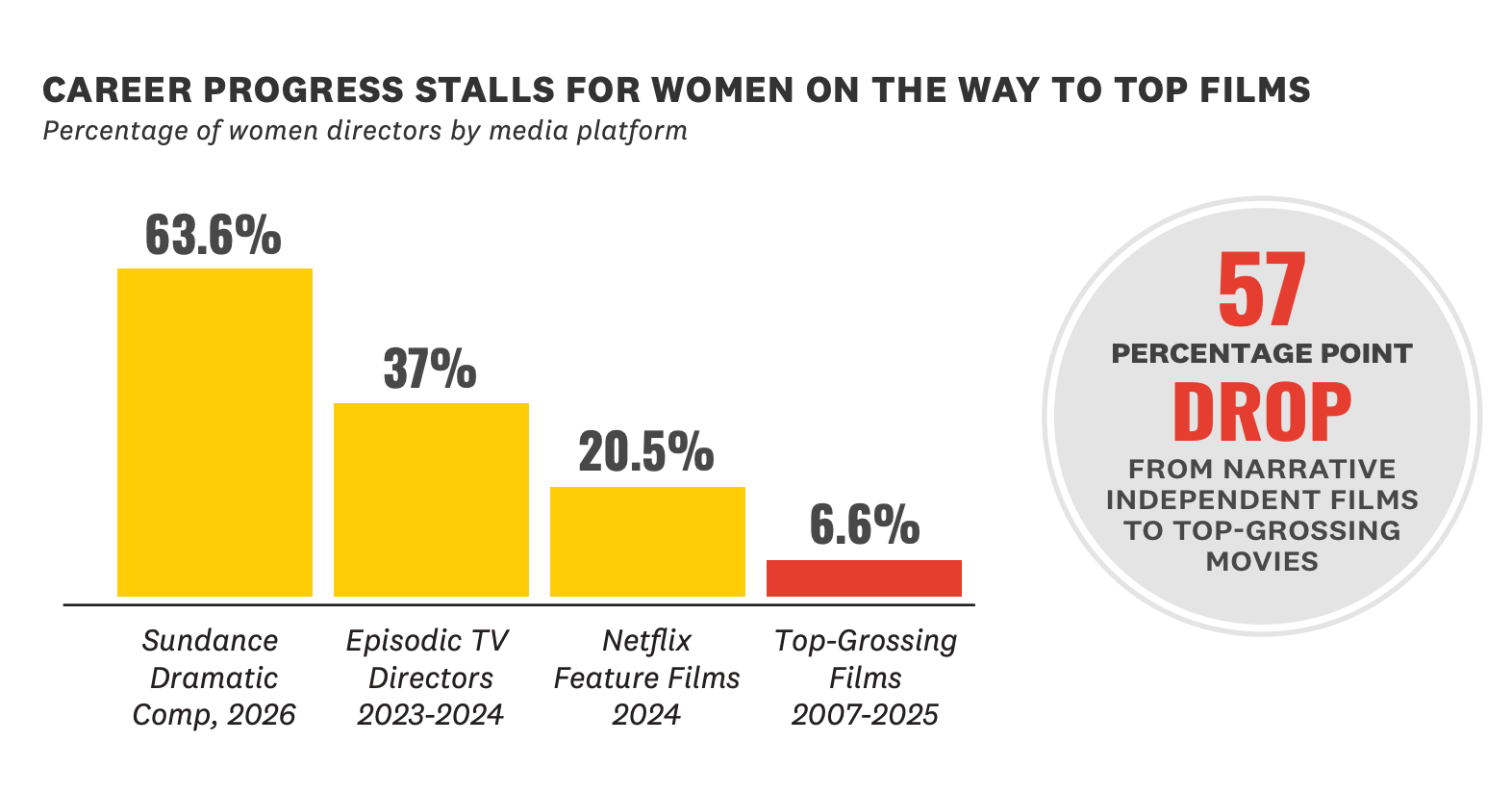
Step 1: The Researchers. Annenberg releases its yearly report. It uses Sundance Dramatic Competition, a tiny, problematic sample (currently 10 films a year), as a flawed baseline for female commercial viability, then implies that, because of discrimination, not enough of those women made it through to the top one hundred most successful box office performers.
Step 2: The Trades publish this dire data unchallenged, perhaps because these documents are a real pain to read, and all the big stuff is already upfront in the charts for them anyways.
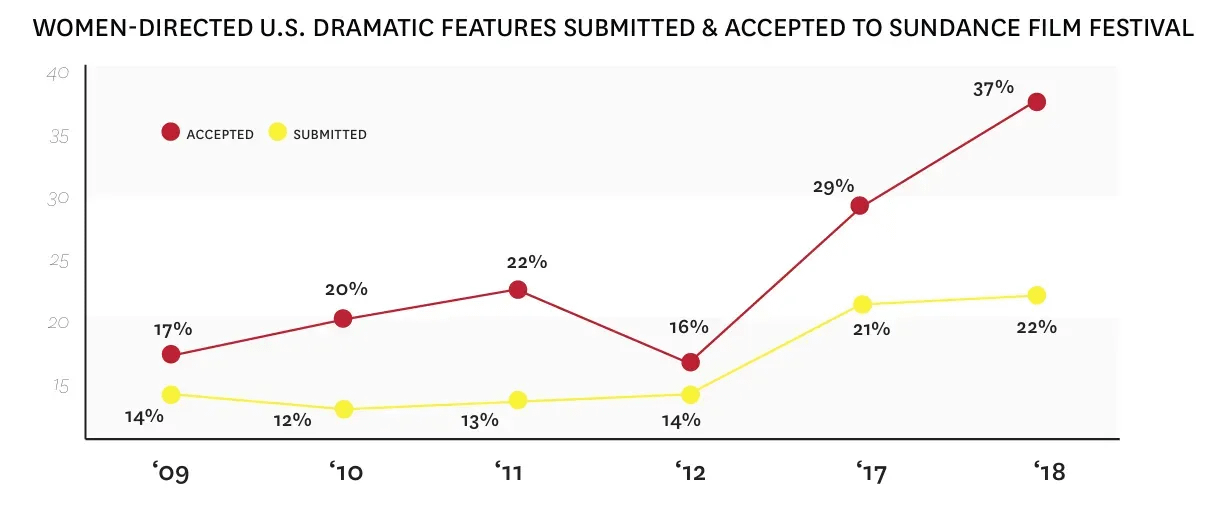
Step 3: The Indie Film Ecosystem becomes outraged, and the industry pipeline of film schools, nonprofits, labs, and festivals spring into action to try and bring in more female filmmakers. Sundance dramatic competition, for one, programs women at a much higher rate than their submissions, as shown in Annenberg’s own data from another study:
But Sundance, just like Annenberg, consistently selects for the wrong traits if the goal is more top 100 female directors.
Step 4: The Industry, which moves very slowly, but is actually improving, while also trying to run a business, largely ignores this new yearly crop of female directors (which is really quite small, maybe 5 to 7 a year).
Why? Well, the industry are the only people in this system with actual skin in the game, using their own money to place bets on who will succeed.
To keep that money, they mostly ignore the female directors from Sundance Competition, who they perceive as commercially unviable, as demonstrated by their box office.
The box office is, of course, one of the only tangible metrics of success in this entire process, one which also can’t really be influenced by Sundance or other nonprofits.
So the industry once again improves very gradually, pulling from a very different, more functional pipeline, which Stephen Follows very intelligently broke down in a follow up post to this one. (Hint: screenwriting and television are far bigger feeders than Sundance Dramatic Competition). Soon another year passes, Annenberg publishes a new study, and the outrage cycle repeats itself.
It’s like the mythological Ouroboros, the snake that eats its own tail. The Annenberg Study sparks the same endless feedback loop, year after year, while the industry actually makes very slow progress, on the order of .3% a year (likely a bit more), from 2007 to 2025, according to Annenberg’s own data.
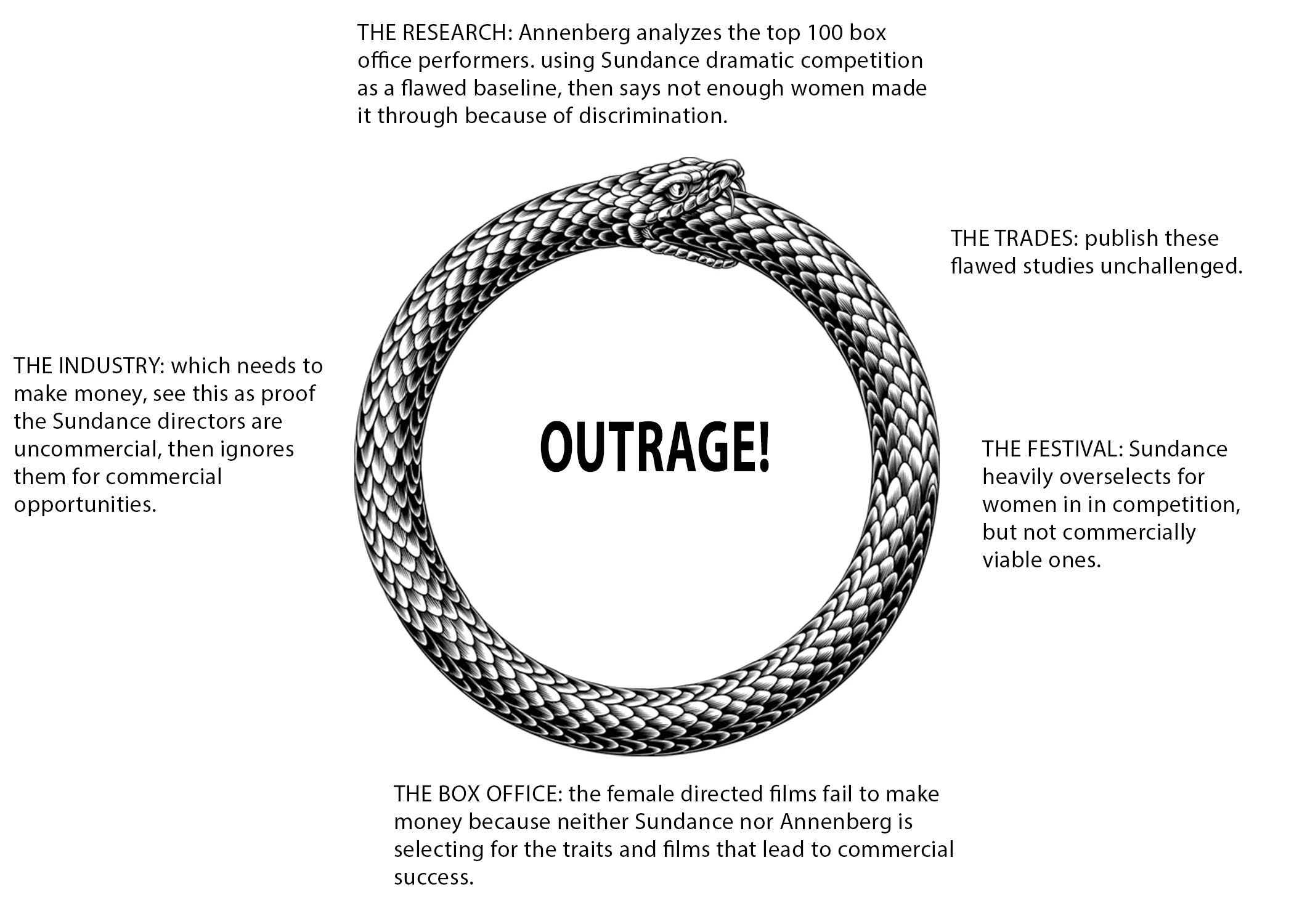
So, now that we understand how this works, let’s get to critiquing this very strange study:
The Top 100 Directors Problem
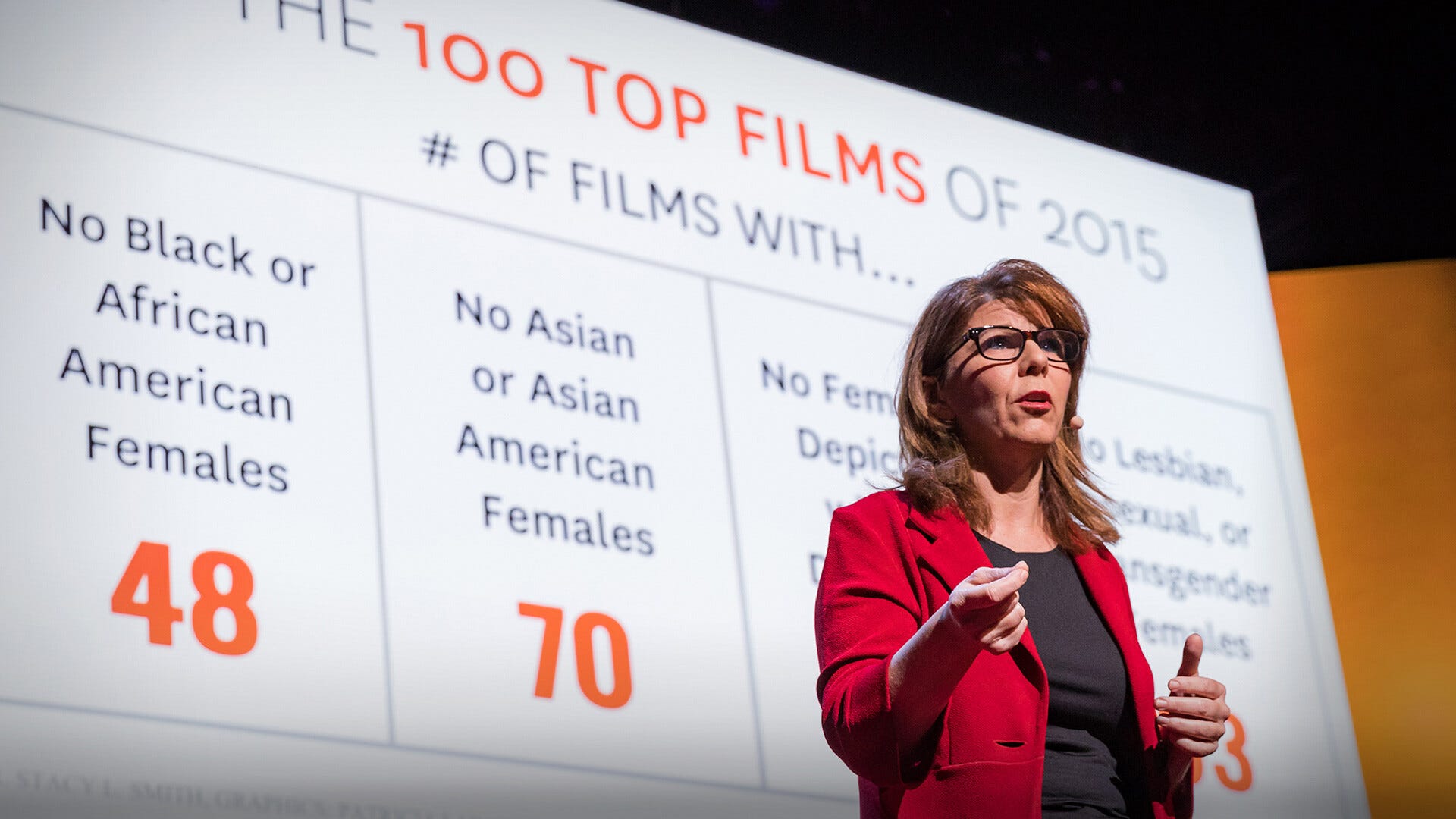
Annenberg only follows the top 100 grossing films every year, which are the absolute end of a very long, intensely-winnowed pipeline of commercially-oriented talent.
The study implicitly assumes that blockbuster directing is the highest order of filmmaking success, and equally desirable to all filmmakers.
Annenberg also assumes making a top-100 film is the goal of everyone who enters filmmaking, and that unequal outcomes thus imply discrimination.
Based on this logic, it’s a failing of the film industry, and evidence of systemic discrimination, if a talented filmmaker like Debra Granik, who made the beautiful Winter’s Bone and the criminally-underseen Leave No Trace, doesn’t direct a Transformers movie.
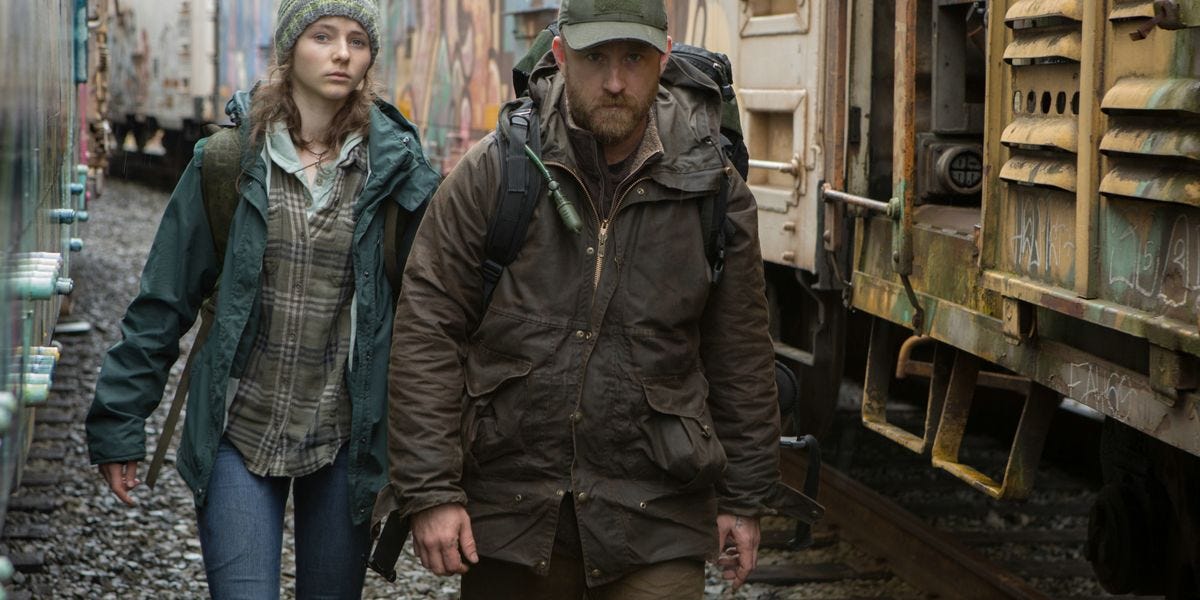
Did Debra Granik actually want to direct Avengers, or does she simply value a different kind of filmmaking?
It’s a bit like saying the only reason classical pianists at Juilliard aren’t next to Taylor Swift in the billboard top 100 charts is because of sexism.
The study treats unequal outcomes as evidence of discrimination, but it doesn’t even establish that women and men, let alone in equal numbers, are pursuing the same goals in the first place. Competition to enter the top-grossing director world is very intense and heavily favors older, proven incumbents. Men and women may even self-select into that pipeline in different numbers. Again, we don’t know, because the study doesn’t investigate this.
For example, Celine Song’s first feature, Past Lives ($42m), was a critically acclaimed romantic drama. Her second, Materialists ($106m), was a romantic comedy-drama, a more commercial genre, with recognizable stars. This is notable because the indie film ecosystem generally requires directors to make films like Past Lives before they can make films like Materialists. Yet it was the latter that moved Song into the top-100-director list.
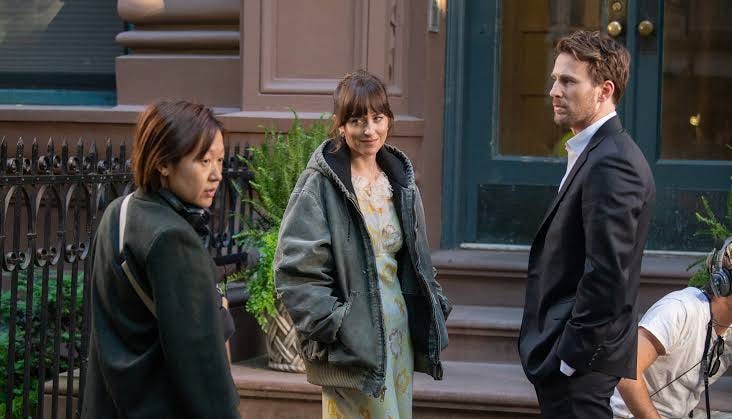
Song’s Materialists is an original movie, and a path that Song actively chose. If she had chosen to spend her cultural capital from the success of Past Lives on a different, more art-housey kind of project, it’s unlikely she’d join the top grossing directors. Would that be a failure by Annenberg's logic?
Again, for many, many reasons, it’s already problematic to use the top one hundred box office performers as a proxy for all filmmaking success.
Nonprofit institutions primarily exist to support artistic films, not commercial ones. That’s a perfectly legitimate goal. The problem arises when those same artistic films are treated as proof of the director’s blockbuster potential.
Sundance Competition Is a Poor Proxy for Blockbuster Success
At various points in the Annenberg study, they use the Sundance dramatic competition as a one to one proxy for talent and future commercial success, then imply that those directors not transitioning into Hollywood blockbusters is proof of discrimination.
In a truly bizarre chart, the study moves in reverse chronological order from Sundance Dramatic Competition 2026, to 2023 TV Directors, to 2024 Netflix feature films, to the top grossing films from 2007-2025.
Just from a basic sense of logic, shouldn’t we start in say, 2020 and follow a cohort chronologically through these perceived natural steps into top-grossing movies?
Wouldn’t that be better evidence for this as an actual pipeline at all? Is there any evidence that this pipeline is real? That it works for men and not women?
Even stranger: only one of the women in the top 100 this year has even had a film in Sundance competition; Chloé Zhao with Songs My Brothers Taught Me, a small film that flopped commercially over a decade ago.
Song’s Past Lives played Sundance, but in the premieres section. Same for Nisha Ganatra’s Late Night. Emma Tammi’s first feature The Wind premiered at Toronto. Hikari’s first feature premiered at Berlin; she’s never had a film at Sundance. Jennifer Kaytin Robinson was a screenwriter whose first feature Someone Great premiered on Netflix. The others came from animation, which produced just as many top female directors as Sundance.
The numbers are real: women do cluster in the lower-budget, lower-risk tiers - 63.6% of Sundance dramatic, 37% of TV, 20.5% of Netflix - and go scarce at the top.
What's invented is the arrow between them. Calling those tiers a "pipeline" and the top-grossing gap a "drop" implies they're sequential rungs a director climbs, so the scarcity at the top reads as leakage — qualified women lost along the way. But nobody climbs these rungs in order.
Gerwig didn't touch Sundance Competition, TV, or Netflix before Barbie; Zhao never directed television; not one of this year's top-100 women walked the ladder step for step. These aren't four stages of one career. They're four different populations, chosen by four different gatekeepers on four different criteria - and a non-commercial showcase feeding a commercial box-office endgame is a simple category error.
Annenberg published an even stranger “pipeline for women directors” in their 2019 study, this time going from the Sundance directors lab, to short films, to dramatic features, to episodic tv, to top grossing films:
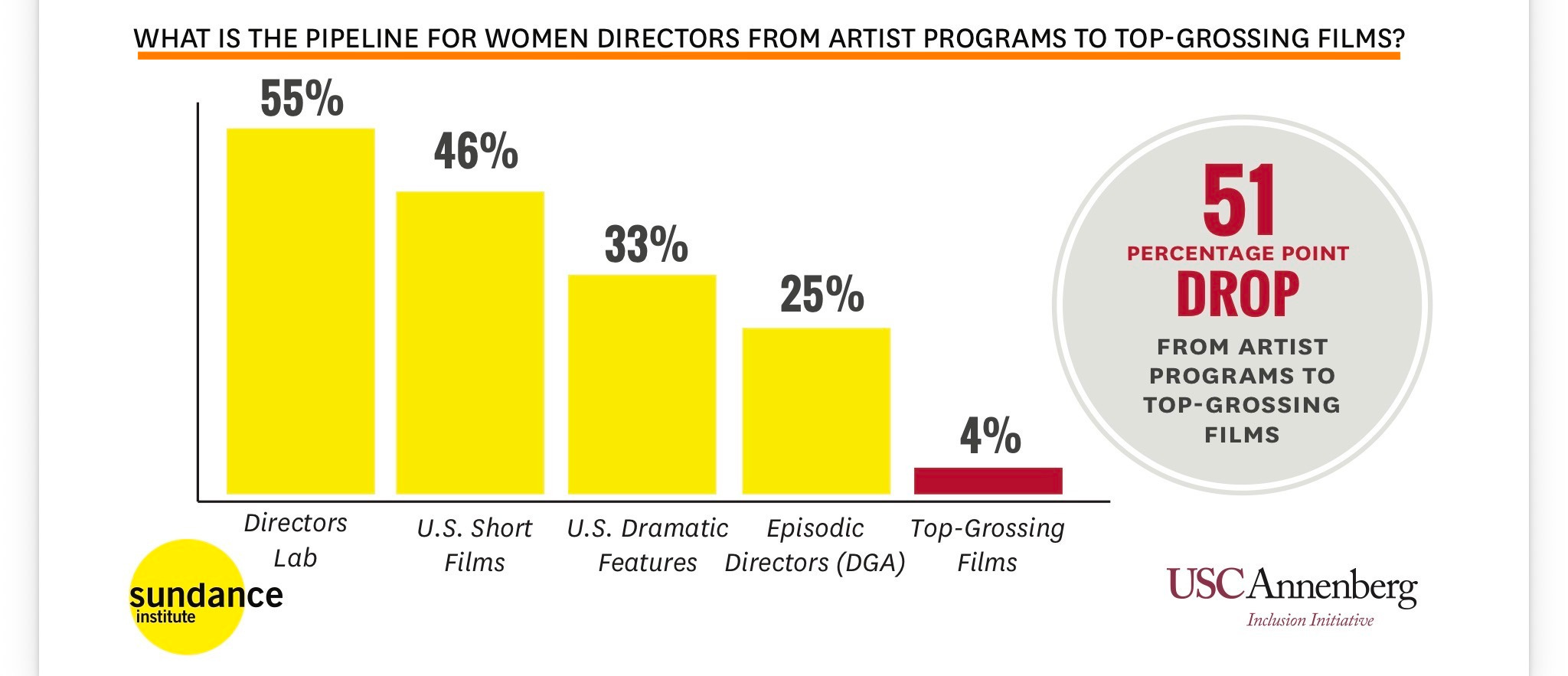
This is what they call a pipeline? The Sundance director’s lab is the natural jumping off point for commercial-minded filmmaking? Before you make short films? It’s bizarre.
That bothersome question of intent also holds true for the other parts of this pipeline; do all TV directors want to direct large franchise movies? Do all Netflix directors? Did Celine Song even know Materialists was going to pass $100m?
Don’t a lot of indie directors use TV as a financial support system while chasing their smaller arthouse projects instead of big franchise movies?
But even more interesting is a crucial, unanswered question:
Why don’t the female Sundance competition directors make it to the top 100?
The study implies discrimination, but presents no real evidence. It never demonstrates, for example, that the Sundance pipeline works better for men than women - a basic comparison necessary to support that claim.
A genuine pipeline study would at the very least compare male and female Sundance directors with similar budgets, genres, critical reception, and commercial performance, then examine whether and how their careers diverge afterward. Annenberg never performs that analysis.
This chart also implies that Sundance dramatic competition selects solely for commercial instincts and does so better than any other talent pipeline. It implies that female Sundance competition directors are the most qualified for and interested in directing blockbusters.
But this assumption is also severely flawed. Sundance Competition is an inconsistent pipeline to blockbusters, and the films skew uncommercial.
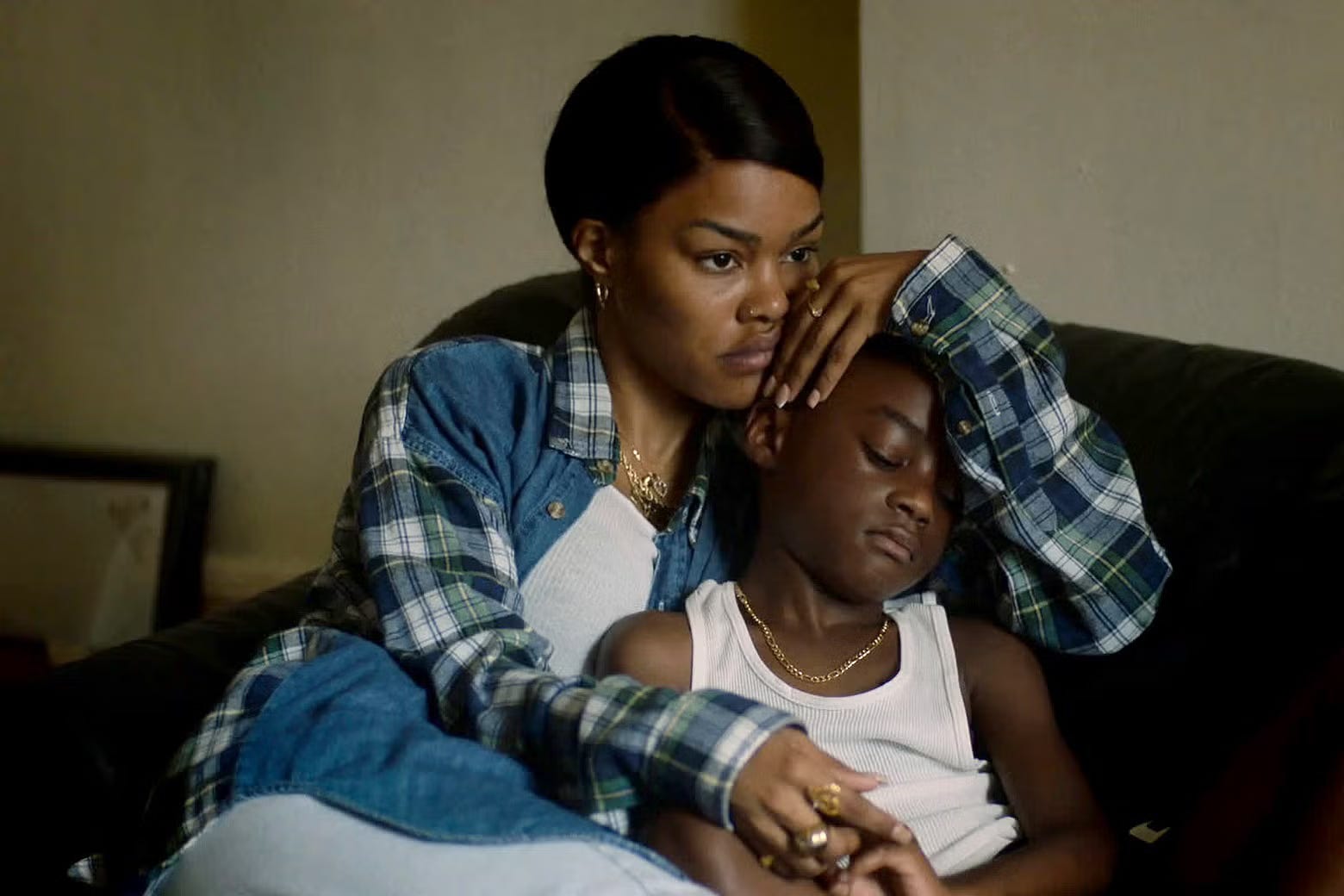
If anything, Sundance competition of late seems particularly bad at selecting for commercial viability, as my study of the 68 Sundance competition films from 2020-2025 has shown. As I wrote then, Obsession, one low budget horror film, has outgrossed all 68 Sundance dramatic competition films combined, including box office and streaming deals.
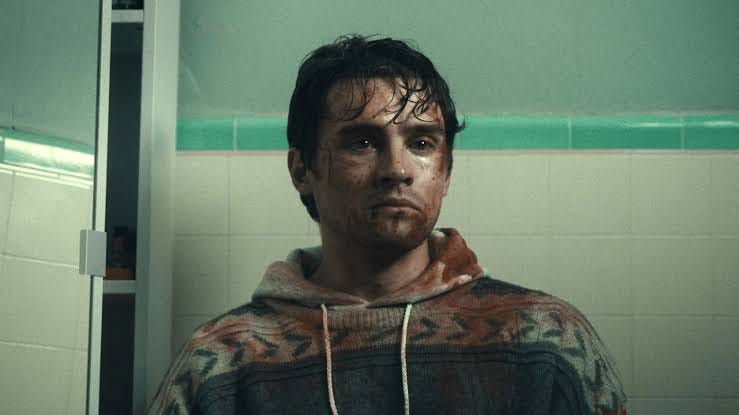
Surely there’s another, more commercially viable source of emerging female directors to study?
The second major problem:

The study treats a selection in US Dramatic Competition as proof of female qualification to direct blockbusters. But Sundance itself has heavily increased the share of female-directed competition films over the past decade, meaning the benchmark is already tilted by their own decisions. Again, Annenberg has shown this in their own research:
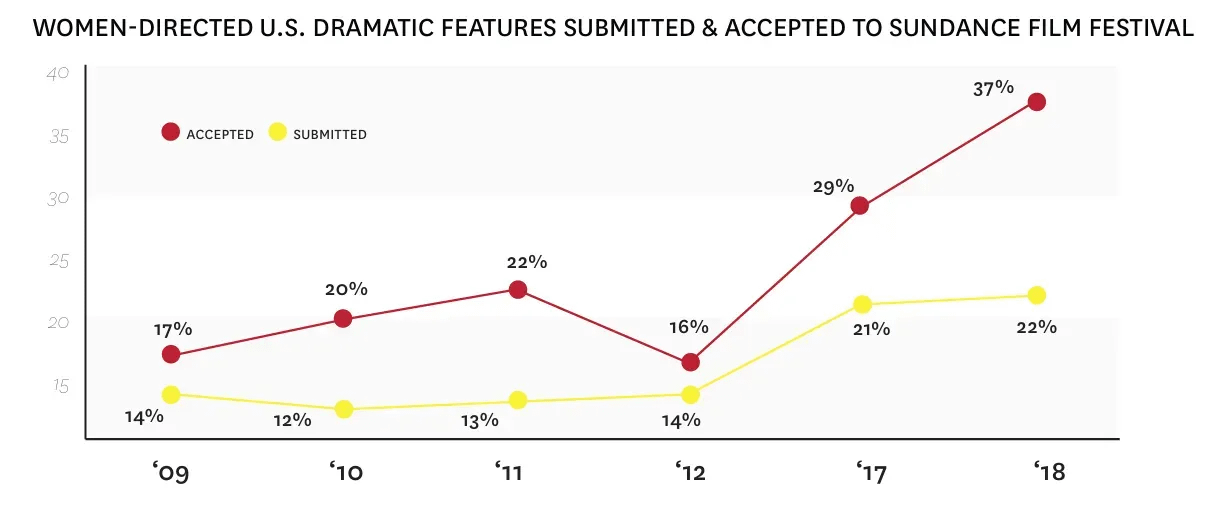
Comparing all of these different types of entertainment to blockbusters is apples to oranges. Unlike indie films, blockbusters generally work on clear, market-based incentives.
As the chart above shows, it’s far easier to change the inputs and outputs for institutionally-controlled prestige pipelines, like Sundance, than market-controlled ones like blockbusters, which rely on the decisions of millions of ticket buyers, and verifiable outcomes, i.e. box office.
Television and Netflix also operate under different economic constraints than theatrical tentpoles. They involve less concentrated financial risk, and are thus far easier to diversify.
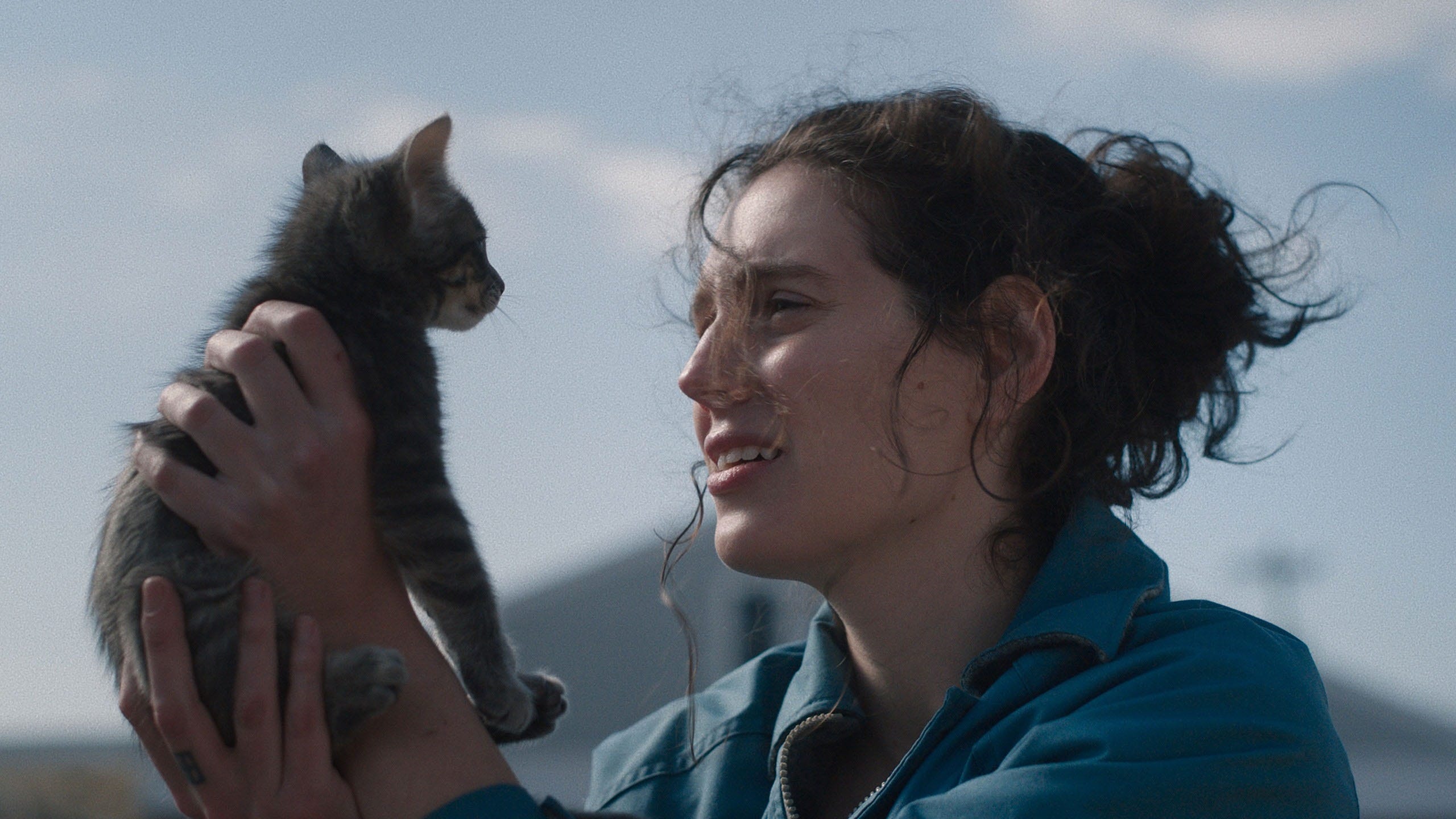
The Sample Size Is Tiny
Even with Sundance’s over-selection in favor of female filmmakers, this is still a comically small number of filmmakers entering the pipeline.
Across the entire 20-year Sundance Dramatic Competition dataset (2007–2026), there were 286 films, 108 of them with at least one woman director, or 38%.
The early era programmed 16 films a year; the later era dropped to 10–12, alongside a sharp rise in the share directed by women.
16-film era (2007–2020): 32% | 72 of 224
10–12-film era (2021–2026): 58% | 36 of 62
Put that in perspective: there are fewer female-directed films across all 20 years of Dramatic Competition (108) than there are blockbuster directors in a single year (111).
Here’s a thought experiment. Treat each of those 108 films as a distinct woman director - generous, since some directors appear more than once - and suppose every one of them entered Hollywood and directed a blockbuster every three years.
108 directors ÷ 3-year cadence = 36 films a year. 36/111 = 32%.
Even granting all of it - every director advancing, which is impossible, each working at a steady three-year clip - the pipeline still lands at 32%. Reaching 50% would take roughly 167 active directors at that pace. It isn’t even close.
Sundance Selects Against Commercial Genres
There’s an interesting factoid buried in the “bottom line” section of the UCLA Study; the most profitable and successful films of 2025 by genre.
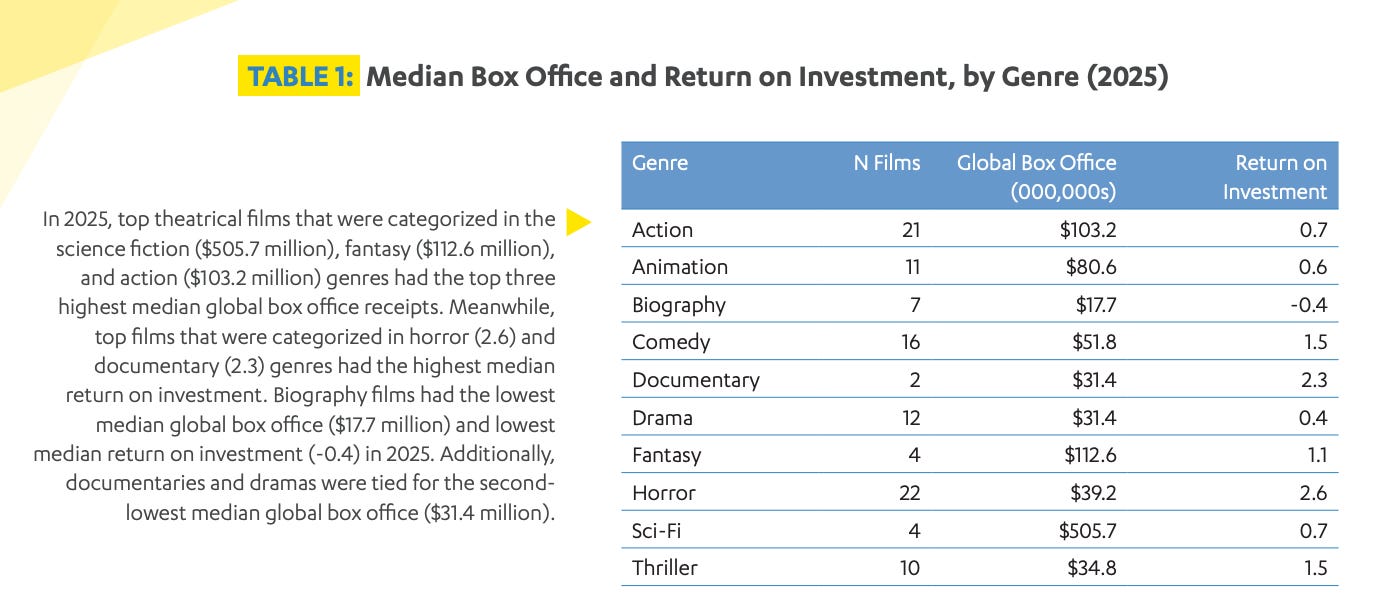
Here I have to be precise, because two different definitions of “success” are in play here, and they point at different genres. If success means top-100 gross - the metric this entire essay and the Annenberg study use - the genre path runs through science fiction, fantasy, and action: the tentpole tier.
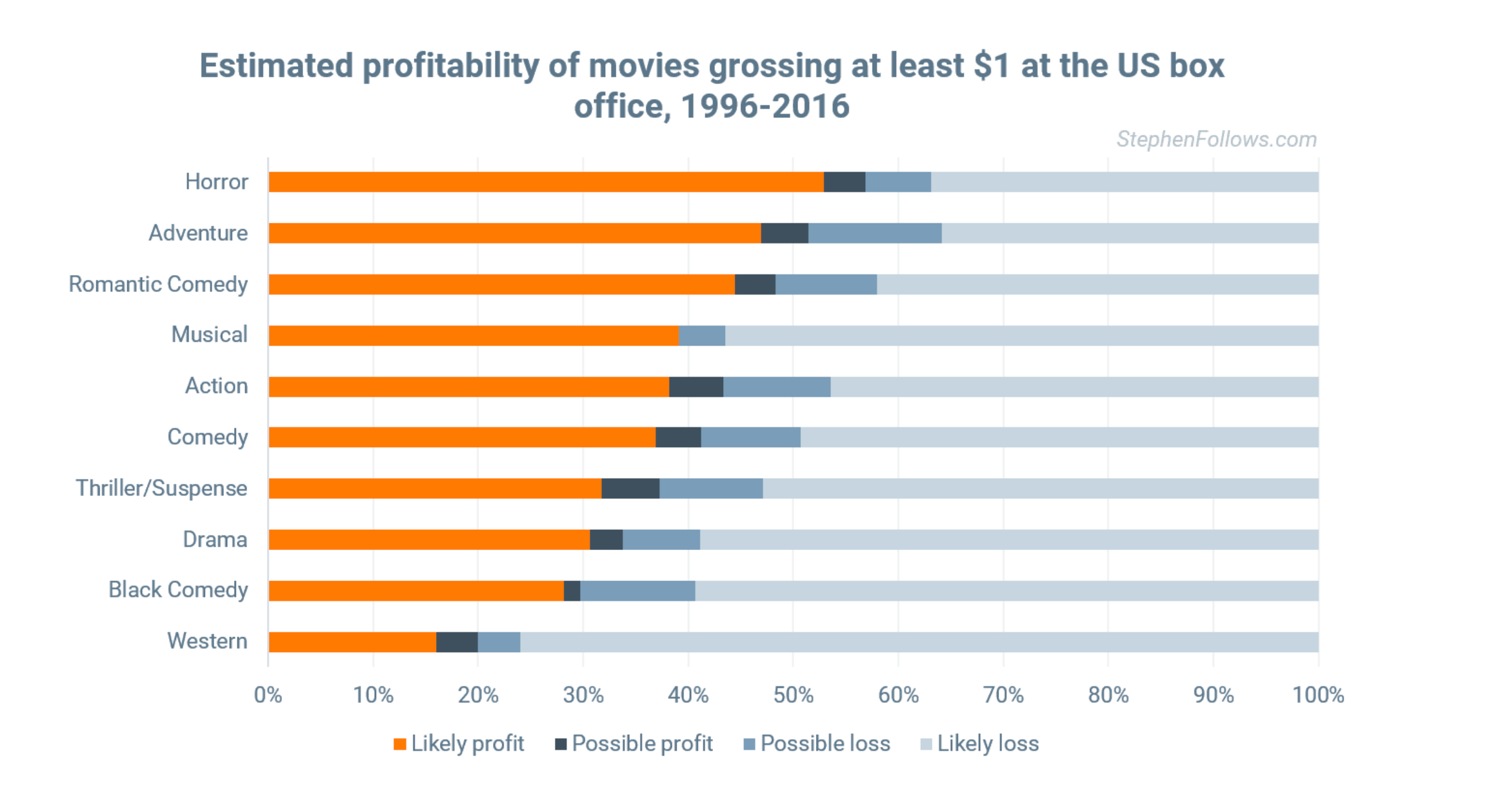
Low budget, high-return genres like horror often function as a proving ground for commercially-minded directors, who demonstrate returns on a small budget, then scale upward. Sam Raimi and Jon Watts, who directed different editions of the Spider Man franchise, both followed versions of that path, each starting with low budget horror films like Evil Dead (Raimi) and Clown (Watts).
So if we’re trying to pull the most financially successful directors out of Sundance, what genre of films did the last decade of Sundance competition program?
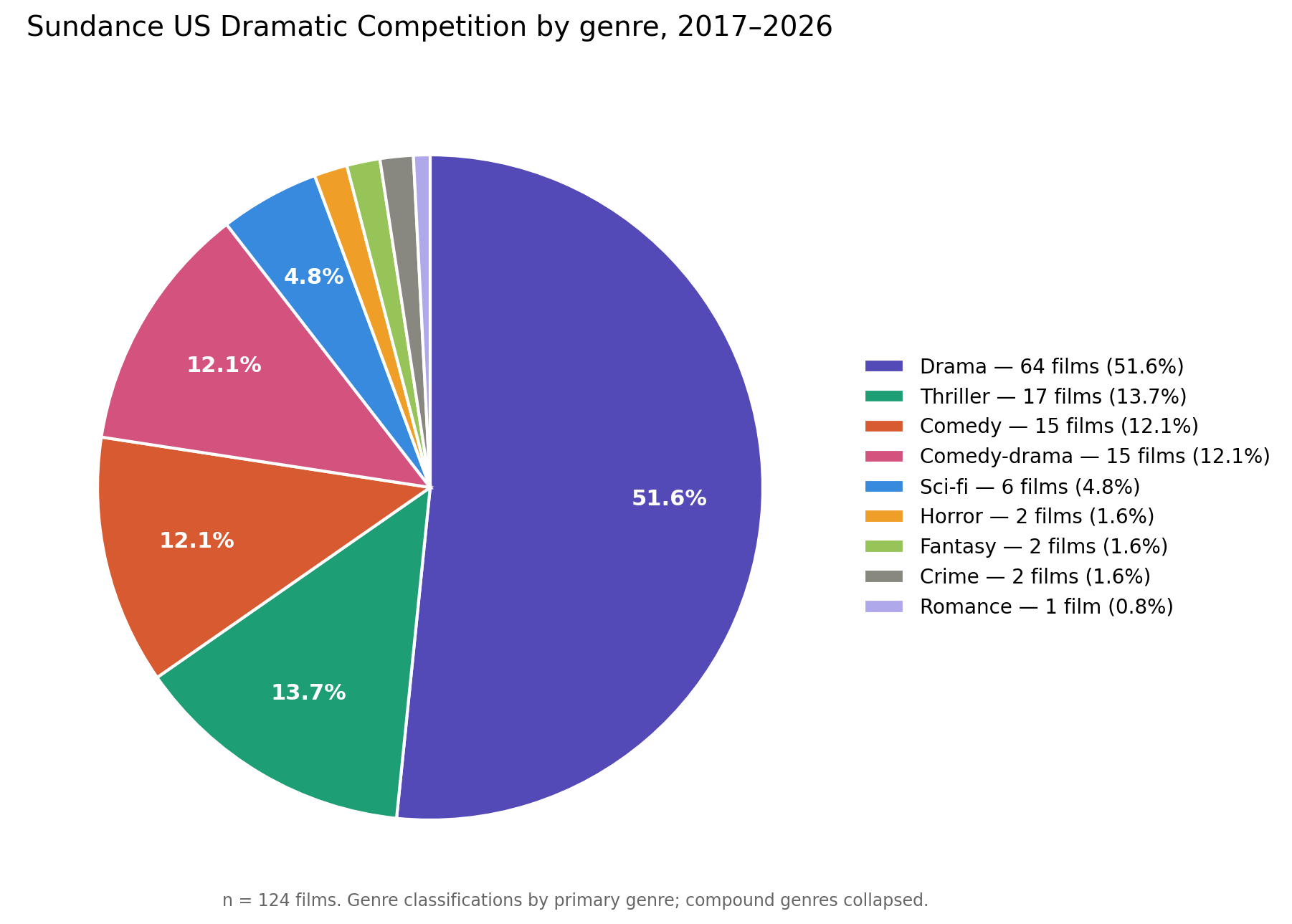
Drama is by far the most popular genre of film programmed at Sundance, and yet it’s the third-worst performing genre financially. Horror is the most financially successful genre in terms of profit, and yet only 2 horror films in the last ten years were programmed in Sundance competition, the section Annenberg uses as a proxy for commercial qualifications in female directors.
So whichever definition you choose - biggest gross or best return - Sundance competition optimizes against both. It programs prestige drama: the third-worst financial performer, and the genre least likely to either crack the top 100 or post horror-like returns. It’s an arthouse showcase, which is precisely why it’s such a broken proxy for either kind of commercial filmmaker.
If Sundance were an actual pipeline to commercial success, as the study claims, it would select very different types of movies. But it doesn’t.
Sundance is an arthouse institution, which is why it’s a terrible proxy for blockbuster potential.
But we all knew this already. It’s in their mission statement for crying out loud:
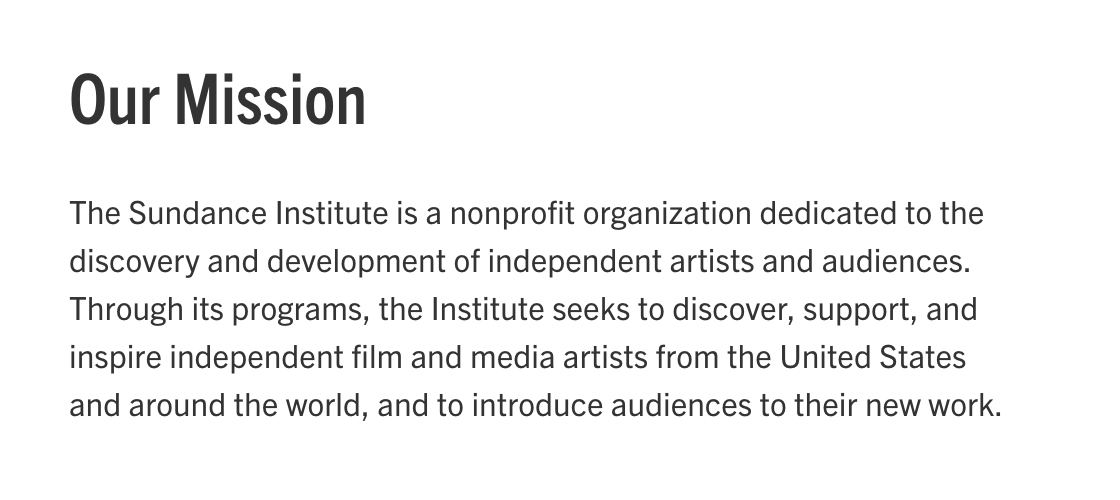
If Sundance wanted to produce more commercially-viable female directors, you would see a lot more horror films in competition. I’ve shown elsewhere that female directors in the early 2020s were selected more for prestige, which institutions control, than commercial instinct, which can only be verified by audiences.
This was a mistake, if the goal is box office. On a $200m movie, I don’t see how you can have any other goal.

The best example of the traditional pipeline working is Greta Gerwig, who demonstrated increasing commercial success on escalating budgets (Lady Bird, Little Women) before her blockbuster Barbie.
But again, Gerwig didn’t follow the imaginary Annenberg pipeline: she didn’t premiere in Sundance Competition, she didn’t direct television, and she didn’t direct a Netflix movie before Barbie.

Also of note, since the industry selects so heavily for class, horror films are the most popular with the working class, and align most with the makeup of the general population. As I’ve implied elsewhere, there is a direct conflict between elite institutions’ tastes and those of the general population. The more directors come through the former, the less interested the latter seems to be.
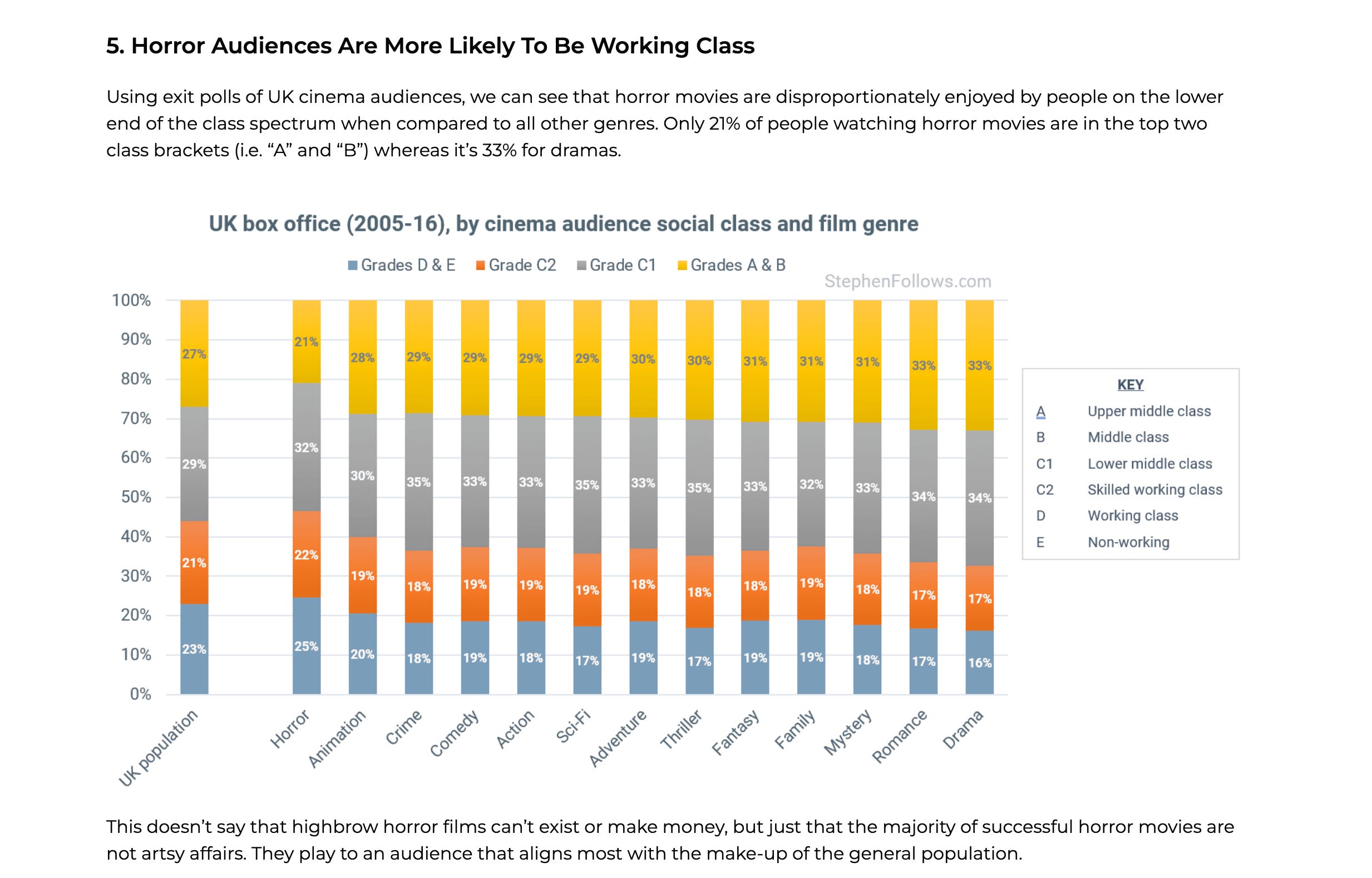
Again: horror films are also almost never programmed in Sundance competition.
Annenberg Mistakes Signal for Noise, and Stock for Flow
The Annenberg study regularly uses one year, single digit percentage shifts as evidence of catastrophic industry setbacks for female directors, putting scary observations in all bold and italics:

This is a textbook confusion of stock and flow.
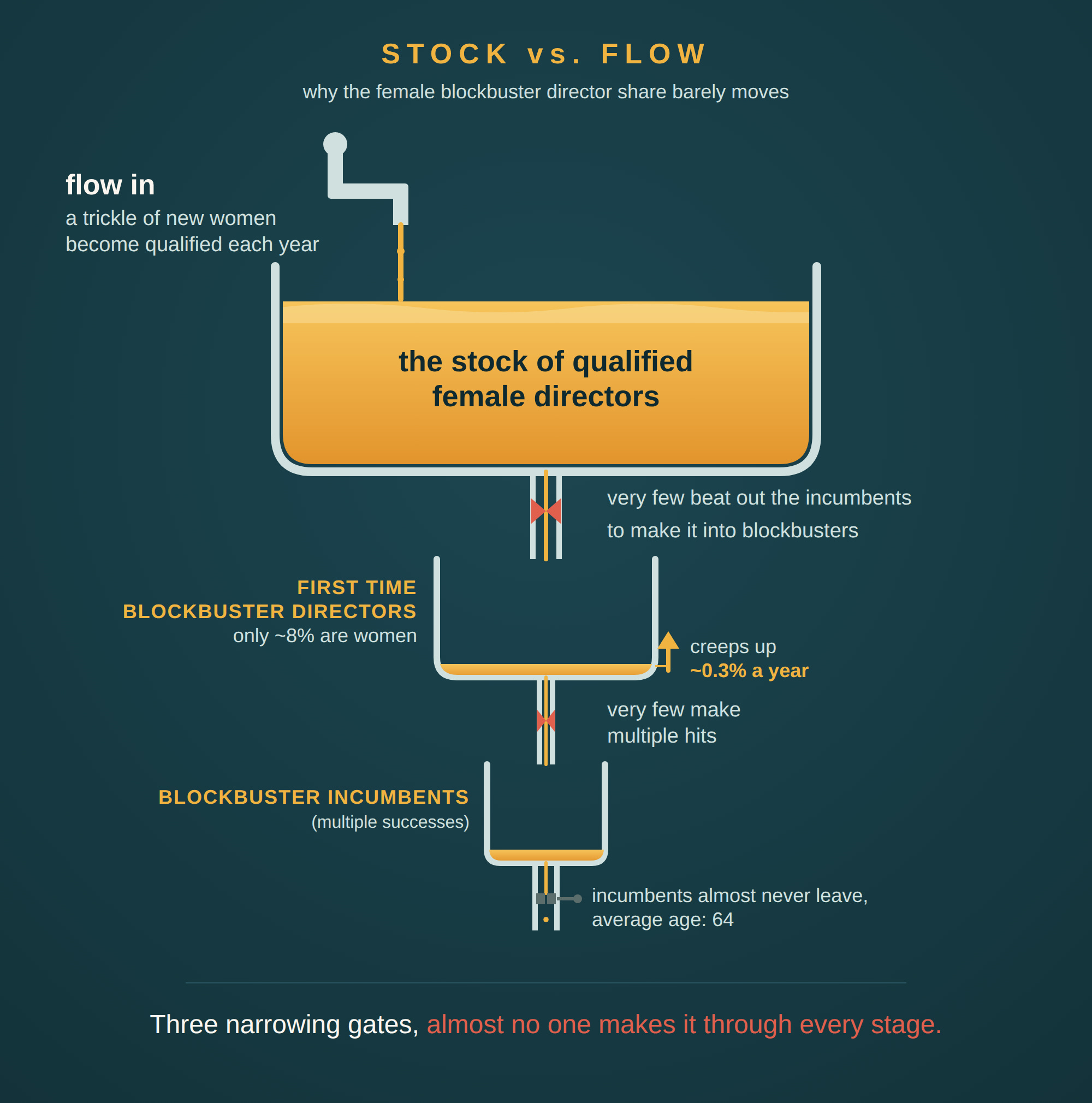
The population of top-grossing directors is a stock - a standing pool of incumbents who sit on their thrones for decades. The average top-grossing director is about fifty, up roughly six years since the mid-nineties, and the tier keeps aging for a simple reason: the same names cycle back through, and fewer new ones break in.
The directors newly entering that first time blockbuster tier each year are the flow - and in an industry this competitive, the flow is a trickle. The tub is nearly full of the same people, the drain is all but plugged, so the female share of that pool moves only a fraction of a percent a year, no matter what happens in any one season.

And it’s specifically the blockbuster tier that’s the chokepoint, not directing as a whole. Again, according to Annenberg’s own numbers, women directed 37% of television episodes in 2023–24, 20.5% of Netflix movies in 2024, and 63.6% of the films in Sundance’s 2026 Dramatic competition. Women aren’t missing from the director’s chair. They just thin out heavily on their way to the hundred biggest theatrical releases.
When it announces female directors “fell” from fifteen to nine and brands it a massive backslide, the problem isn’t that six films is trivial - against a yearly inflow this thin, six is a lot. The problem is the opposite: the numbers are so small that a swing of six tells you almost nothing.
Run the actual test - fifteen of 112 directors against nine of 111 - and the drop comes back statistically insignificant: a gap that size shows up by chance about one year in five, even if the underlying rate never moved an inch. With a flow this narrow, single-year moves in either direction are mostly noise, and reading any one of them as a trend - backslide or breakthrough - is the error.

Blockbusters also take a minimum of two to three years to make. This year’s count reflects greenlights from years ago, which Smith herself concedes were locked in before the 2024 election. So the “backslide” reflects bets placed years ago, not some fresh wave of discrimination anyone could plausibly pin on the current moment.
And none of the top directors, men included, make a massive movie every year anyway. It’s physically impossible, and even if they could, they’d drop dead.

So why does Annenberg treat these one year variations as catastrophes? Well, one explanation might be that the study is published every year, and thus needs new headline findings.
Gradual, statistically noisy progress (what’s actually happening) is far less catchy than catastrophic headlines.
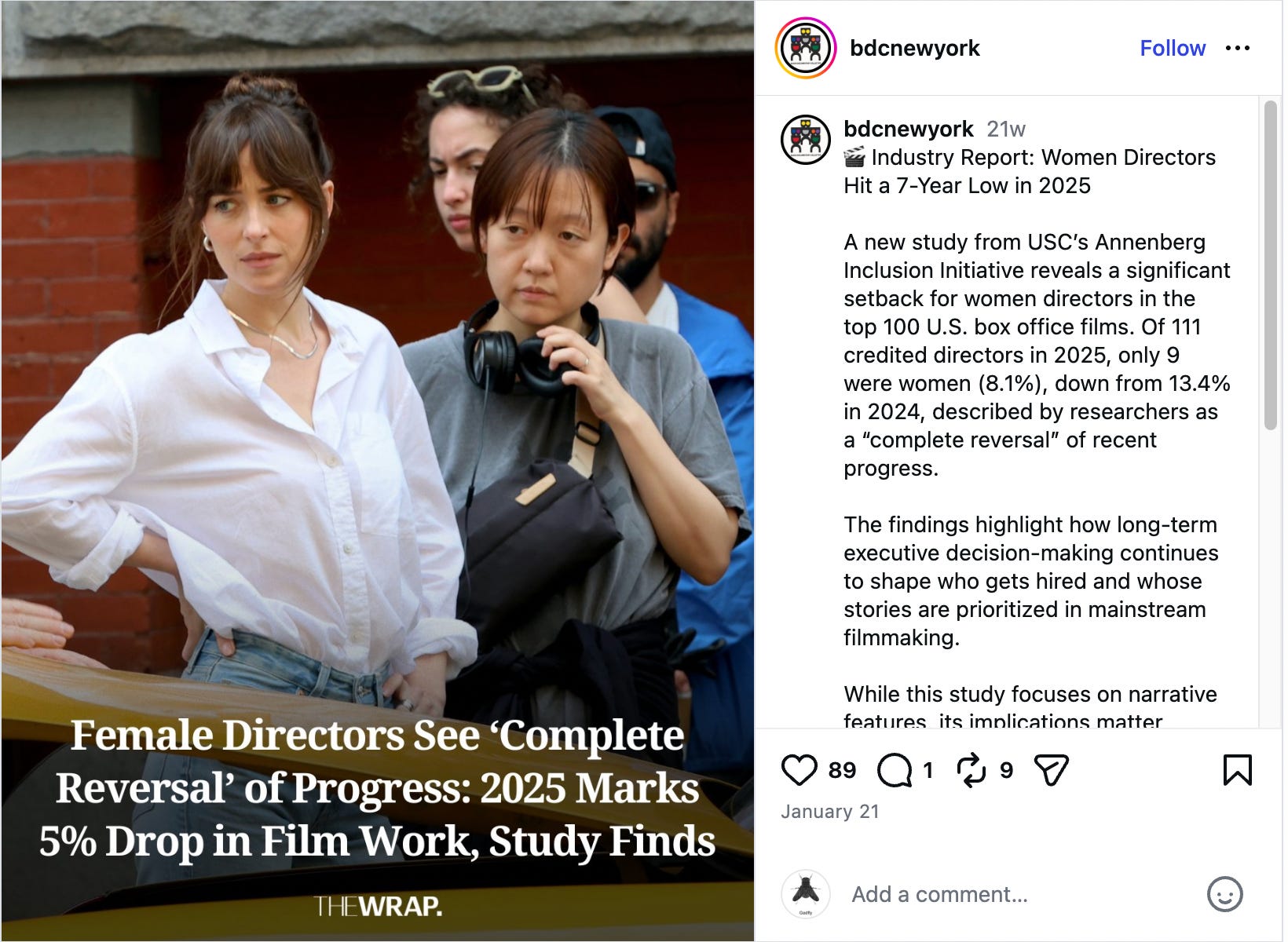
Imagine the truthful headline: "things are gradually improving for female directors, but in a lumpy way, on the order of around a quarter to a half a percent a year.”
Is that going to generate clicks for the trades? Probably not.
But what about the signal? Well, honestly it looks a lot better, but through strange data practices, the study shows the opposite.
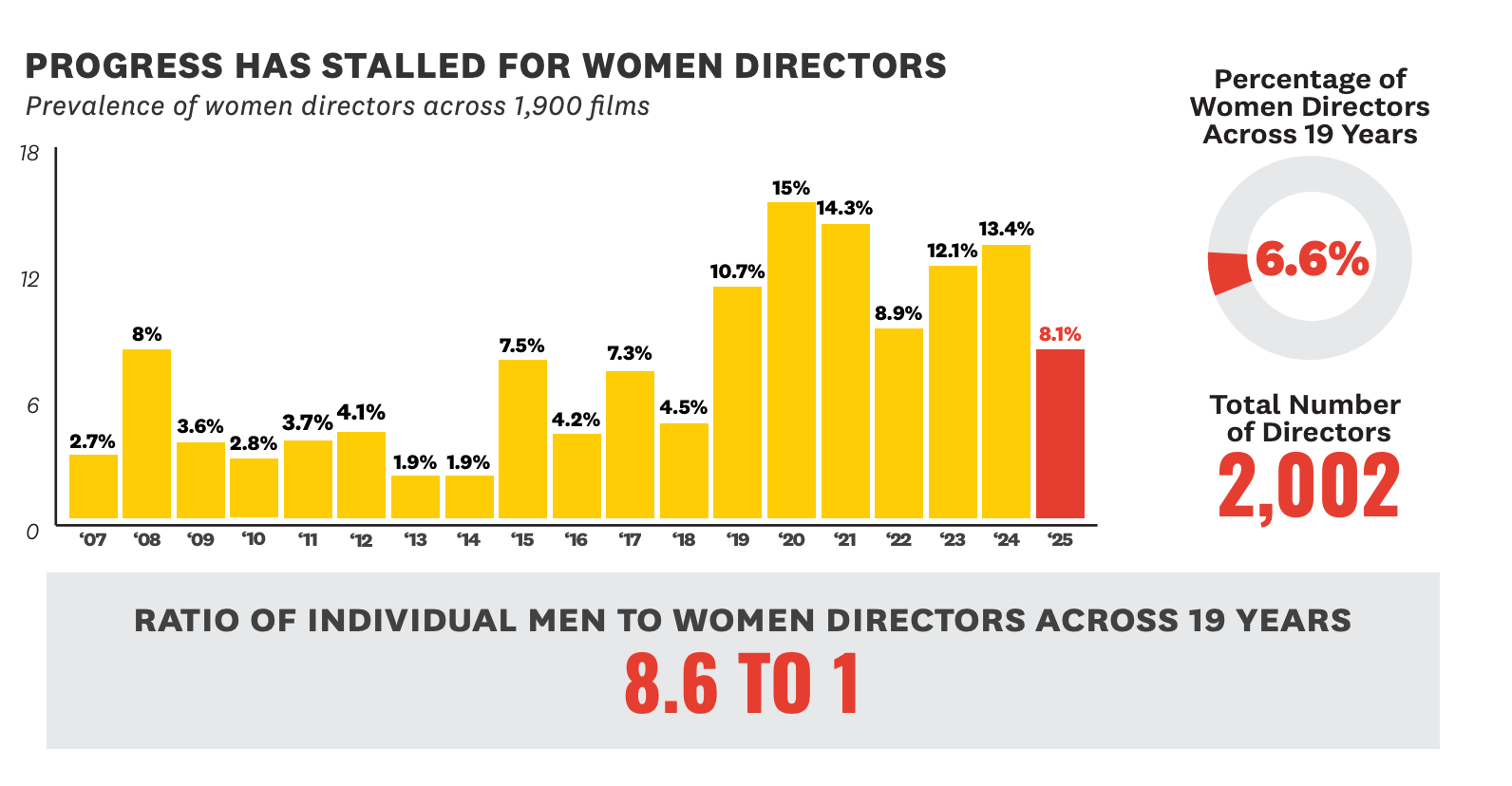
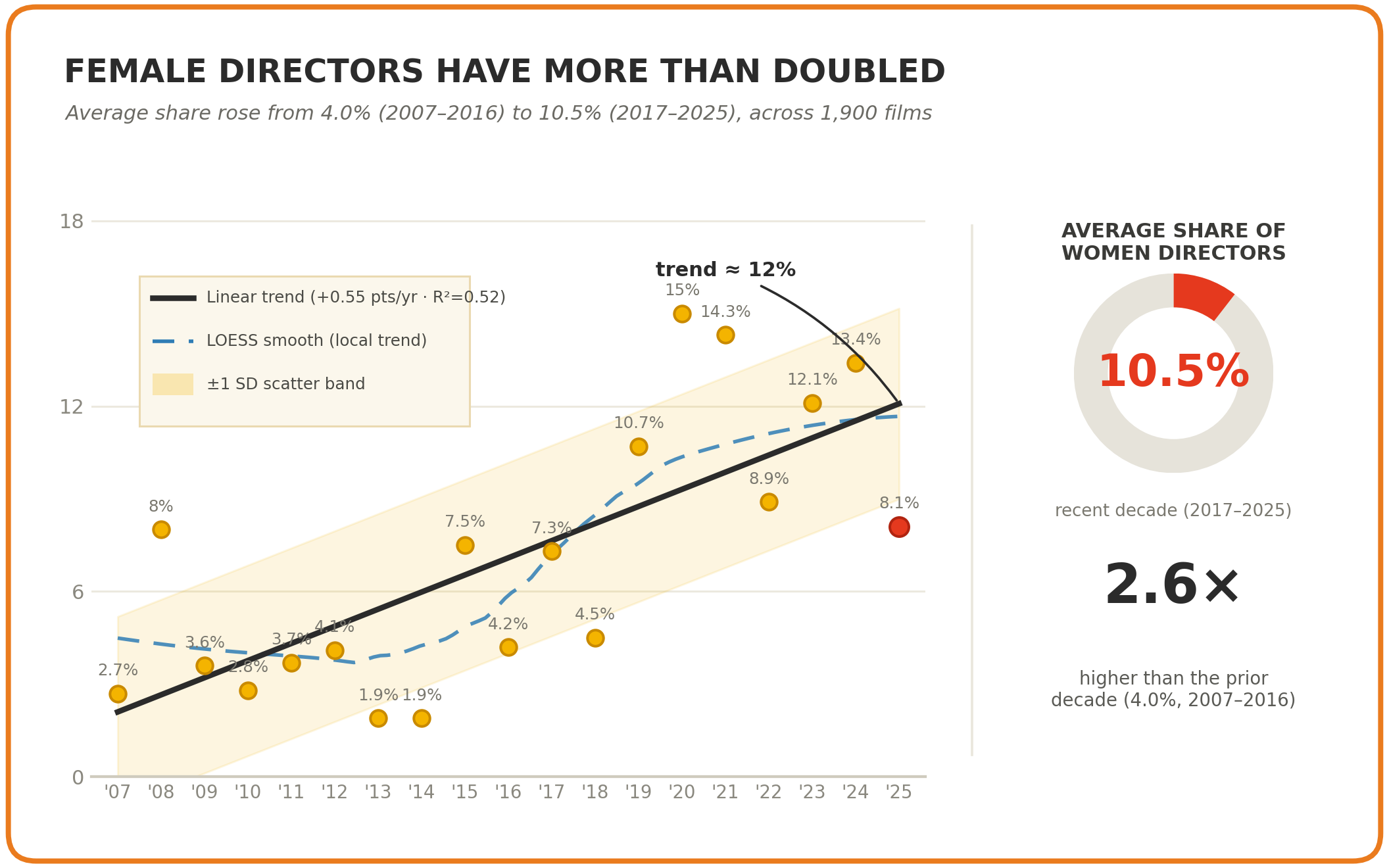
The right way to read a series this jumpy is to stop reading single years at all. A one-year move - up or down - is mostly noise; the signal only emerges over multiple years. Like all data you can read it several ways, but a more meaningful way is to look by decade:
2000s: ~4.8% female | though this is only 2007–2009 (2.7, 8, 3.6), and adding the earlier years would likely drag it down.
2010s: ~4.9% | almost zero progress.
2020s: ~12.0% | holy crap! More than double the decade before! Hallelujah!
That’s the signal: a decade of stagnation, then a genuine boost.
Even if you insist on the cruder, single-year endpoint version - 2.7% in 2007 to 8.1% in 2025 - the number of female directors still TRIPLES. Amazing!
Year over year it’s about .3% growth. And 2025 was a weak year, so that 3x is a conservative read.
Which is what makes that 6.6% so strange - the one number they lead with on the right. It’s a nineteen-year pooled lump that blends a 2.7% world and a 15% world into a single figure describing no single year on the chart and no direction the data is moving.
You see how odd it is that that’s the only one they use?
Here’s what the same chart looks like, interpreted more honestly:
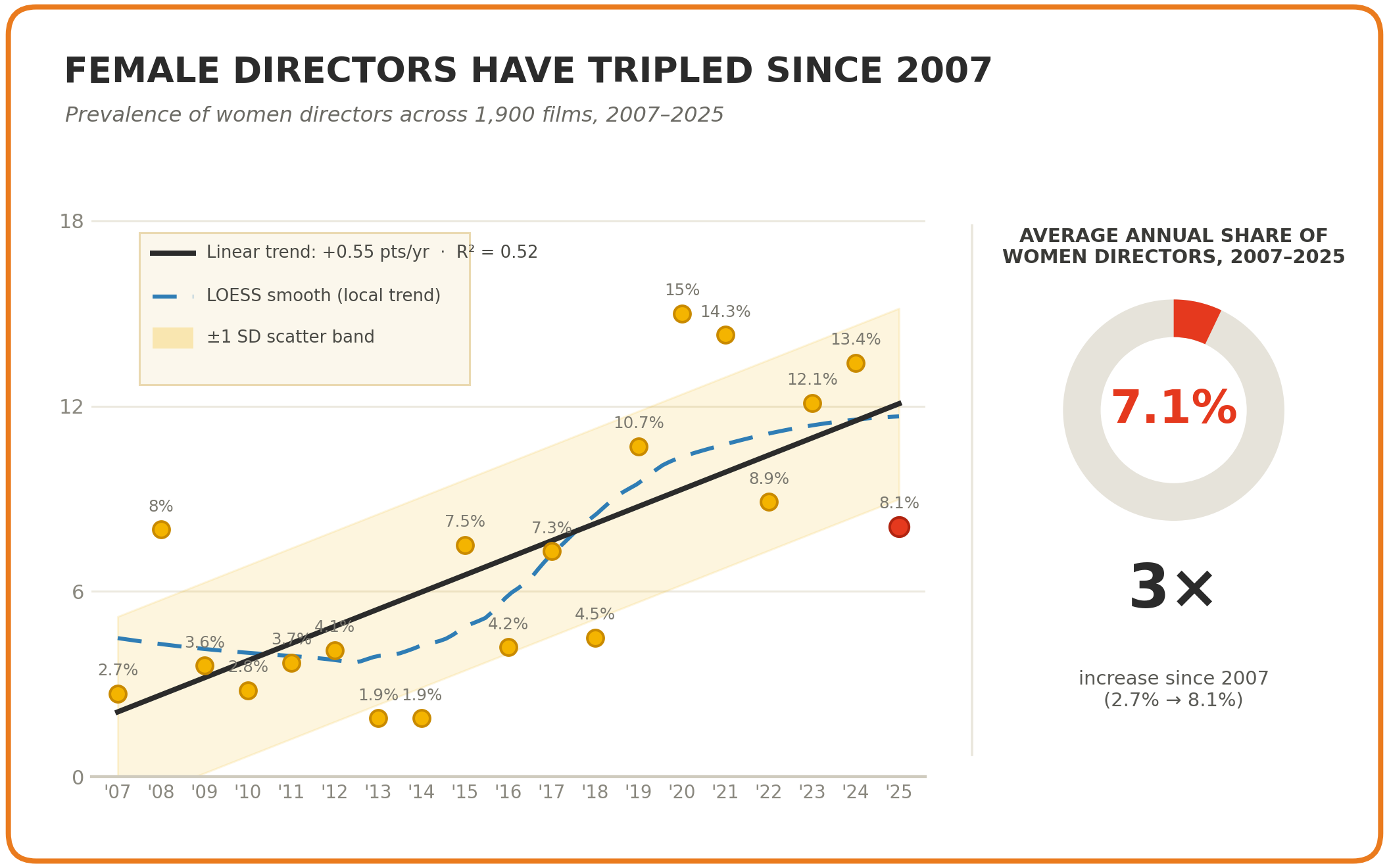
Here’s another fun variation:
The Same Problems Exists in the BIPOC Section
The study also focuses on diversity, and presents the following chart:
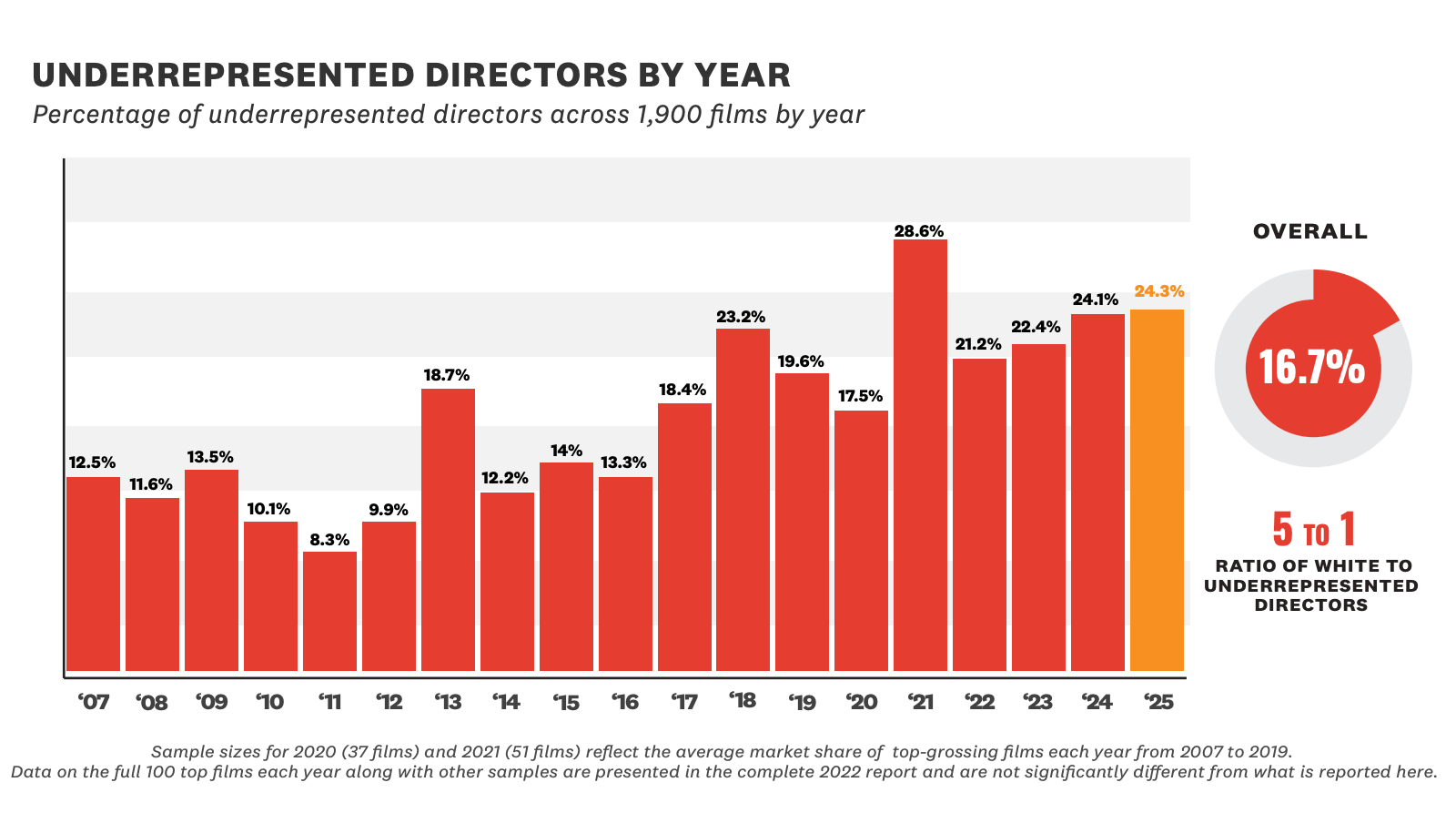
Looked at in simple chronological fashion, from 2007-2025, by any metric this is also a huge success. The underrepresented directors were 12.5% in 2007, now they’re 24.5%.
The number of underrepresented directors ALMOST DOUBLED since 2007! By any reasonable measure, that represents substantial progress. It shows that the industry is becoming more diverse, by significant numbers, over time.
I won’t belabor this point too much, since it’s basically the same flaw as the female directors section.
Yes, it is very slow growth, on the order of .6% a year, but becoming a top-grossing director is a brutally competitive industry that selects for consistent, growing commercial instincts verified by financial success metrics, which knocks most people out of the pipeline very quickly.
And once someone becomes an incumbent, they hang out there for decades.
The most elite cohort of directors, the top-grossing directors of all time, is even older. And this makes sense, because it takes a lot of time to make movies, and it’s a cumulative number.
Here are the top-grossing directors of all time and their ages:
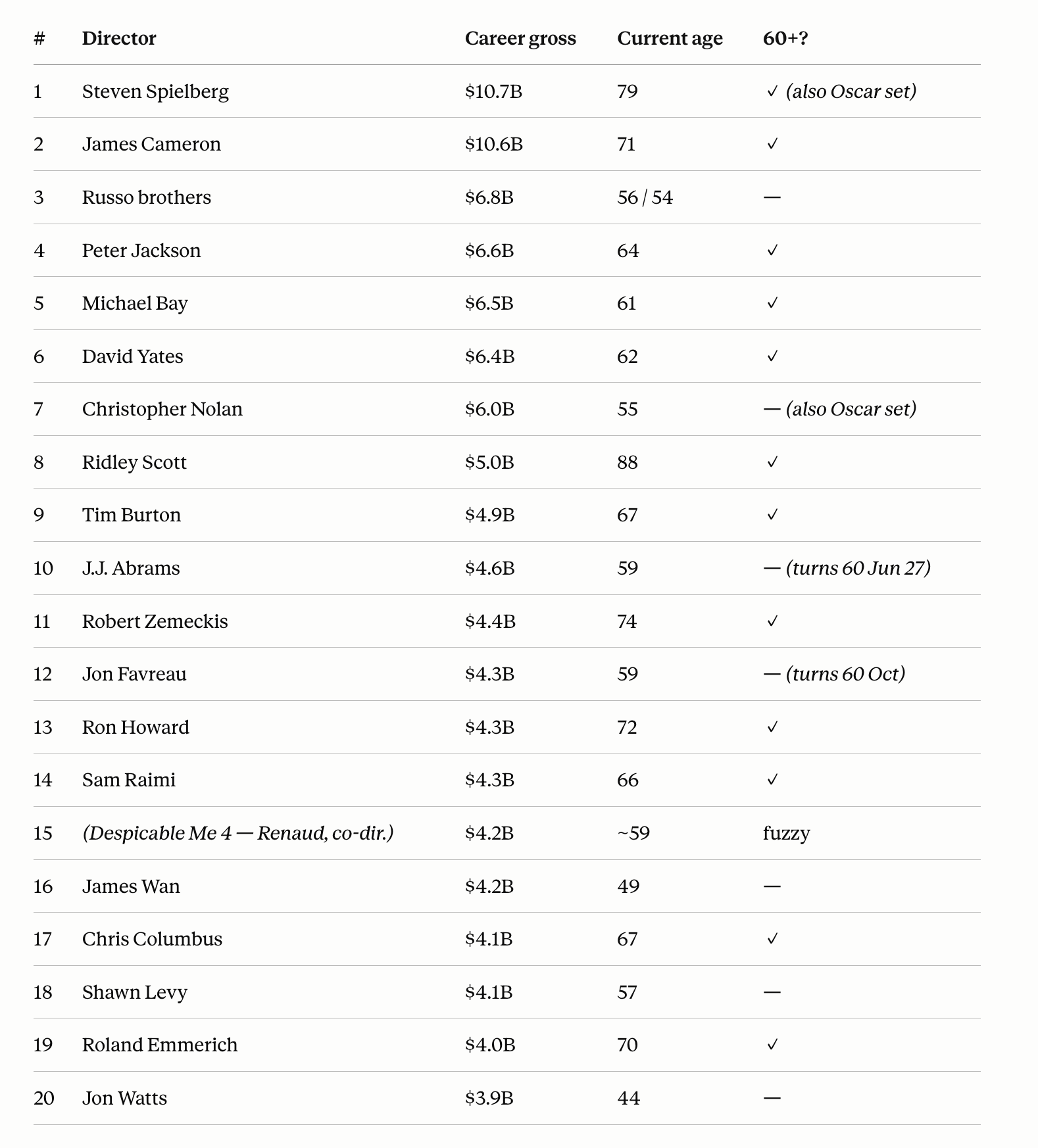
The average age is 64. It takes a long time to become a top grossing director of all time.
P.S. The BIPOC category also obscures meaningful differences between groups. Notably, all of the 2025 women of color were Asian women, a topic for another piece.
Panic in the Streets of Hollywood
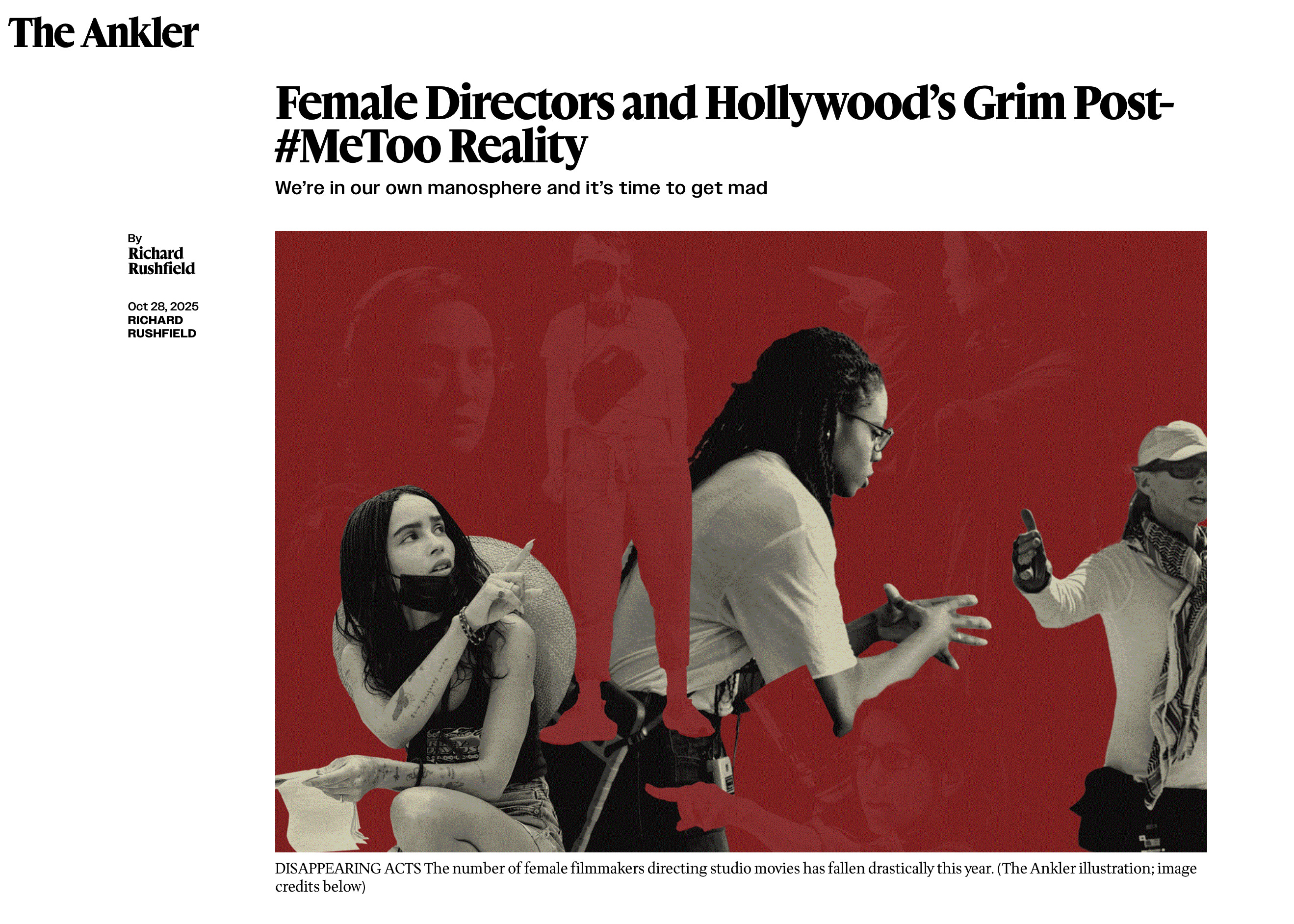
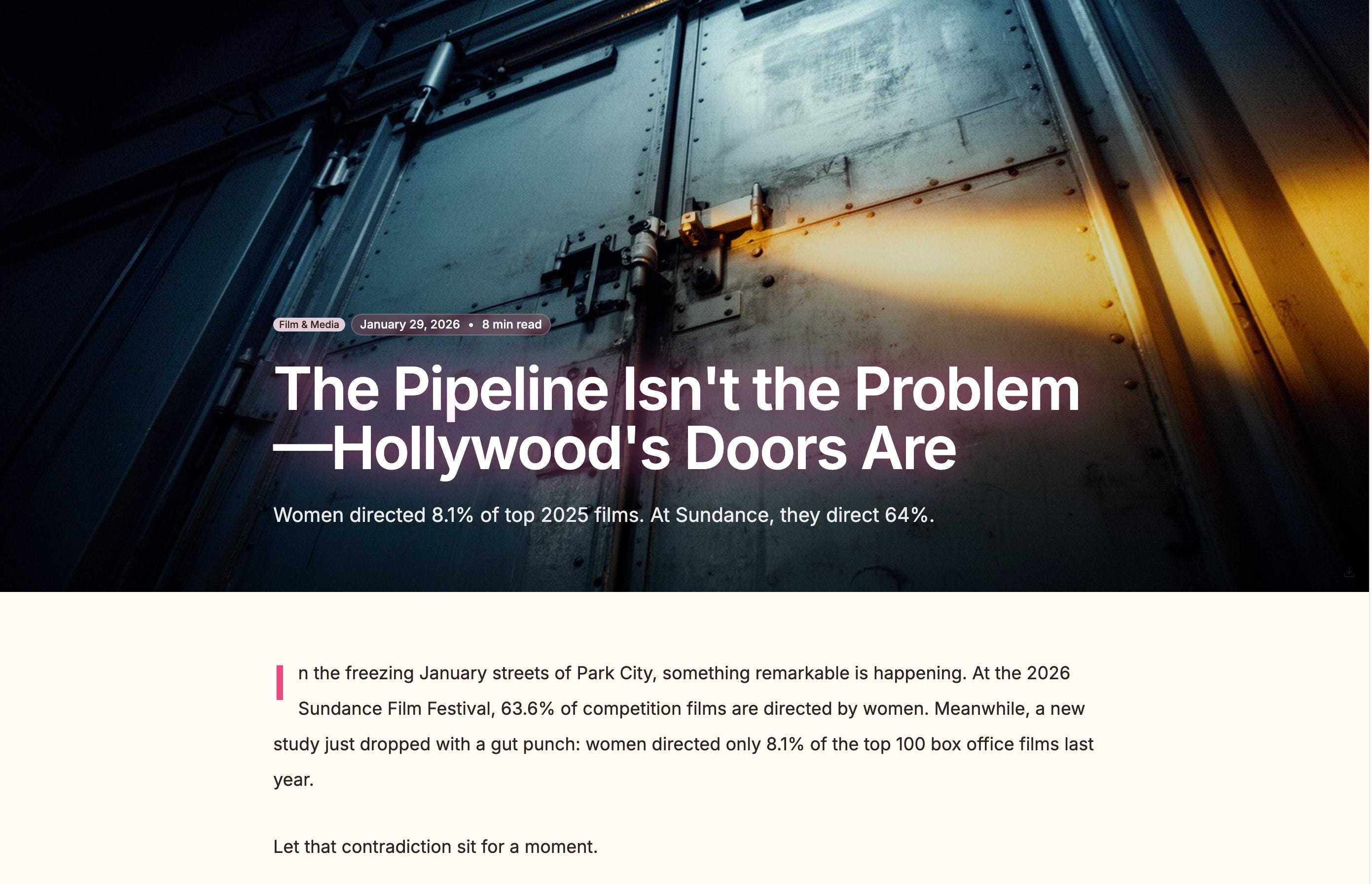
As you can see above and below, activists and media outlets repeat these flawed claims completely unchallenged, as if there were a men’s only highway built from Sundance Dramatic competition to a special bunker in Hollywood.
Fellow Substacker Raquelle David recently published a post which again relies on this flawed Annenberg data:
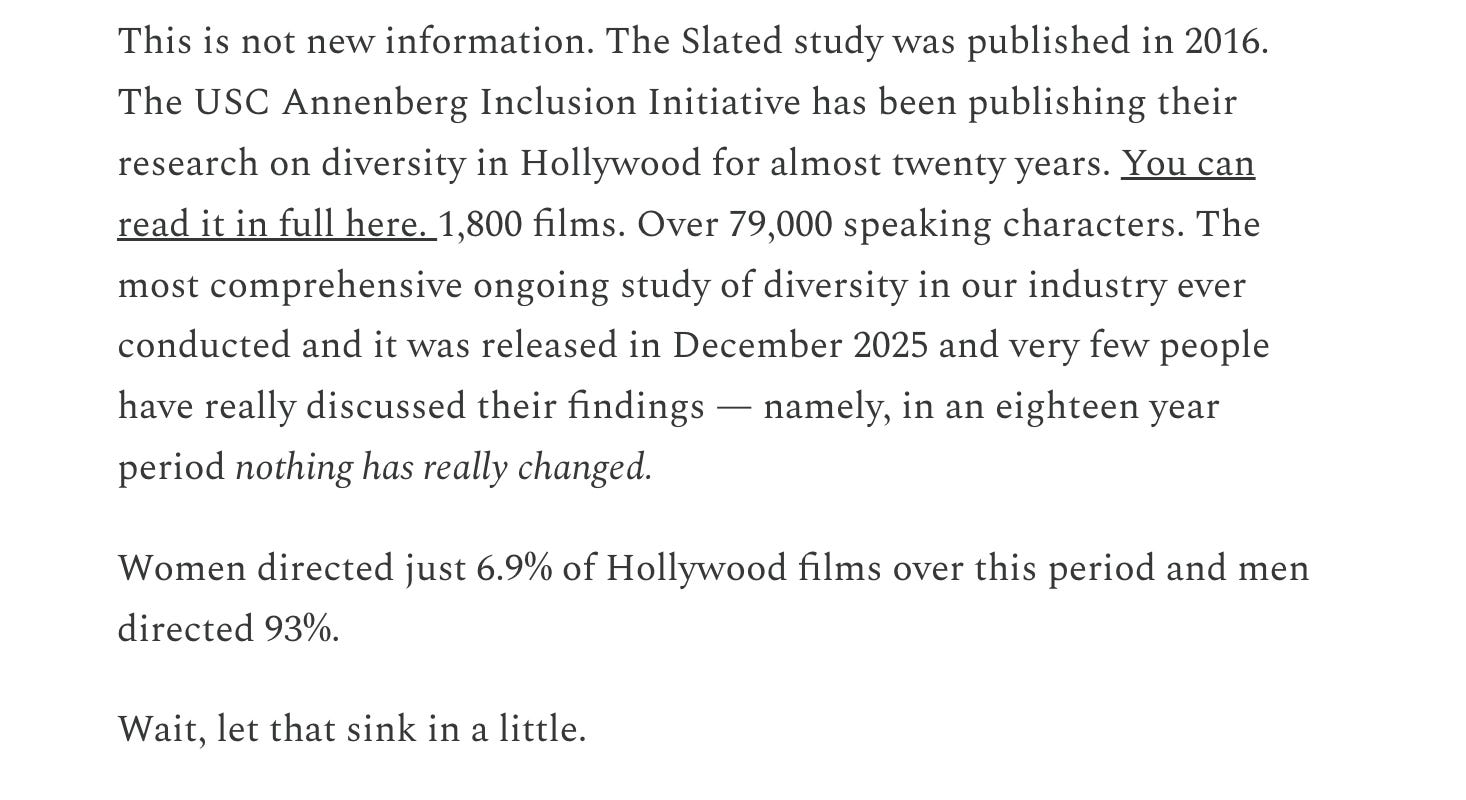
Can you see it? It’s the ouroboros. The media-sphere reinforces Annenberg and Sundance, and the process repeats. Over. And over. And Over.

Ripple Effects
Those positive-but-slow growth numbers, POC filmmakers almost doubling since 2007, women tripling over the same time period, isn’t what Annenberg wants us to focus on.
Instead, the chart highlights the average representation over the 19 years, but not the progression from 2007 to 2025.
This is bizarre, and masks significant progress. They say as much, the chart says in BIG BOLD LETTERS that…
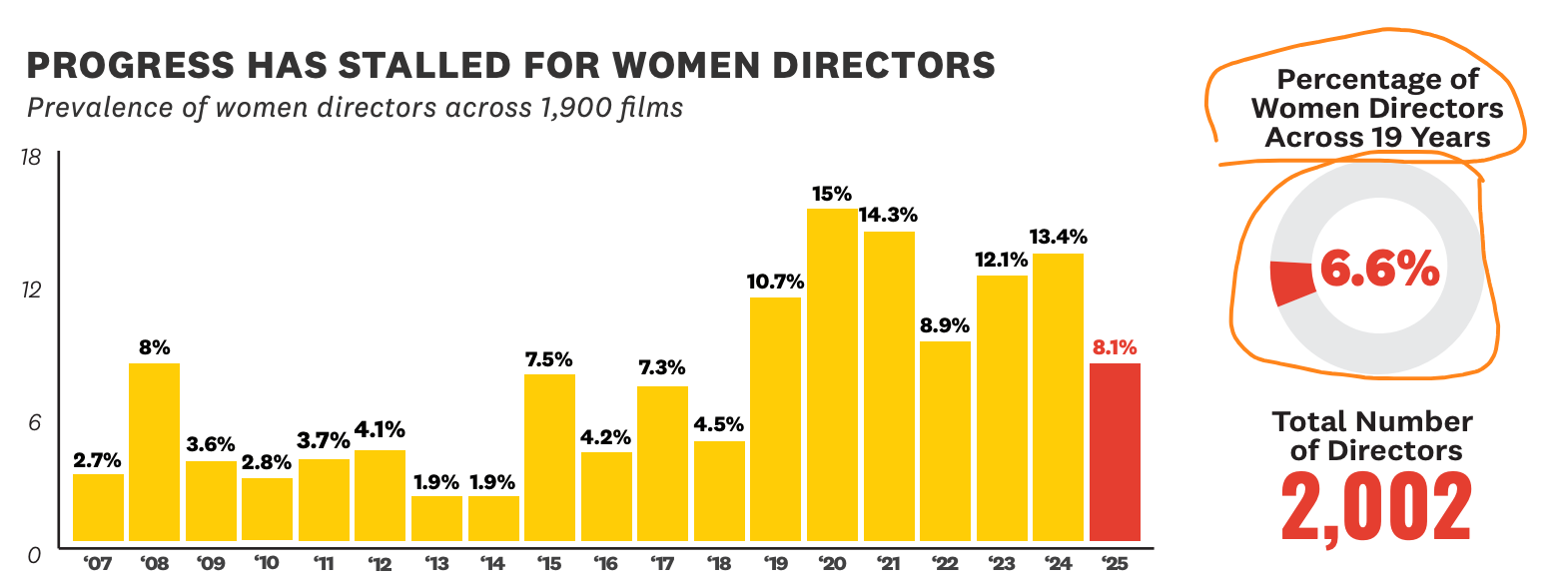
But this again is misleading: we’re moving forward in history, so including the worst years from over a decade ago obscures the trend in a weird way.
It does the same thing with POC directors:
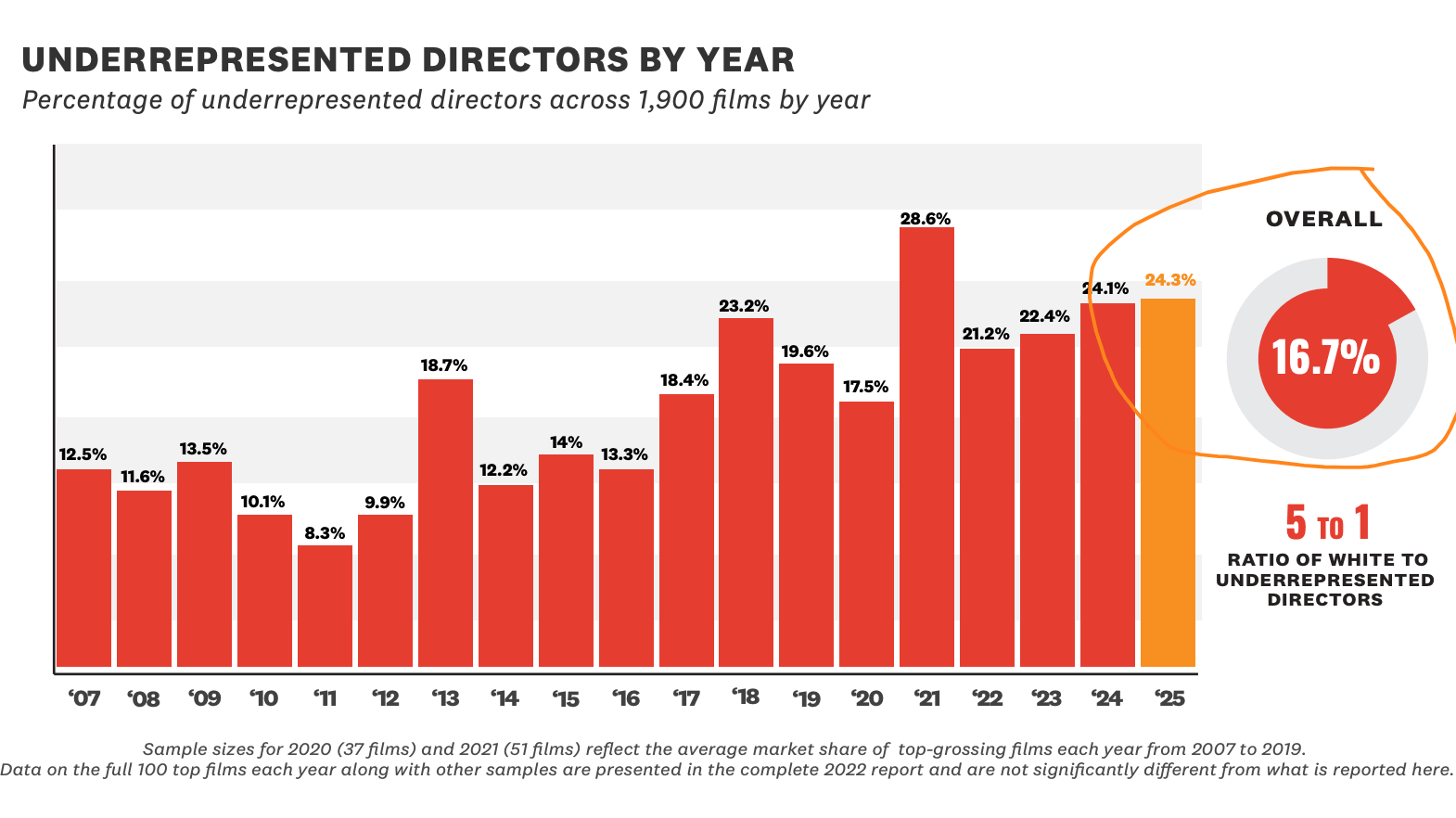
This “overall” figure is actually the 19 year average. But that includes the worst, early years, and isn’t really representative. There has actually been solid, if lumpy growth since the low point in 2011.
These right-hand figures are the numbers people fixate on in debates. I was recently having an online back and forth with a Black filmmaker who told me 85% of Hollywood directors were white, then directed me to these studies. But they’re not 85% white IN 2025, they’re 75%, which is a fairly big difference.
Like many people, he just glanced at these misleading, very large statistics on the sidebar and didn’t question them.
The tragedy is that all this attention is focused on the least useful question. We know how many women reached the finish line in a given year. We still know remarkably little about the pipeline itself.
Which women were one studio meeting away from a franchise job? Which career paths produce the highest success rates? Which barriers matter most? After nearly two decades of research, those remain surprisingly difficult questions to answer.
Of course this is going to generate ragebait headlines like this:
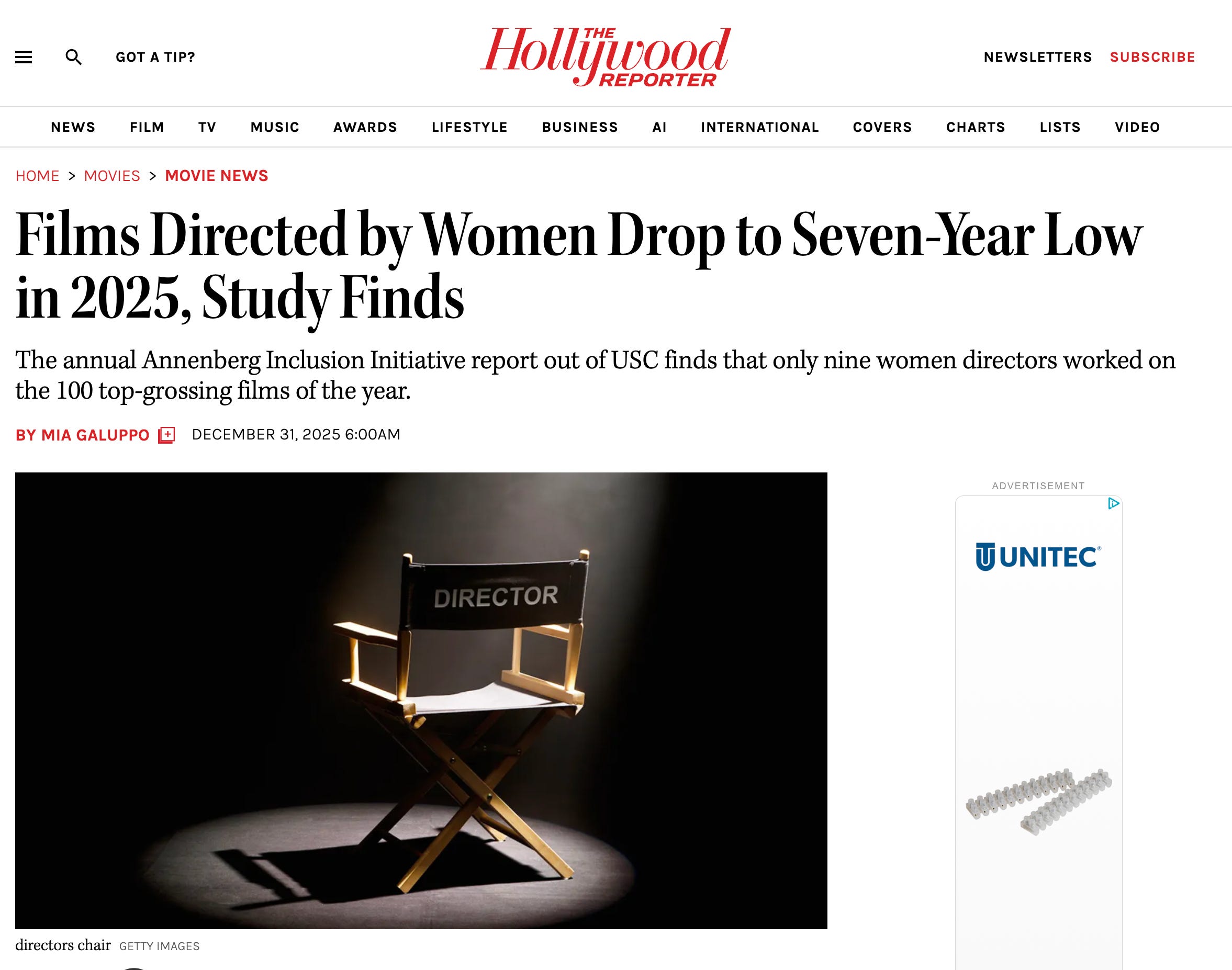
And of course it sparks a thousand think-pieces, just like in the press.
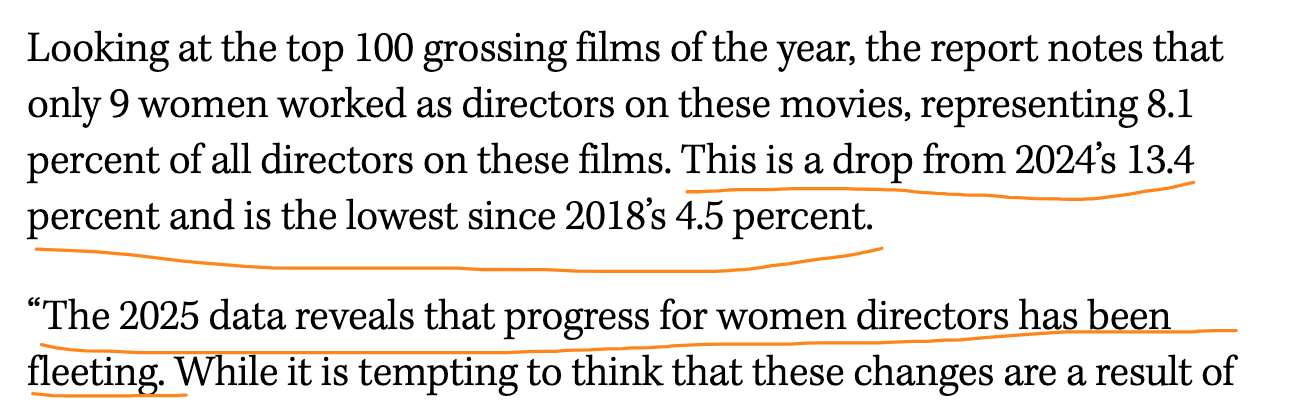
But progress has not been fleeting. Even though Hollywood is getting objectively, gradually better, this deceptive use of data makes it look far worse.
Again, the whole framework is so misaligned with its stated goals that it simply can’t produce those results.
Nota Bene: I have many more critiques of this study, but this piece is already very long.
Annenberg’s Solutions Are Flawed
Annenberg ends on a “solutions for change” section, where they offer three flawed recommendations:
One Opportunity is Not Enough
Annenberg says that women and underrepresented directors receive only one chance to direct a top grossing film. This is also mostly true of men, which I pointed out in my piece on top grossing female directors. The key seems to be getting the right opportunity at the right time. As I wrote in that piece:
A campaign online has begun to give Nia DaCosta a second chance, but men rarely receive these as well. Louis Leterrier never made another Marvel movie after the Incredible Hulk failed. Alan Taylor did get a second chance after Thor: The Dark World bombed critically (though provided a decent box office showing) with Terminator: Genisys, another critical bomb, but this was not within the Marvel universe. Taylor has not directed another blockbuster, and since returned to television. Peyton Reed, director of the relative bomb Ant Man and the Wasp: Quantumania, (but also notably the series’s more successful first two entries), has moved into television as well.
If a director like Celine Song were interested, she seems to be in a good position for a larger budget now; she’s already demonstrated growing box office success, an ability to work with stars, and a commercial sensibility. The question is whether she wants to do that or not. Like Song, half of the top grossing films directed by women were original material in 2025.
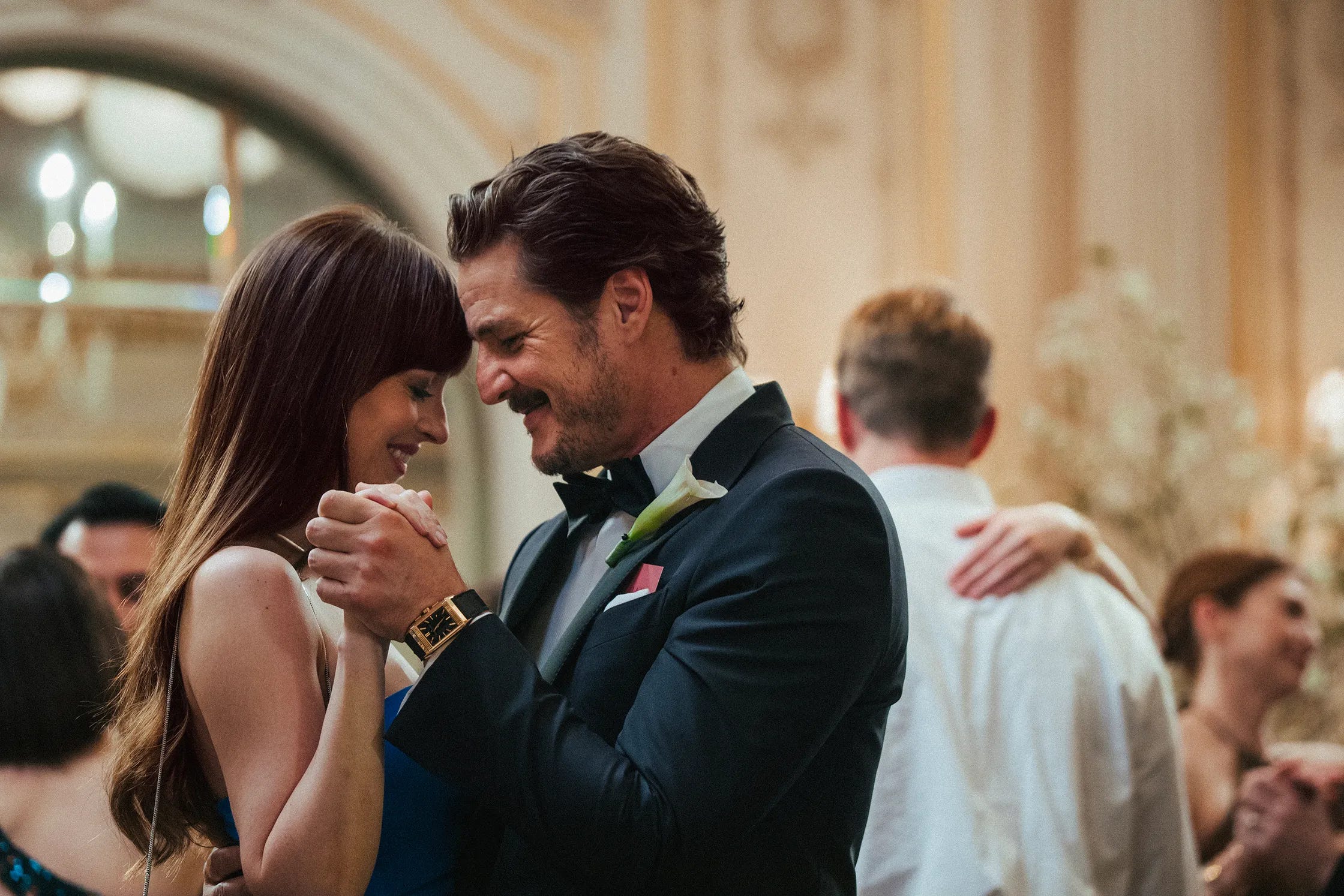
And I’m grateful for that! I liked the Materialists! We need more original material!
Use Clear Criteria
This recommendation is a bit ironic and difficult to evaluate because the study never establishes what the actual blockbuster pipeline looks like.
As I’ve shown, using Sundance Dramatic Competition as a benchmark for commercial viability is severely flawed.
Gerwig seems to be the best, most repeatable model; a suvvessful original film, followed by growing budgets and box office success in popular IP genres, leading into a true IP blockbuster, where the filmmaker’s vision is trusted because of that proven track record, not their identity.
Continue To Invest in Pipeline Programs
This is the most ouroboros-like argument in the piece. The flawed pipeline will not work for generating top one hundred filmmakers unless the pipeline successfully identifies and selects for the right traits. Sundance Competition was never designed to be a pipeline program for top 100 directors, and it’s absurd to claim that.
They could of course rename to the “Sundance Female Horror Director Competition,” but I suspect that’s not their bag.
It reminds me of South Park’s Underpants Gnomes:
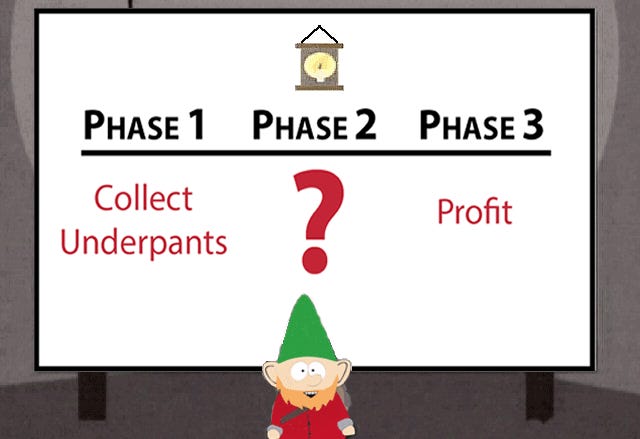
Phase 1: Invest in the pipeline.
Phase 2: ?
Phase 3: More top-grossing female directors!
Then, when it doesn’t work, they just repeat phase one all over.
Honestly, the whole framework needs to be broken down and rebuilt.
What would good research actually look like?
If we genuinely want to increase the top-grossing female director pipeline alongside the indie pipeline, we’ll need different inputs and data than what we currently have.
We’ve established that the Sundance Dramatic Competition is a highly flawed proxy for commercial success, but we need more clarity on what the actual pipeline looks like. I’ve made suggestions here, but it’s beyond the scope of this essay to create an entire new pipeline. (Fortunately, Stephen Follows did the work to identify the real one.)
Better research on this issue would track the actual careers of women who have a clear desire to enter the blockbuster system through multiple financially-successful commercial projects, with steadily-increasing budgets, including…
their first feature
their second feature
their first studio hire
And their first franchise hire…
All while also carefully controlling for the elements we know lead to successful blockbuster performance; growing budgets and commercial success, just like Gerwig, who went from Lady Bird, to Little Women, to Barbie.
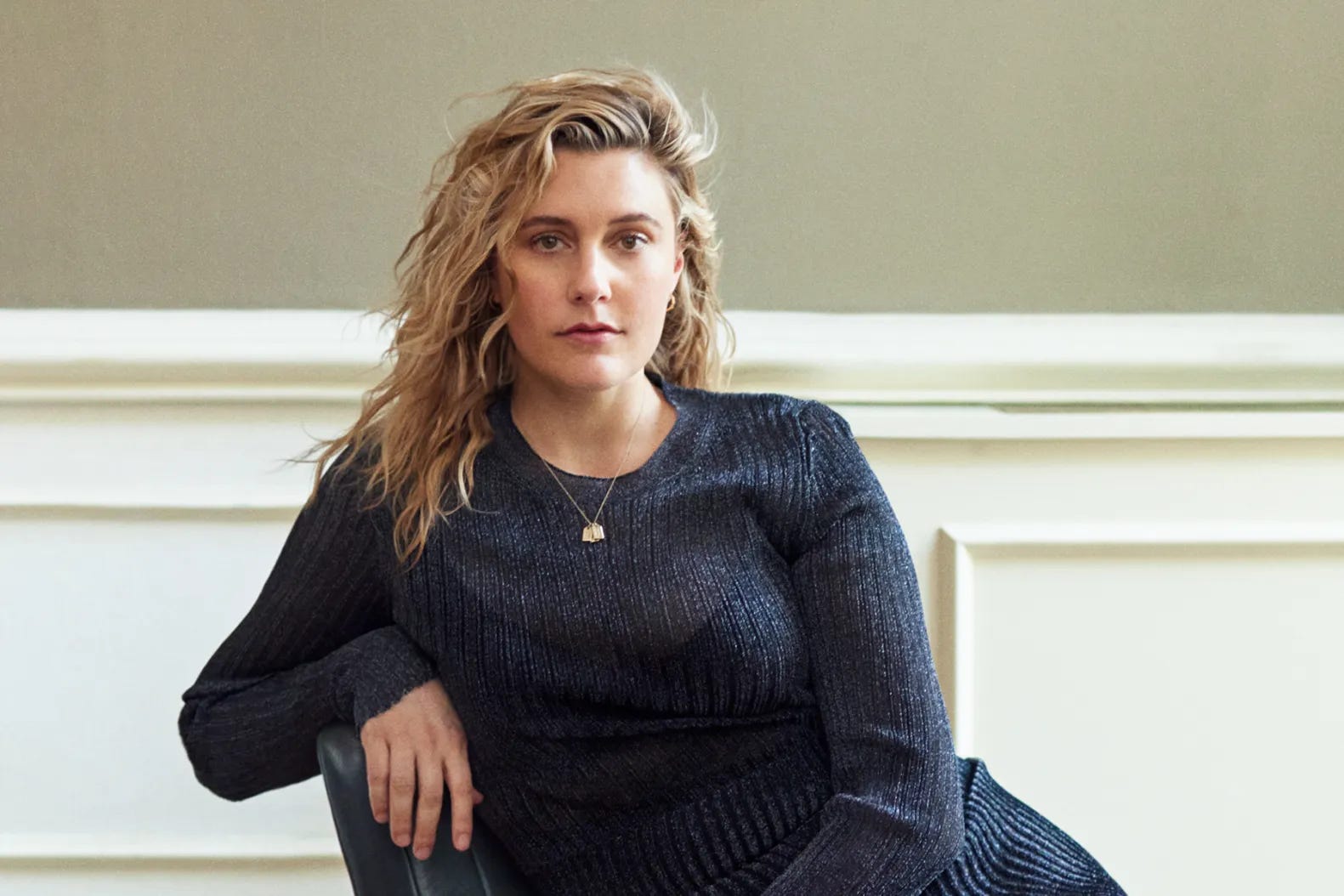
Gerwig is the clearest proof-of-concept we have: growing budgets and box office in popular genres, leading to a true blockbuster on the strength of a track record, not an identity. I want to be careful not to over-build on one career - Barbie is an outlier, not a template. But the arc - escalating commercial success earning escalating trust - is exactly the hypothesis a real cohort study would test.
Again, these women also have to be selected for a clear desire to take that path.
Actually following cohorts of both men and women, who are trying to break into the top 100, comparing and contrasting what genre of films they made, how they performed at the box office, and how they took the next step would be a truly useful exercise, as would systematically interviewing the top box office performing women each year to see what can be learned for future cohorts.
What obstacles did they face across the cohort? How did they overcome them? If they encountered sexism, how did they deal with it?
Institutions could poll the women on the types of directing jobs they’re pursuing, and whether they got them or not, and why. If they didn’t, were they beaten out by a man or a woman? Why?
There could also be mentorship and training sessions for those women going into those pitches from more established filmmakers who’ve already succeeded.
If women are consistently going out for the same big studio jobs as men, with similar qualifications, then losing, this would be a much more persuasive argument for persistent discrimination. Maybe it’s already been made, but not by Annenberg.
This is also not terribly difficult to implement. It can be anonymized to protect the women, and could be activist gold if we really want to change the system.
Proof of Concept
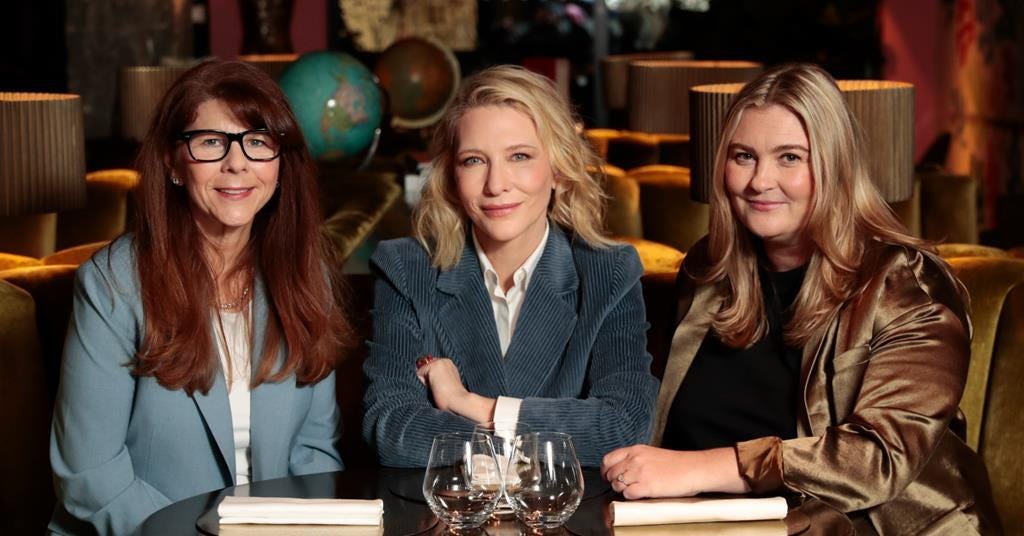
For the clearest evidence the loop is real, you don't have to look far. In December of 2023, Dr. Smith announced she was co-founding an accelerator for women, trans, and nonbinary filmmakers called Proof of Concept, alongside Cate Blanchett and her producing partner Coco Francini, with funding from Netflix.

Its launch announcement justifies the program by citing Annenberg's own headline number: only 6% of directors across the 1,600 top-grossing films - sixteen years' worth - were women. But that 6% was already stale when they reached for it. In December 2023, the most recent year on their own chart, 2022, sat at 8.9%, and 2023 would land at 12.1% — double the figure they used to sound the alarm.
They grabbed the oldest, lowest framing on the board. The current report's version of the same pooled number is 6.6%, higher only because those strong recent years finally got folded in - and a headline stat that ticks upward every time reality improves isn't measuring the present.
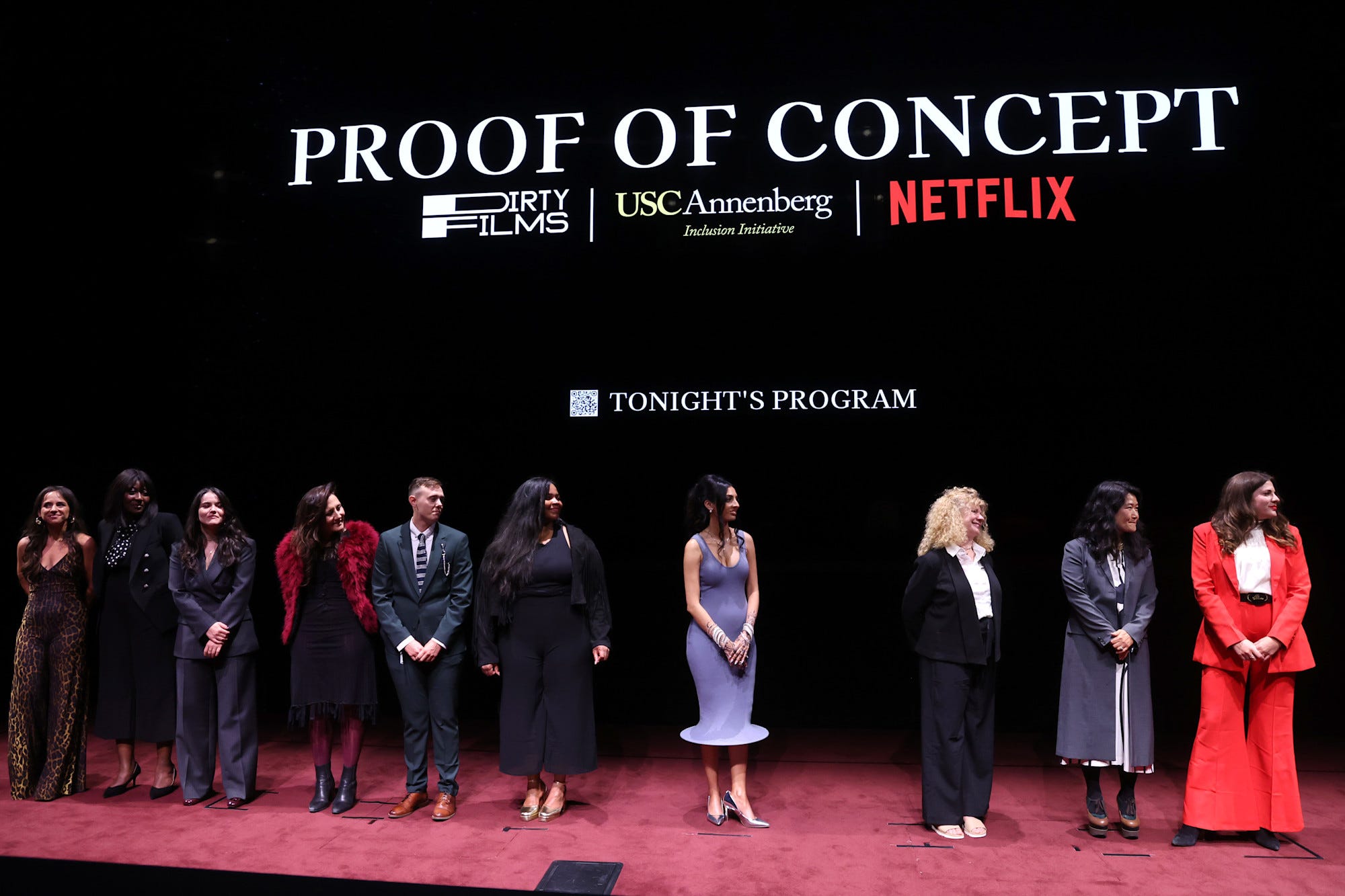
So the report sounds the alarm, and the report's author builds the response - the whole loop closing inside a single career.
And what does it fund? Fifty-thousand-dollar grants to make proof-of-concept short films: shorts meant to prove a director can handle a feature, which is itself several unproven leaps from a $200 million tentpole. That's the missing Phase 2, and the answer to it is another short film.
To their credit, the slate is more commercial than Sundance's - heists, an action-comedy, real genre swings - and the impulse is sincere; money for emerging filmmakers is a genuinely good thing. But it's still shorts, still judged on perspective rather than box-office track record, with no mechanism connecting any of it to the top 100.
As a machine for minting top-100 female directors - its stated goal - it's the ouroboros with a budget: fund the flawed pipeline, skip proving the pipeline works, and wait for next year's report to confirm it still doesn't.
After hundreds of pages, thousands of citations, and nearly two decades of publication, Annenberg still cannot tell us where women are actually being filtered out of the blockbuster pipeline, and even more importantly, why.
That’s because the study was never designed to answer that question.
Good research follows people through a pipeline, identifies bottlenecks, tests explanations, and evaluates interventions. Until Hollywood diversity research does that, it will continue producing the same cycle: alarming headline, industry outrage, institutional response, disappointing results, then another alarming headline.
None of this means discrimination plays no role in Hollywood careers. It simply means we cannot determine its role from the evidence Annenberg presents.
The Annenberg study substitutes a simple headcount of the top 100 directors for the hard work of developing an effective theory of why and how those people got there. Until it stops relying on outcomes instead of processes, the ouroboros will keep swallowing its own tail, instead of helping the female filmmakers who want to become blockbuster directors to finally get there.
P.S. For an excellent followup, have a look at Stephen Follows new piece responding to this one, and identifying the actual pipeline: link here.
How about more great movies? I don't care who directs them. Diversity is a harmful, artificial benchmark.
1. Why should I care about the gender of a director? All I want is great movies. Give me films equal to The Godfather or On the Waterfront.
2. The focus on blockbusters reveals the true metric: money. Maybe the people who finance movies are afraid that female directors can't deliver big paydays as reliably as male directors.
That isn't "male privilege." It's greed, which is blind to gender.