


Apologies, this got accidentally deleted. I’m reposting it now.
We all hate getting “nos.” But if you want to make movies and television, you will receive thousands. Over the years I’ve gotten better at absorbing most of them.
I’m at a stage in my career now where things falling apart is far more painful than an initial rejection. But a wave of rejections is typically how projects start, then end.
I can’t even count the number of times now when, in the beginning phase, a producer or an executive will tell me with confidence that “this will never work,” then one hour later someone more successful than them loves it. The thing I’m working on now was passed on by a junior development executive before it roped in a big, award-winning showrunner. It was the exact same document.
The beginning nos are easy now. It’s the “end nos” that still sting a bit. They happen on projects that already have producers, networks or financiers attached, that are often paying me at least some money, have significant time investments, and are getting the big “end nos” from networks, festivals, financiers, actors, etc.
The kind of people who can get something made or seen, but still rarely choose to. Sometimes it’s one of those people who already said yes, but then walks away or gets fired or has another project blow up. Once or twice I was very close to a deal when a nearly identical project was released or announced. The latter starred the same actress I had worked with and was planning on going to.
It’s a crazy thing to do.
So today I want to get into the weeds on rejection with a simple, counterintuitive binary.
The Good No
I will talk a lot more about getting to a “no,” and getting past it at some point. As many of you have learned, even just receiving a verbalized or written “no” is rare, especially in Hollywood.
Mostly you get silence.
But I wanted to take a moment to talk about why a good “no” (even unspoken) can be a good thing, even the best thing. Something that, over the years, you learn to hope for.
A good “no” frees you from whatever path you were seeking in a clear, direct way. It can give you valuable (or worthless) feedback on a project, and direct your energy to other, more fruitful avenues.
It’s also far, far better than what I call “the bad yes.”
The Bad Yes
A bad yes generally comes when someone is doing one of three things:
Fishing for easy wins (of which there are very few).
Overscheduling themselves.
Too afraid to say no.
These “bad yeses” are what will burn you out and kill your projects. I have had some very big people come on board to beloved things.
They’re always “just about ready” to work on it after another project. Or they’re rescheduling the meetings over and over. Either way, after that dopamine rush of the “yes,” there’s the long goodbye of the unspoken “no.”
Because they are often very successful, I have to tolerate it. But these situations can drag on for years. The bigger person fucks around, the industry changes, the project goes stale.
I’ve even had it kill what I thought were friendships. I have projects where I still have no idea why we stopped getting coffee, or talking. Maybe they’re embarrassed?
Some of my favorite projects have died this way; a thrill at the attachment, followed by a slow decay. The big person pitches it once to their agent, gets middling feedback, then abandons it internally without really telling you. And you have to decide whether to walk away.
Even investing money is no proof that someone will tough it out on a project. I’ve had producers invest thousands and thousands of dollars and still abandon a project after a single no. I decided in favor of one of these people over another producer who I know is a real hustler. Obviously those people are not getting any more pitches from me.
These are the worst situations, because something that could have been a real opportunity, properly fought for, dissolves into a sea of vague disappointment.
They’re paying you, in a sense, to die.
You want people to say yes because they believe in the thing enough to show up year in and year out, hustling it along until it’s made, or it’s proven completely impossible to do so.
And those good people are rare.
Those are the people who are usually smart, mature, and gracious enough to just say no.
Accept that the good no is a sign of character, and respect, while the bad yes is the opposite.
Embrace the good no, and fear the bad yes.
A good no frees you to move forward, while a bad yes can be like the bomb on the bus in Speed, just waiting to activate as the project gains a bit of momentum.
When someone is excited about something, it’s easy to forget all caution. Money! Interest! How rare!
But it’s important to do your diligence; is this person just a ghost warehouse of unproduced projects? Will they be there in a year? Six months?
Are they the kind of person who suffers from “shiny object” syndrome?
Sometimes A Long Wait Pays Off
It’s been a long time since it was optioned and Alexander [Payne] became attached. There wasn’t really much development after that. We just, it was basically waiting for Alexander to find the right time to do it. - Bob Nelson
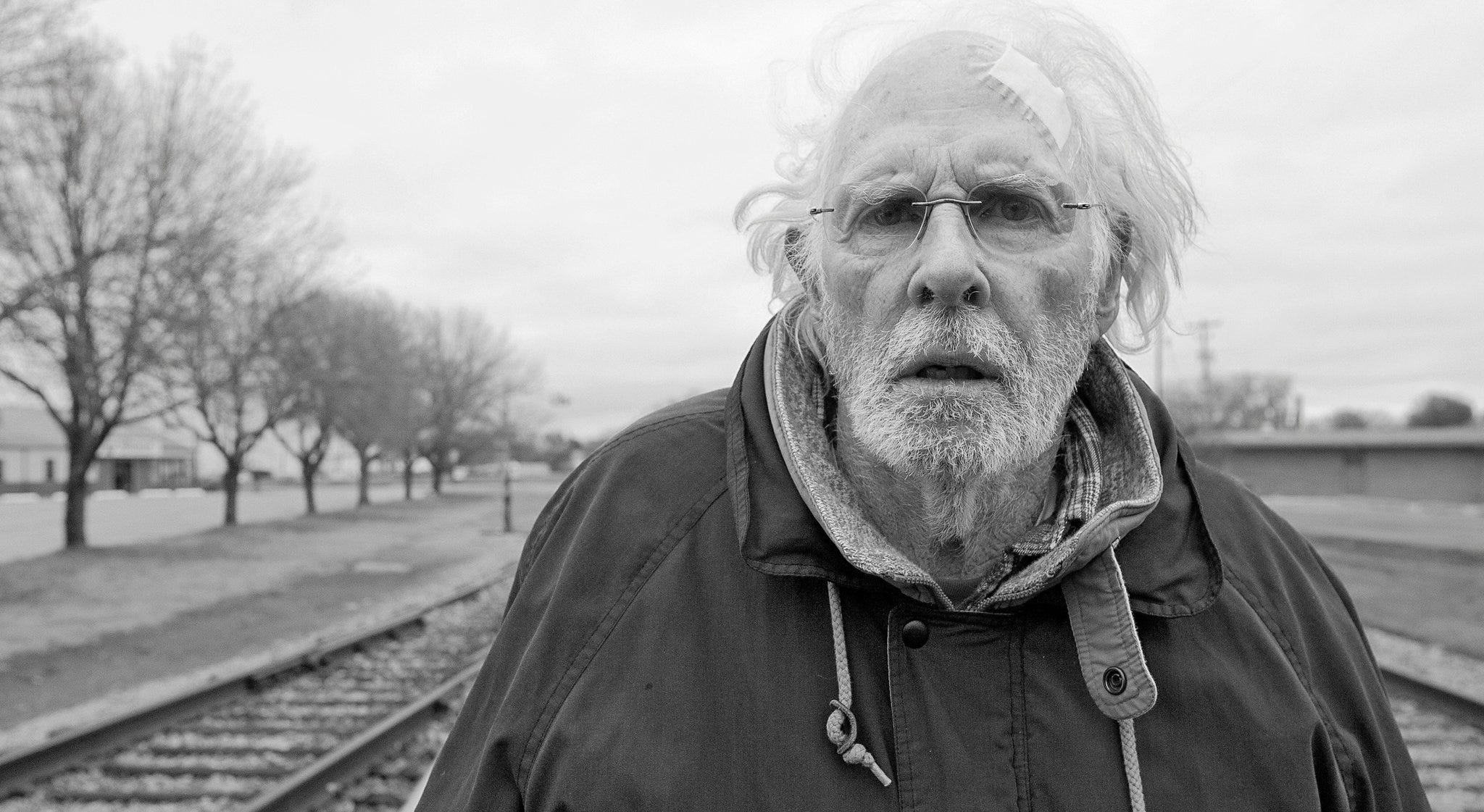
Bob Nelson, the screenwriter of Alexander Payne’s beautiful 2013 film Nebraska, waited a decade for Payne’s schedule to free up, and got a beautiful film in return.
When he read the script in 2003, Payne was just about to make another road movie, Sideways. He didn’t want to spend another year in cars right away, as he put it, so he waited until after The Descendants to pick it back up. That was 2012, nine years after he first read the script. Nelson told the Seattleite:
We didn’t know, and he probably didn’t know, that it would take seven years to live up to his commitment but we were the movie after that. He kept his word and all during that time he would reassure us that he was still planning on making Nebraska. That’s really all we needed. There was a worry that he would pick up the script and re-read it and go, “What was I thinking?” and drop out of the project. But he kept telling us, “I just read it again, I’m still onboard” so we didn’t worry too much.
Nebraska is such a good movie.
Note that Nelson knew that he had a real win with Payne. He was humble and patient. On Payne’s end, he also followed up regularly to continue to show interest.
Even with the decade wait, that’s still a very good yes. Nelson got to see his movie premiere at the Cannes Film Festival, and get nominated for Oscars.
Not everyone is so lucky.
