

My 30 Favorite Findings So Far
From my first fifteen investigations.

Everybody loves a listicle!
15 posts! Over 100,000 words! Many beautiful charts! Very much truth-seeking, regardless of where it took me. So what have I learned? In one sentence:
Hollywood’s real barrier is class, not identity.
I know it makes people uncomfortable when I go after things like the UCLA and USC studies, but we absolutely need epistemic hygiene, or we’re no different than populist tik tok. We have to have higher standards for truth, especially when its taxpayer funded, or it becomes too easy to attack the idea of truth altogether. Also, people make career decisions based on that information, and if it’s bad, that’s not fair to them.
As we know, some truths are truthier than others.
I also want to take a moment to thank all the journalists whose work I drew on to conduct this research, and who I cite heavily in the actual linked pieces.
Onto the 30 Findings
Ok! So for those of you new to this publication, here’s a summary of my favorite things I learned in my first 15 investigations:
From Survival of the Richest: Hollywood’s Broken Talent Pipeline:
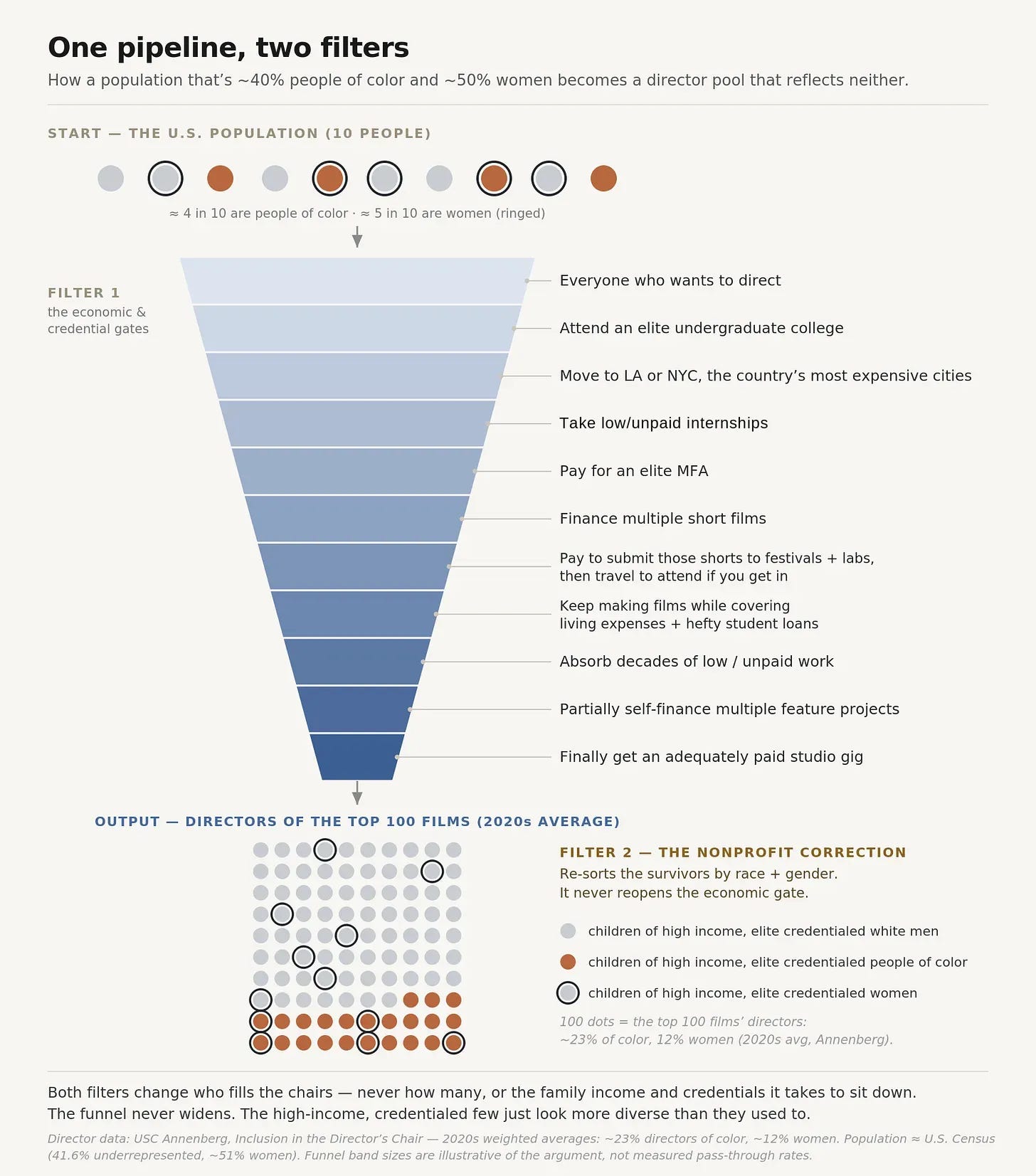
Finding 1: Poorface. Filmmakers like Chloè Zhao regularly hide their wealth to make themselves look more hardscrabble than they are. This makes them more attractive to festivals, grants and awards. But the path she followed was outrageously expensive and is not accessible to even middle class people.
From Skip Institutions, Build Audiences:
Finding 2: The Chloé Zhao path is also dramatically more expensive than the Curry Barker route of just moving to LA, dropping out of film school and just making cheap comedy and horror content for youtube, building your audience along the way.
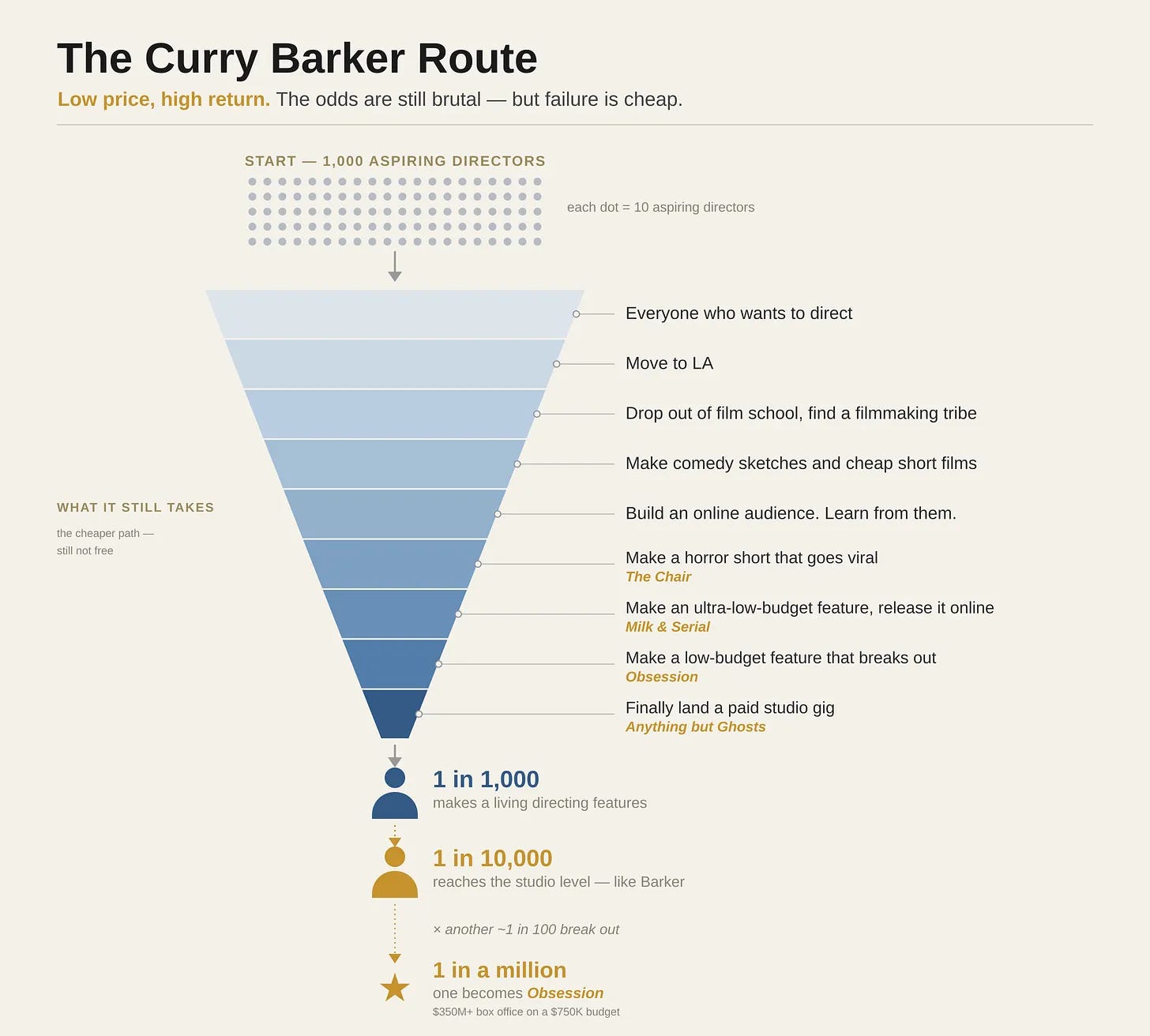
Finding 3: Obsession, a sub-$1m horror feature, has more than doubled the earnings of all 68 Sundance competition films from the 2020s combined. Yes, you read that right. That includes verifiable acquisition prices, not just box office (Obsession’s current haul is roughly $475m, the generous Sundance combined theatrical and acquisition grosses I calculated is $207m).
From The Luxury Film MFA Ends Today:
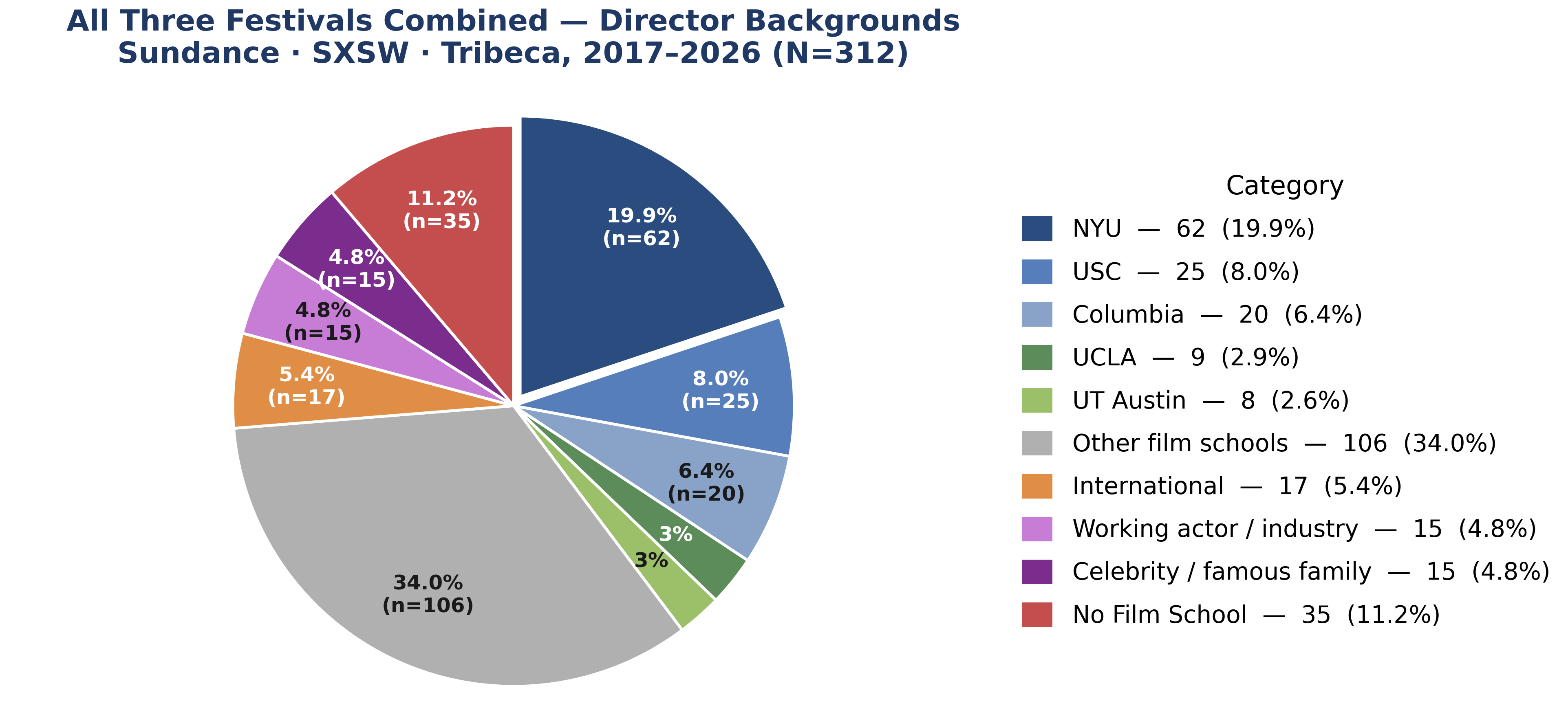
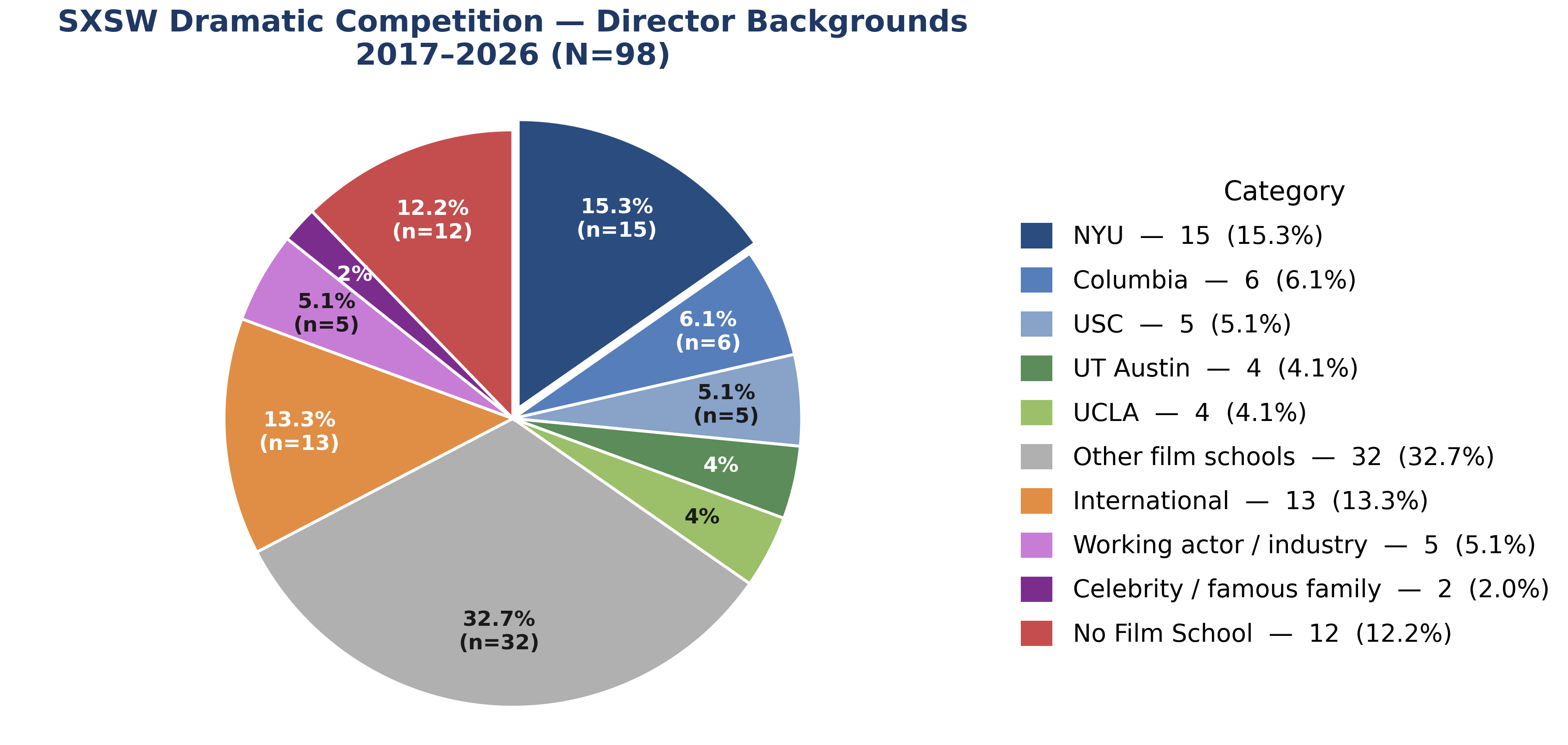
Finding 4: The major American film festivals (Sundance, SXSW, and Tribeca), overwhelmingly program the alums of a handful of private film schools in their dramatic competition sections, which I tracked from 2017-2026. Here they are combined, with the top 5 schools named:
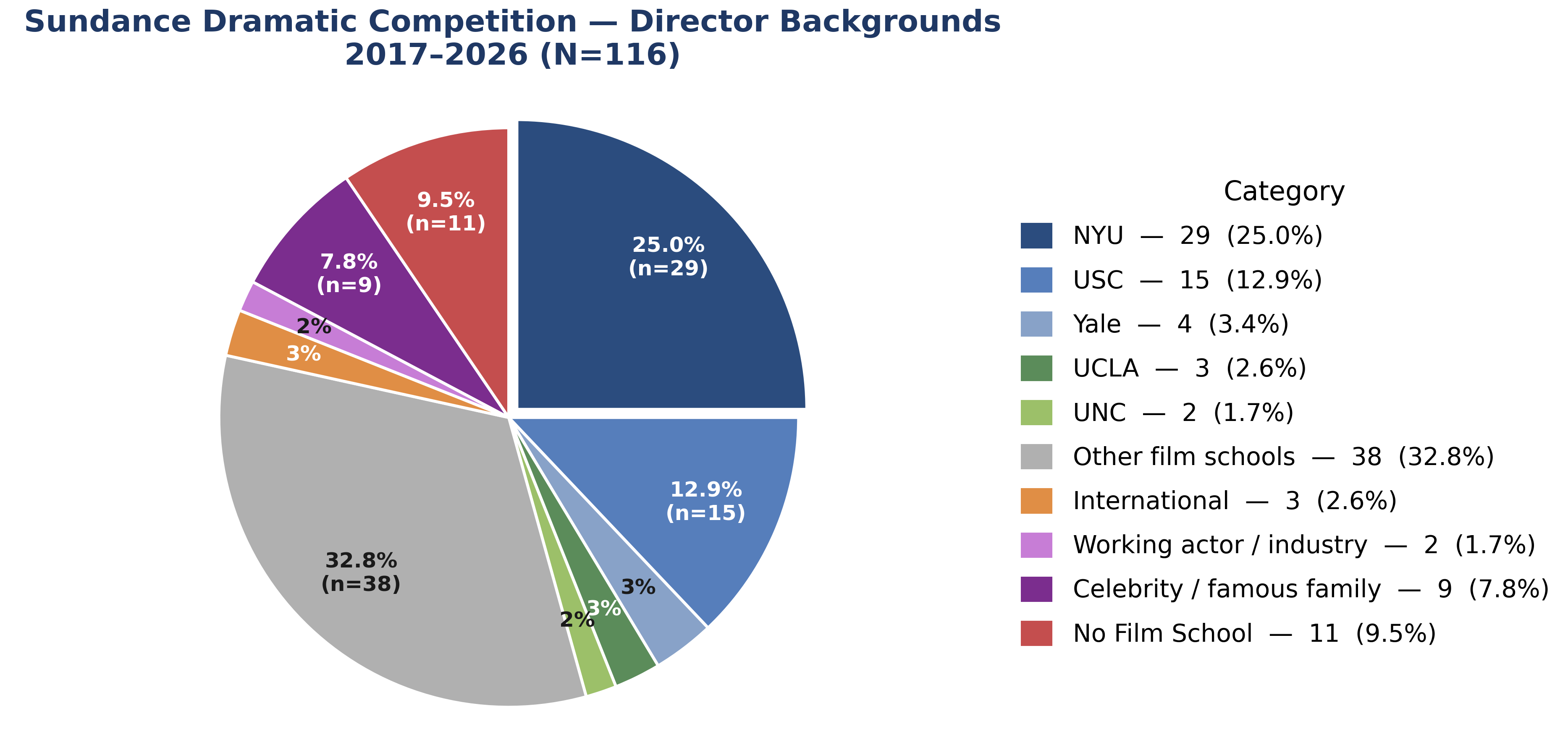
Here’s Sundance…
SXSW:
And Tribeca:
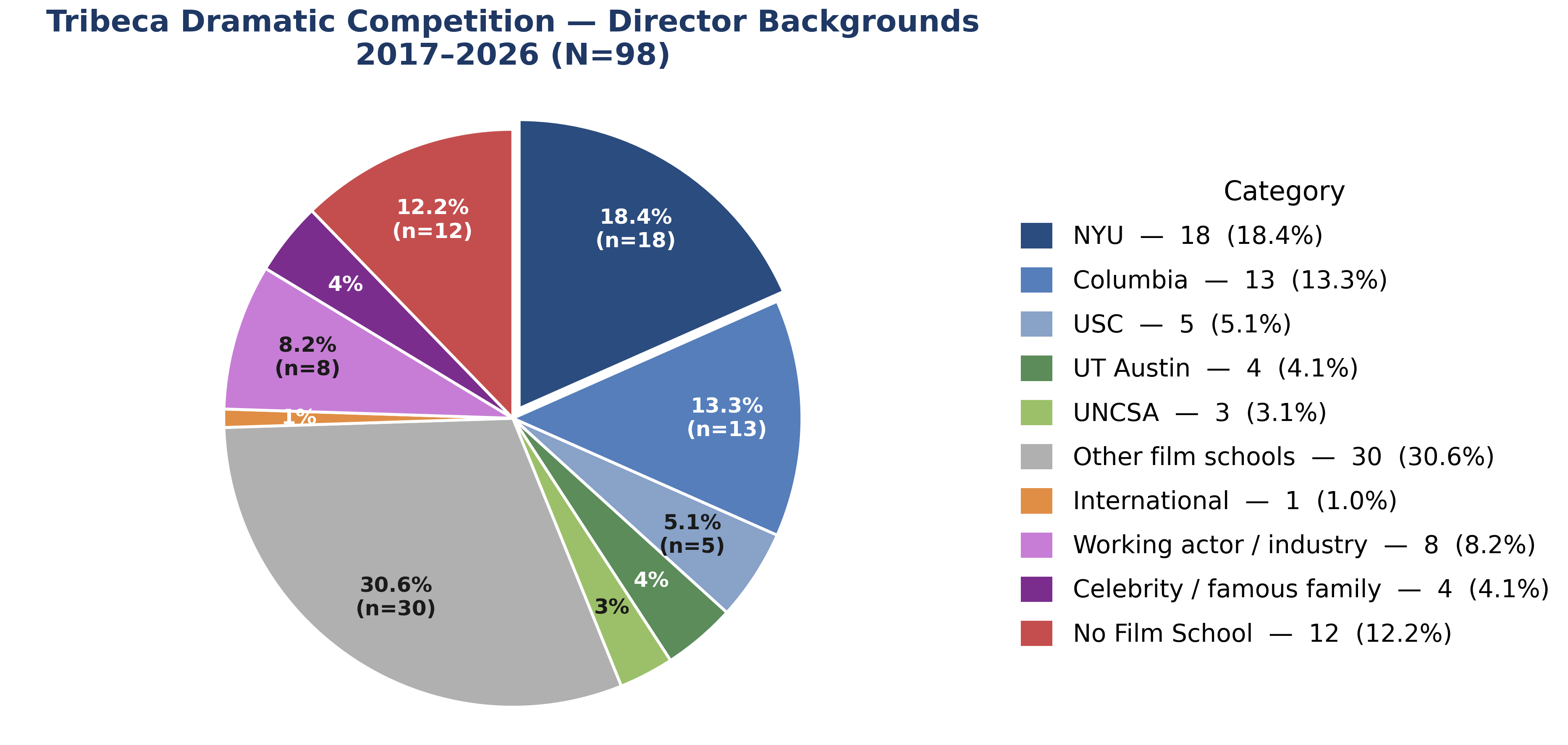
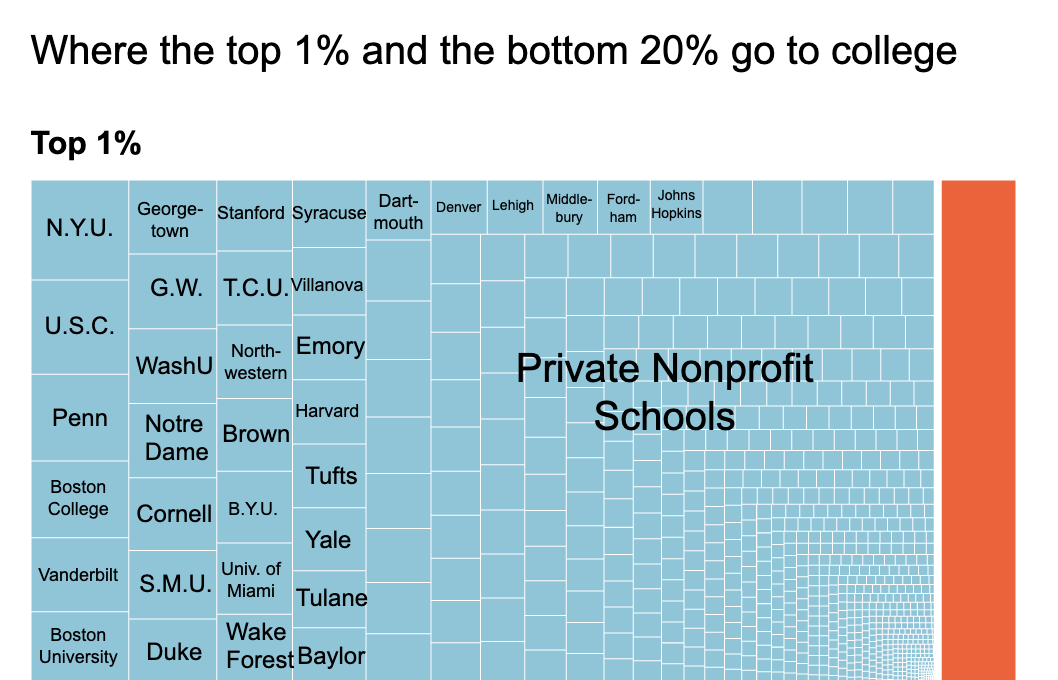
As you can see, film schools, especially the elite troika (NYU, USC, and Columbia), dominate. As the NYTimes reported, the first two are the most popular destinations for the children of the 1%.
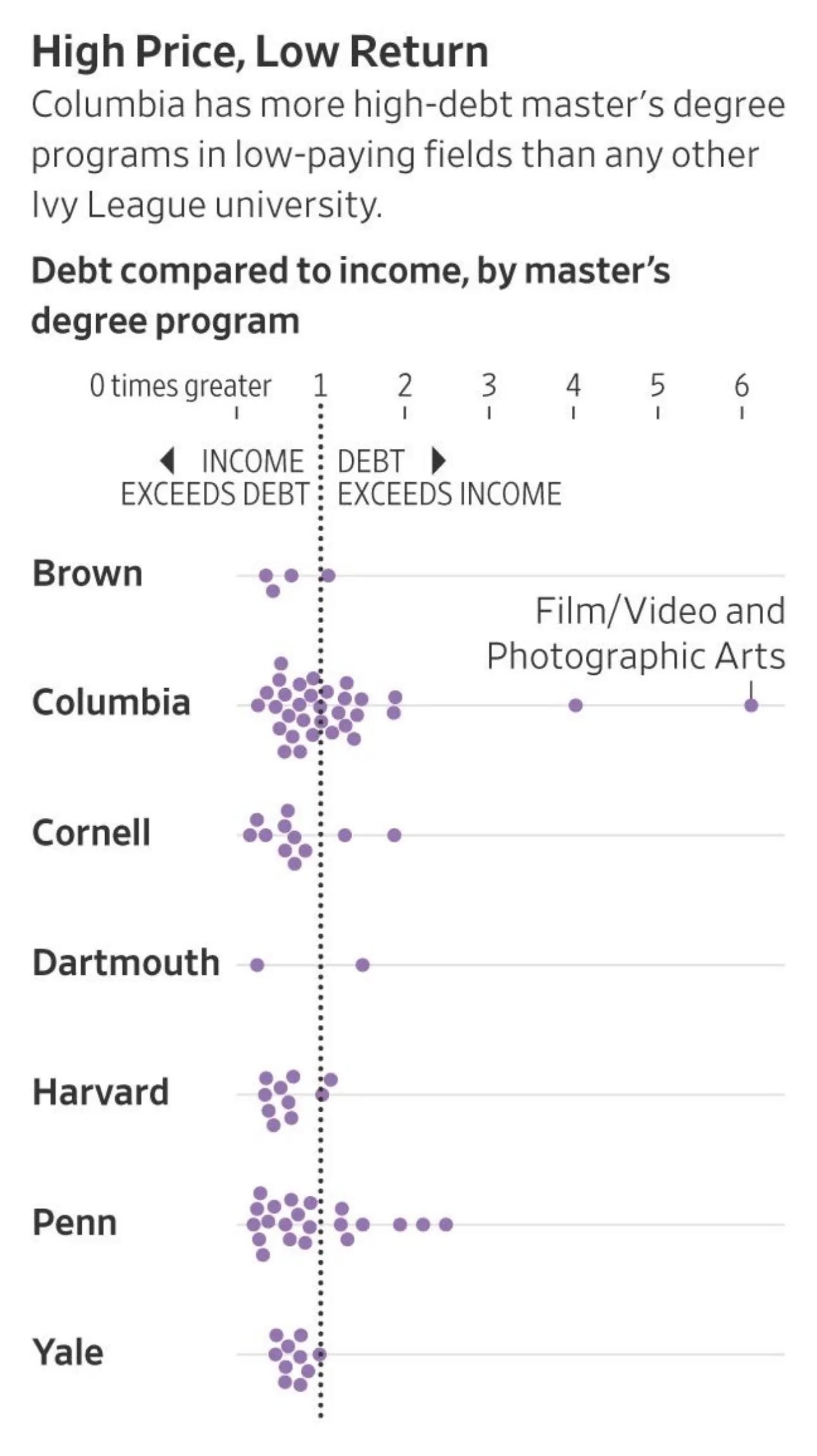
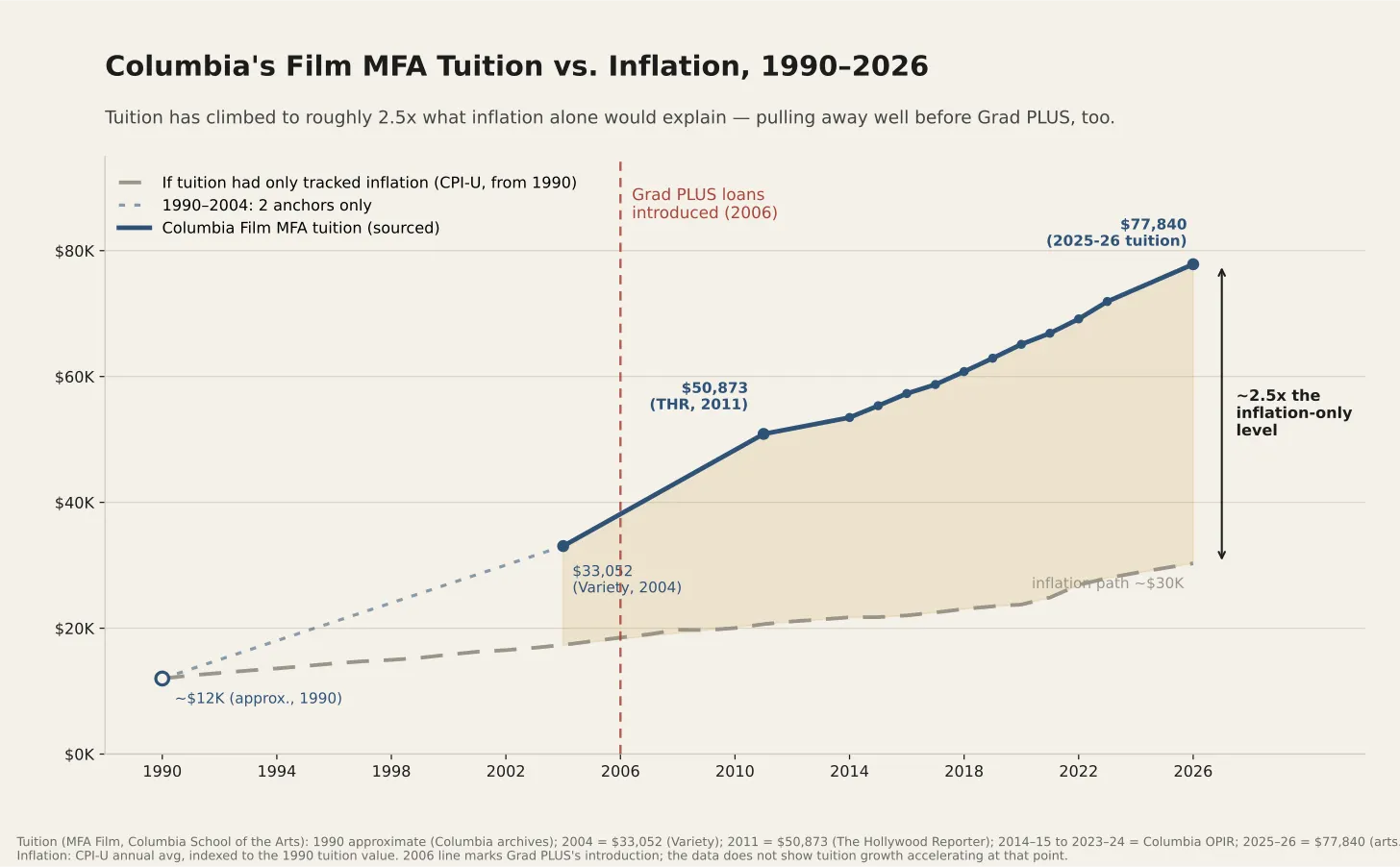
Finding 5: Columbia Film School’s MFA film program has the worst debt to earnings ratio of any MFA arts program in the country. It uses its film MFA profits to fund the rest of the university.
Finding 6: The Grad Plus Student loan program, which just ended, sparked an orgy of borrowing that will be with us for a long time, and likely be bailed out by the taxpayers.
From Promising Young Director:
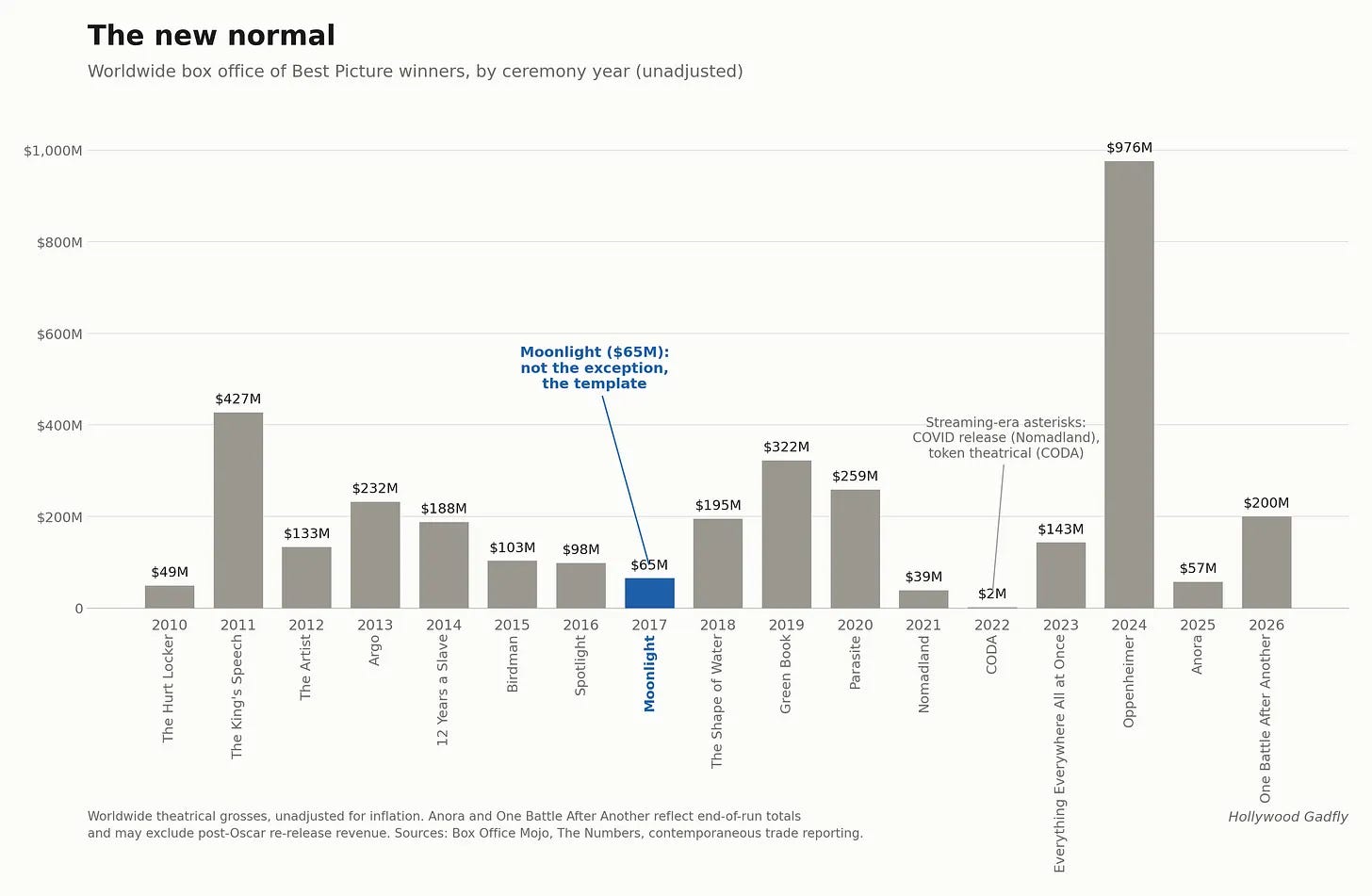
Finding 7: Women have made dramatic strides at the directing Oscars, but winning doesn’t help their box office performance.
For most of Oscar history, a woman in the Best Director category was nearly a once-a-generation event. Lina Wertmüller was the first, in 1977. Across the Academy’s first ninety years, only five women were ever nominated — Wertmüller, Jane Campion, Sofia Coppola, Kathryn Bigelow (the lone winner, in 2010), and Greta Gerwig.
That’s one female nominee roughly every eighteen years prior to the 2020s.
But the 2020s produced six nominations in six years — Chloé Zhao and Emerald Fennell (2021), Campion again (2022), Justine Triet (2024), Coralie Fargeat (2025), and Zhao a second time (2026). Going from one nominee every eighteen years to one a year is, literally, an eighteen-fold jump in the rate. Women have also won two of the six directing Oscars handed out this decade — Zhao and Campion — double the tally of the entire preceding century, when Bigelow was the only winner.
By unadjusted measures, CODA ($2,237,618), Nomadland ($39,392,289), and the Hurt Locker ($49,876,984), all three of the female directed entries, are the lowest-grossing Best Picture winners ever (though number 4, Anora, is male-directed). This is a depressing statistic only somewhat ameliorated by the pandemic, which obviously affected CODA, which had no domestic theatrical release, and Nomadland, which did.
From The UCLA Hollywood Diversity Report Does Not Prove What It Claims:
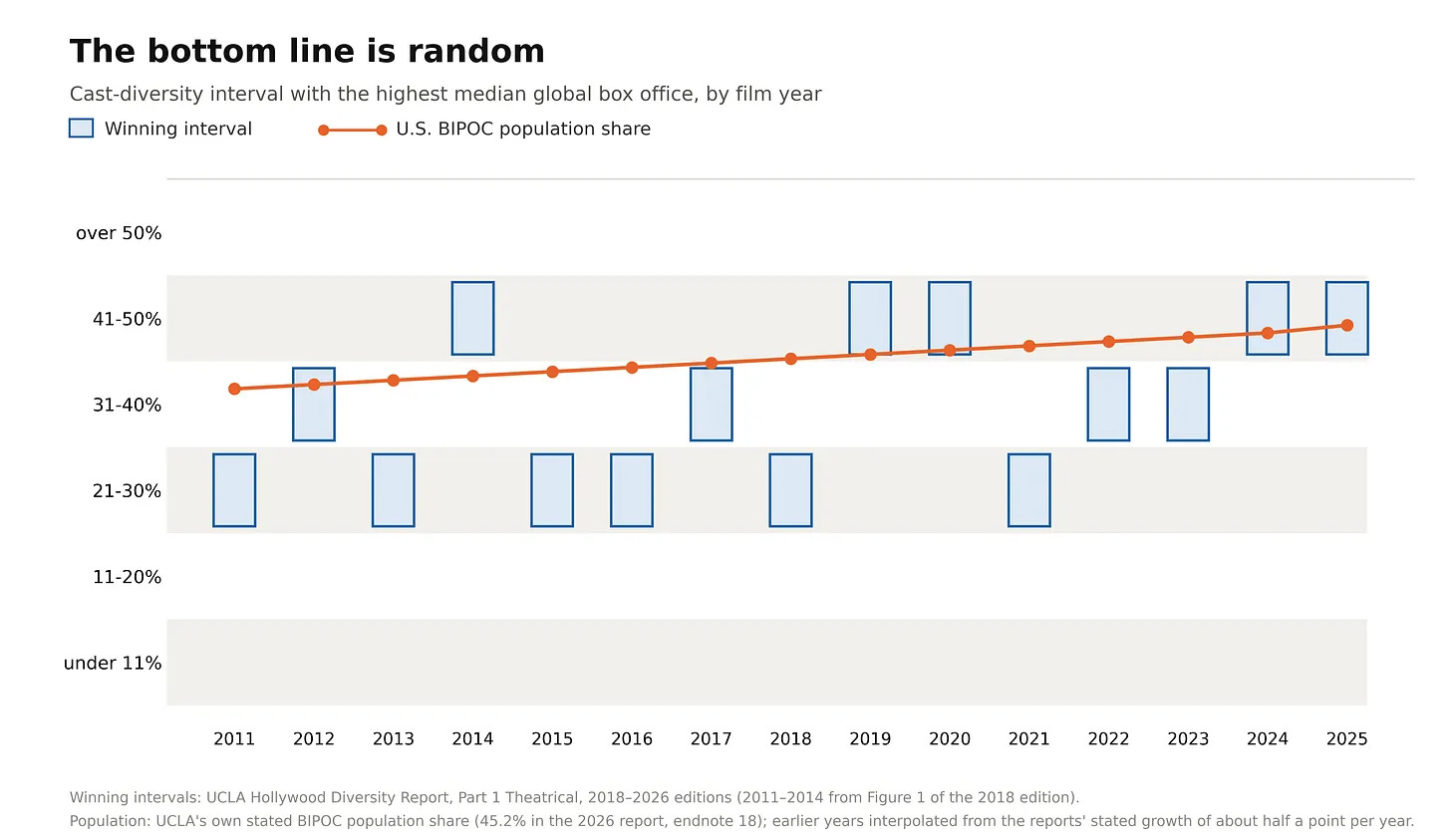
Finding 8: The UCLA Hollywood Diversity Report’s headline finding is false:
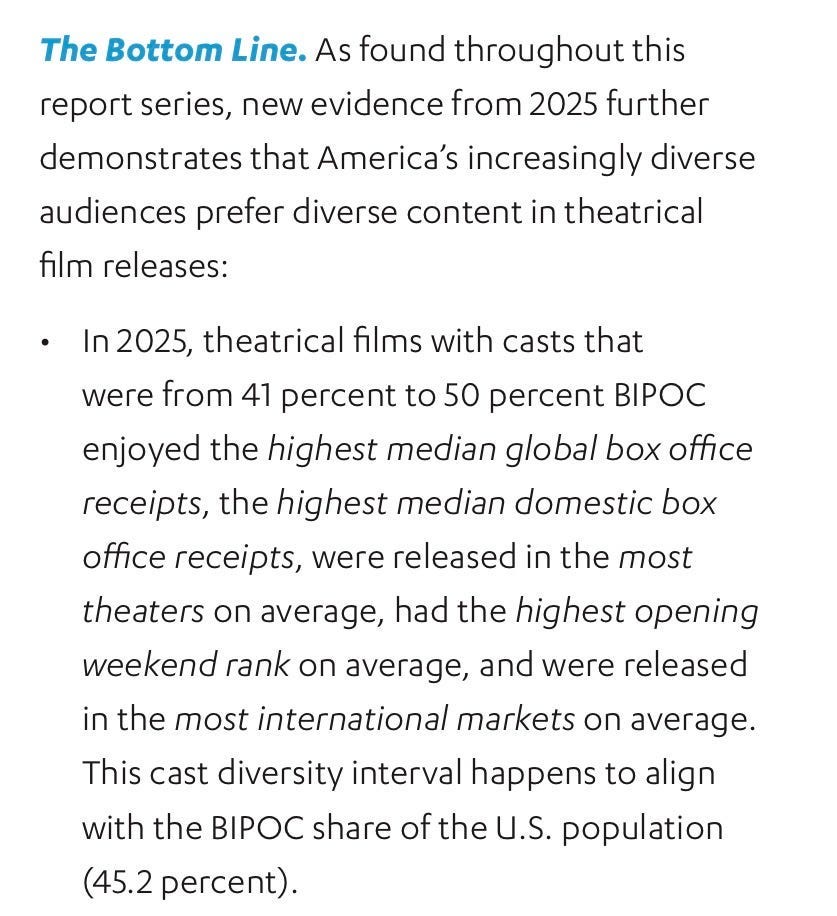
The study’s touted “bottom line” is random:
There is no evidence that cast diversity is good for box office. Stephen Follows’s followup showed no connection whatsoever:
No method shows cast diversity meaningfully lifting box office. None shows audiences punishing it either.
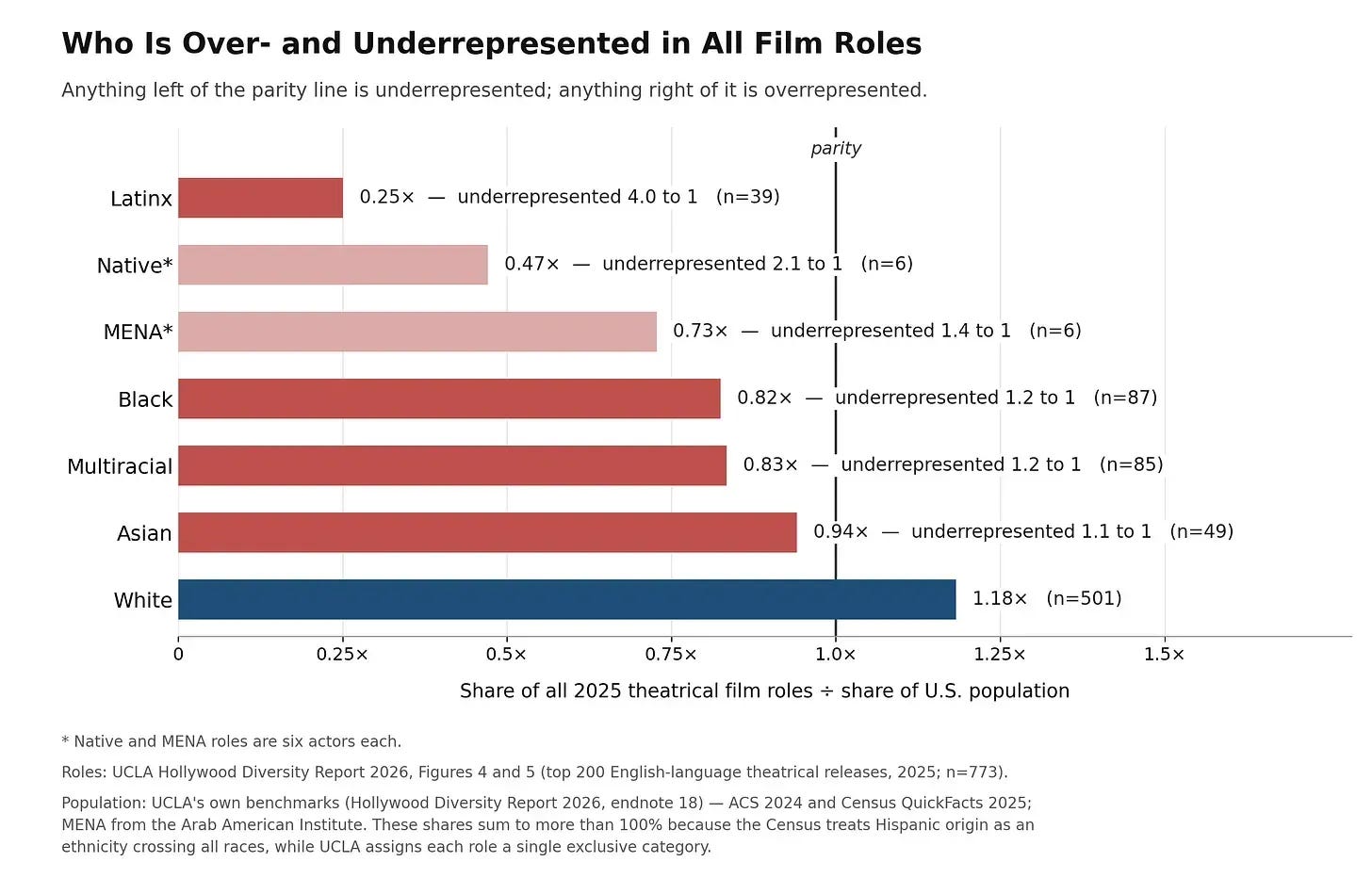
Finding 9: The Latinos are always, always the most underrepresented minority group, and yet it feels like they are talked about the least. Just look at this chart I built based on their underrepresentation versus their population baseline.
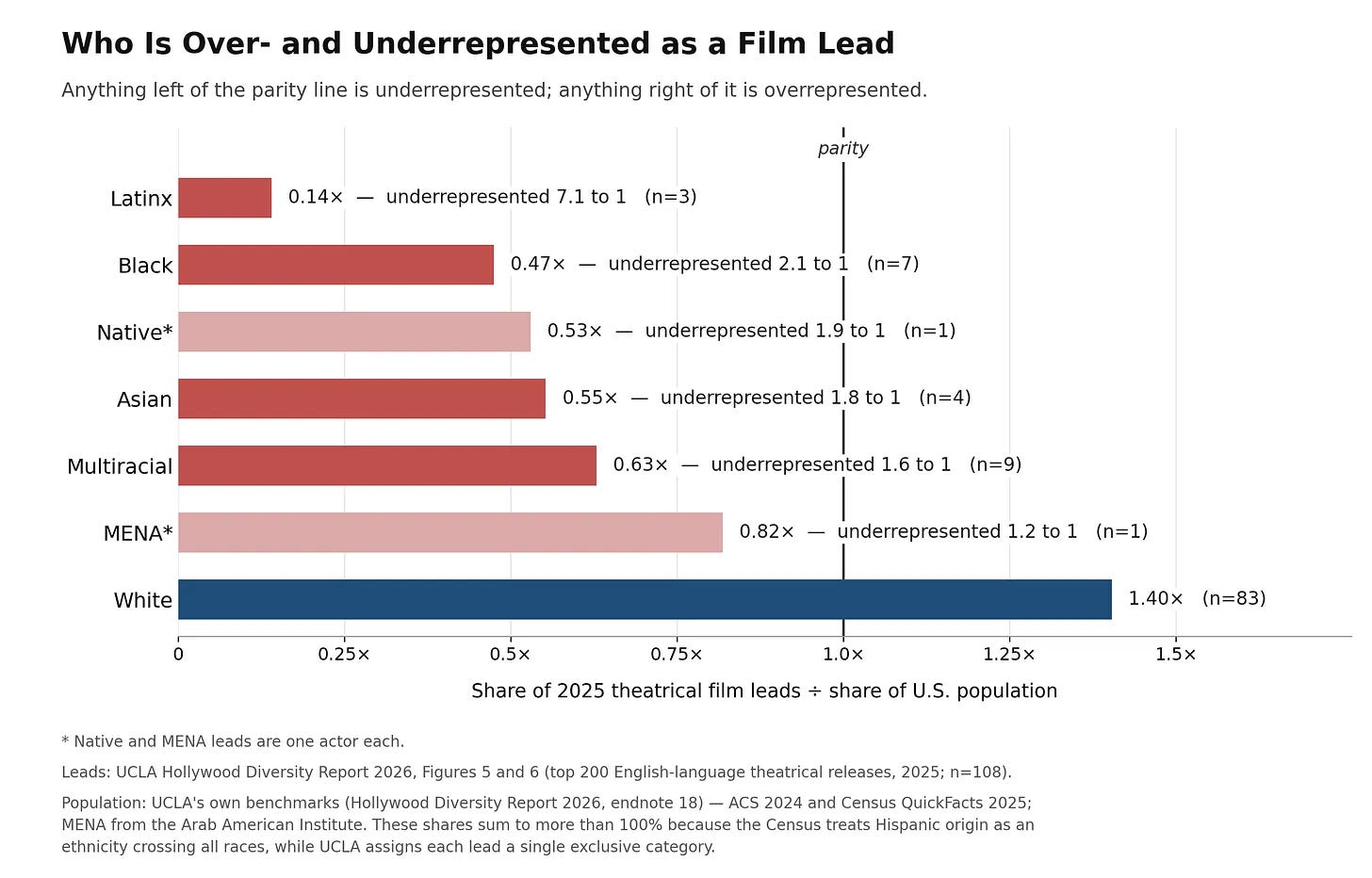
Again, the BIPOC term UCLA uses also hides severe underrepresentation among Latino supporting actors. Here’s the same chart broken out into all roles:
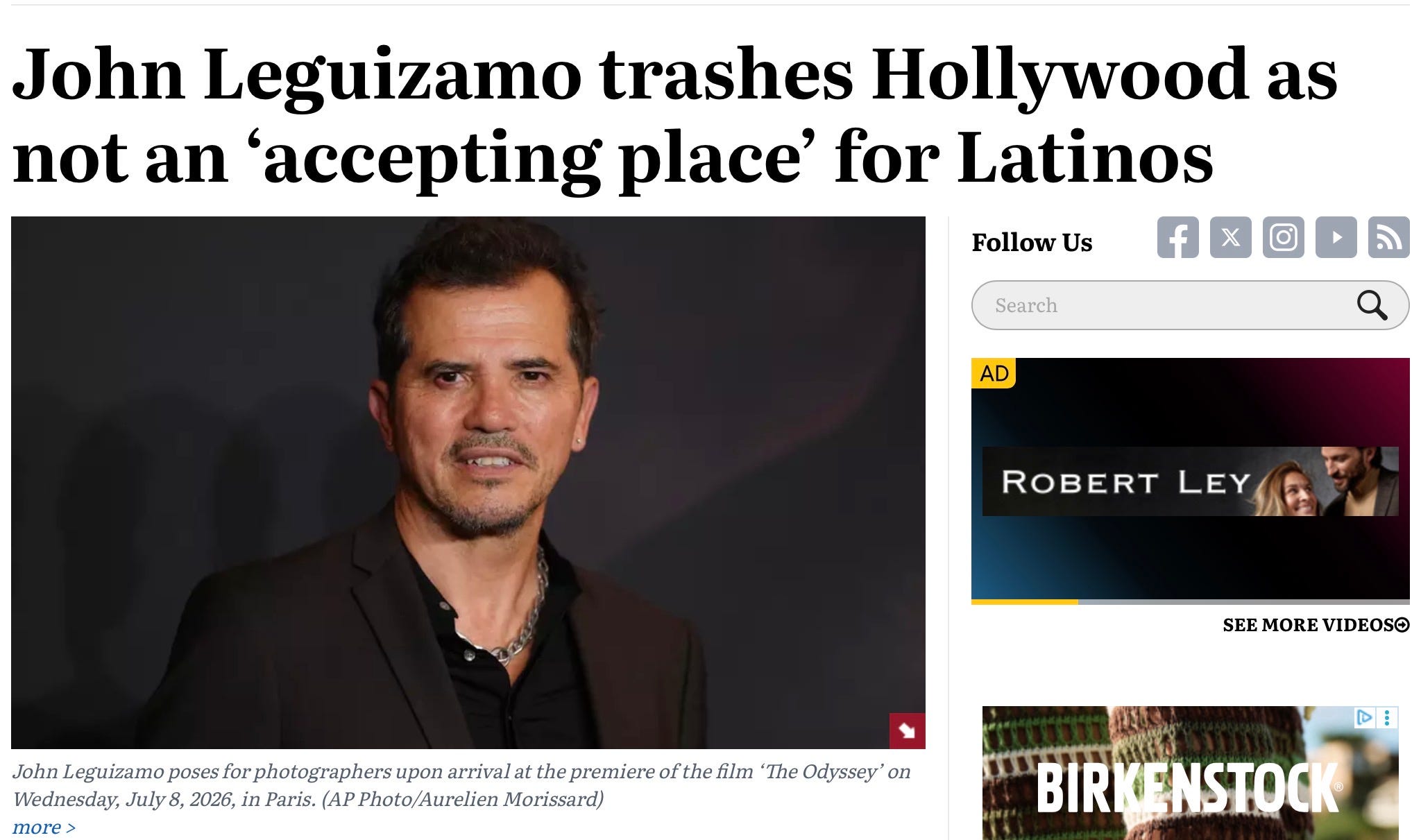
John Leguizamo has been talking about this for a long time. He is absolutely right; Latinos have it the worst in Hollywood by a long shot.
From the Virtuous, The Assholes and the Damned:
Finding 10: Joseph Kahn’s anti-woke Hollywood Reporter op-ed is bunk: there is no evidence cast diversity is bad for box office.
From A Great Black Hope, my massive, 12,000 word history of #OscarsSoWhite, which is difficult to do justice here:
Finding 11: Hollywood and the Academy were genuinely awful to Black actors in the 20th century.
In the 20th century, Black representation in the acting categories had been dismal, with just six competitive acting wins across the Academy’s first 71 ceremonies. Only one Black actor had ever won Best Actor, Sidney Poitier, for 1964’s Lilies of the Field. At the end of the 20th century, no Black woman had ever won Best Actress.
The remaining five winners — Louis Gossett Jr. (1983’s An Officer and a Gentleman), Hattie McDaniel (1940’s Gone With the Wind), Denzel Washington (1990’s Glory) and Whoopi Goldberg (1991’s Ghost), Cuba Gooding Junior (1997’s Jerry Maguire) — all came in the supporting categories. Entire decades passed — the 1950s, the 1970s — without a single Black winner.
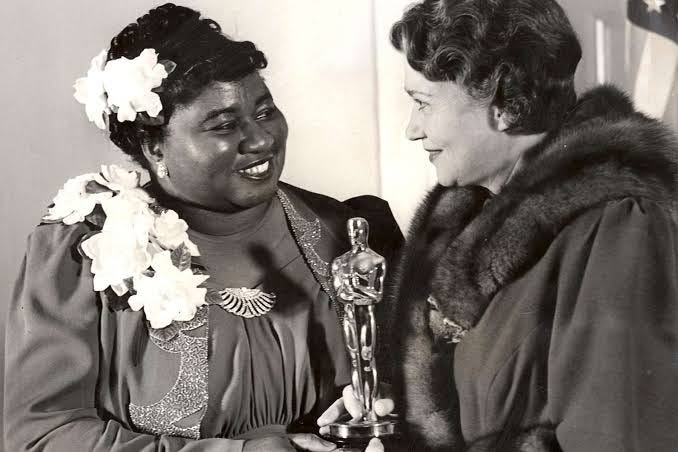
Hattie McDaniel, the first Black Oscar winner ever for Gone With the Wind in 1940, sat at a segregated table against the back wall. She died in 1952 without seeing another Black actor win.
Finding 12: But the 21st century brought several milestones in quick succession:
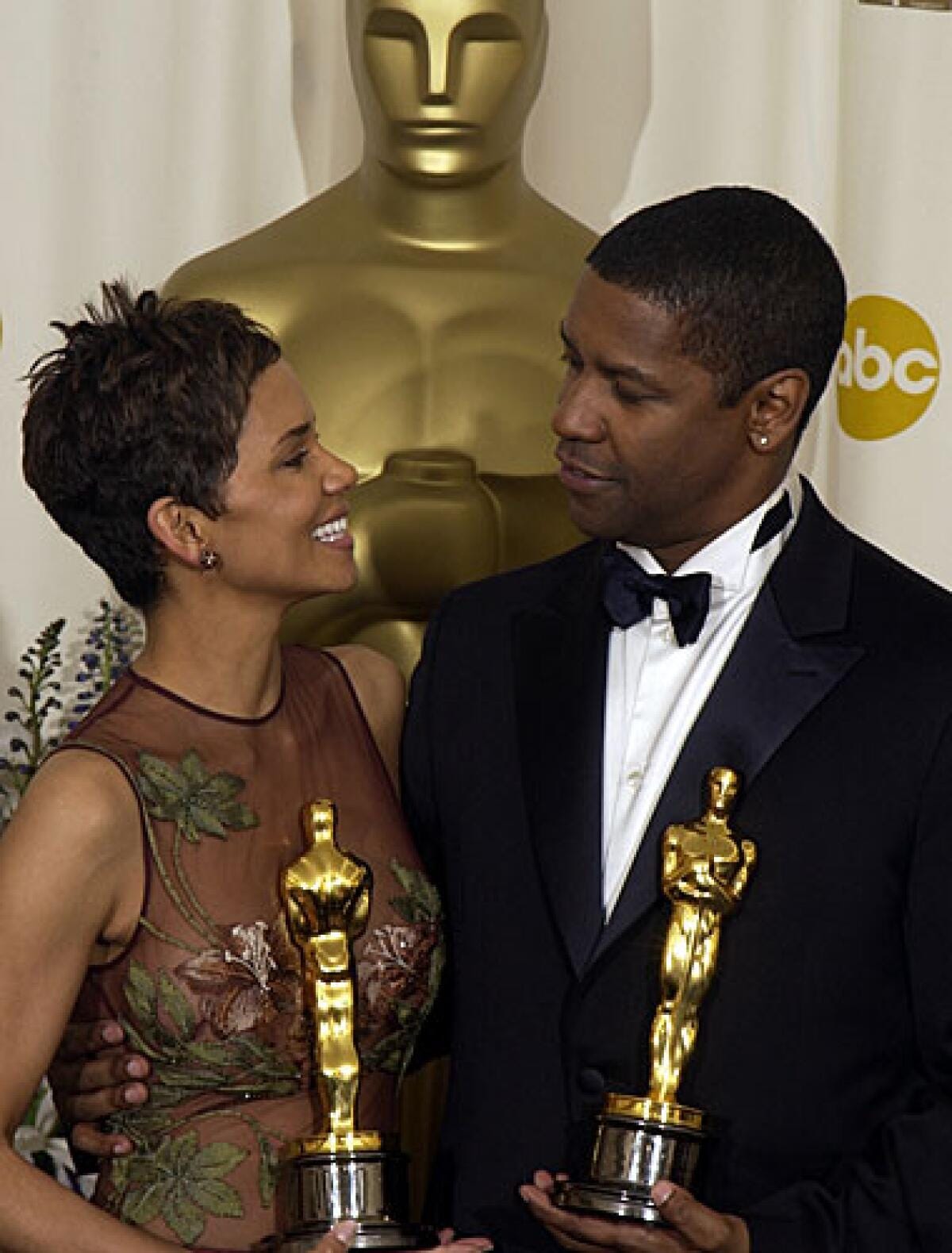
In 2002, Denzel Washington won Best Actor, 38 years after Poitier, for Training Day. Halle Berry also made Oscar history, becoming the first Black woman to win Best Actress for Monster’s Ball.
2005: Jamie Foxx wins Best Actor for Ray, Morgan Freeman wins Best Supporting Actor for Million Dollar Baby. Five Black acting nominations total.
2007: Forest Whitaker wins Best Actor for The Last King of Scotland, Jennifer Hudson wins Best Supporting Actress for Dreamgirls; five Black acting nominees.
2010: Mo’Nique wins Best Supporting Actress, and Geoffrey Fletcher becomes the first Black winner of a screenplay Oscar for Best Adapted Screenplay for Precious.
2013: Quvenzhanè Wallis becomes the youngest person ever nominated for Best Actress for Beasts of the Southern Wild.
2014, the year before #OscarsSoWhite, was arguably the peak:
12 Years A Slave was the 1st Best Picture winner directed and produced by a Black filmmaker.
2nd Black writer to win Best Screenplay (John Ridley).
Black Supporting Actress winner (Lupita Nyong’o).
1st Black female Academy president (Cheryl Boone Isaacs).
1st Mexican filmmaker to win Best Director (Alfonso Cuarón).
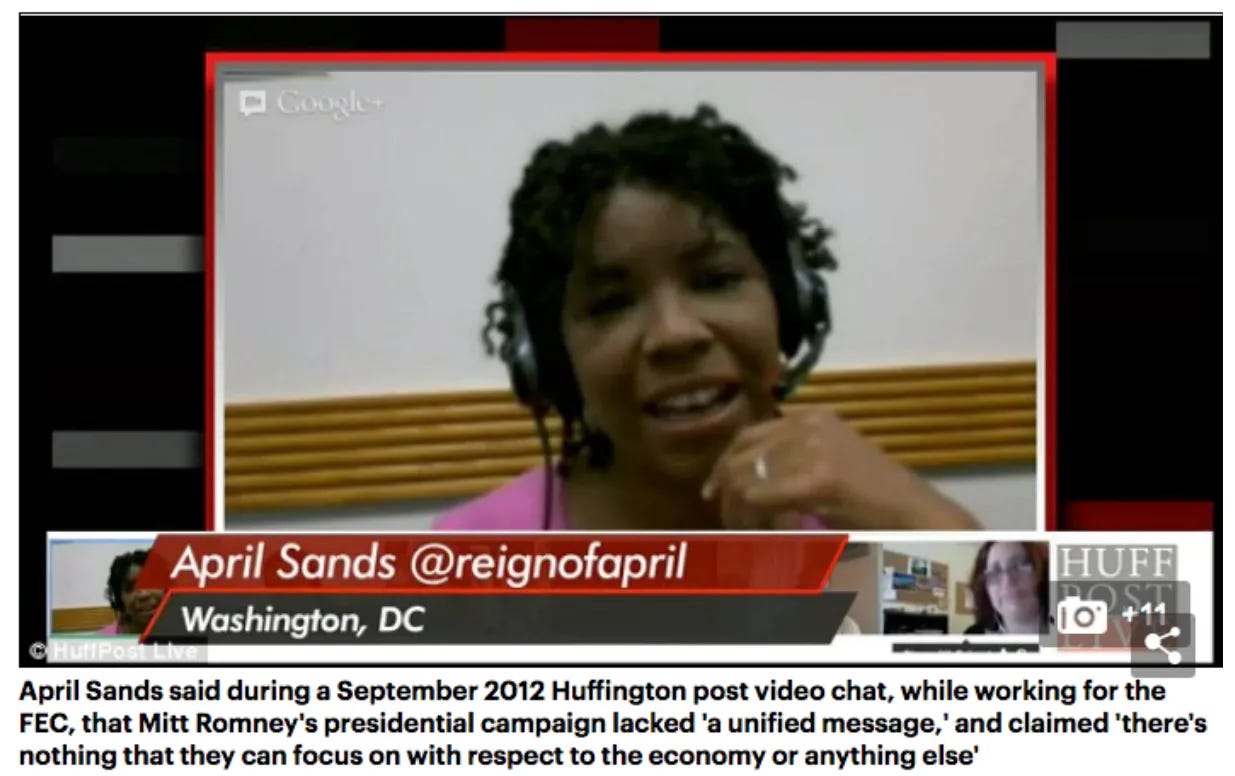
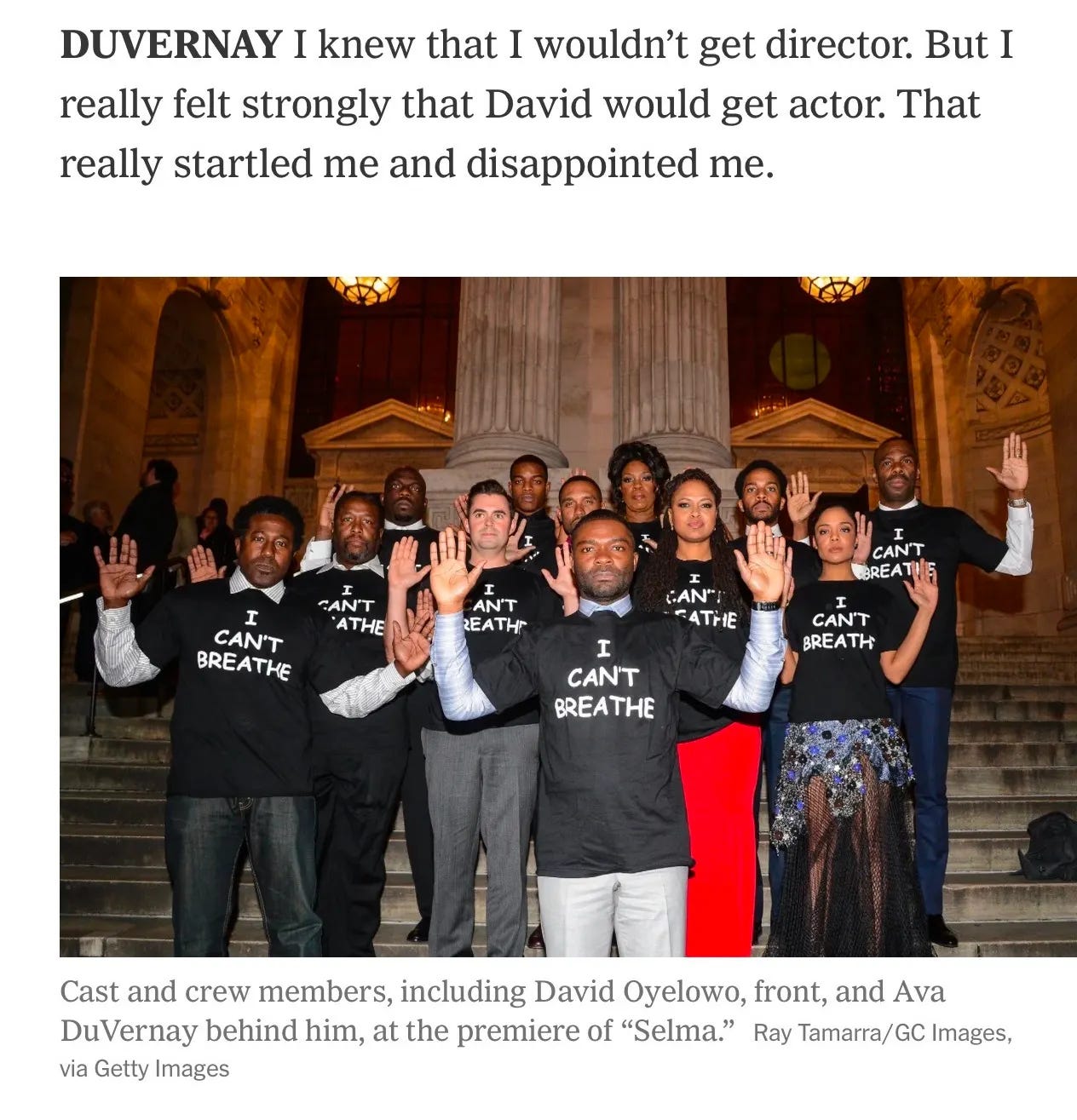
Finding 13: The creator of #OscarsSoWhite, April Reign, was originally named April Sands. She was a disgraced FEC attorney who was forced to resign for violating the Hatch Act. She started the viral hashtag #OscarsSoWhite to protest the lack of Black acting nominees, especially David Oyelowo for Selma, as well as Ava DuVernay’s directing snub for the same film.
Finding 14: #OscarsSoWhite was sparked by Paramount moving up Selma’s release date for an Oscar run. The tightened schedule meant Ava DuVernay missed two crucial guild screener deadlines for the DGA and SAG, which are the main feeders for their respective Oscar nominations. This cost Selma the Oscar nominations for Best Director and Best Actor, which she later blamed on racism.
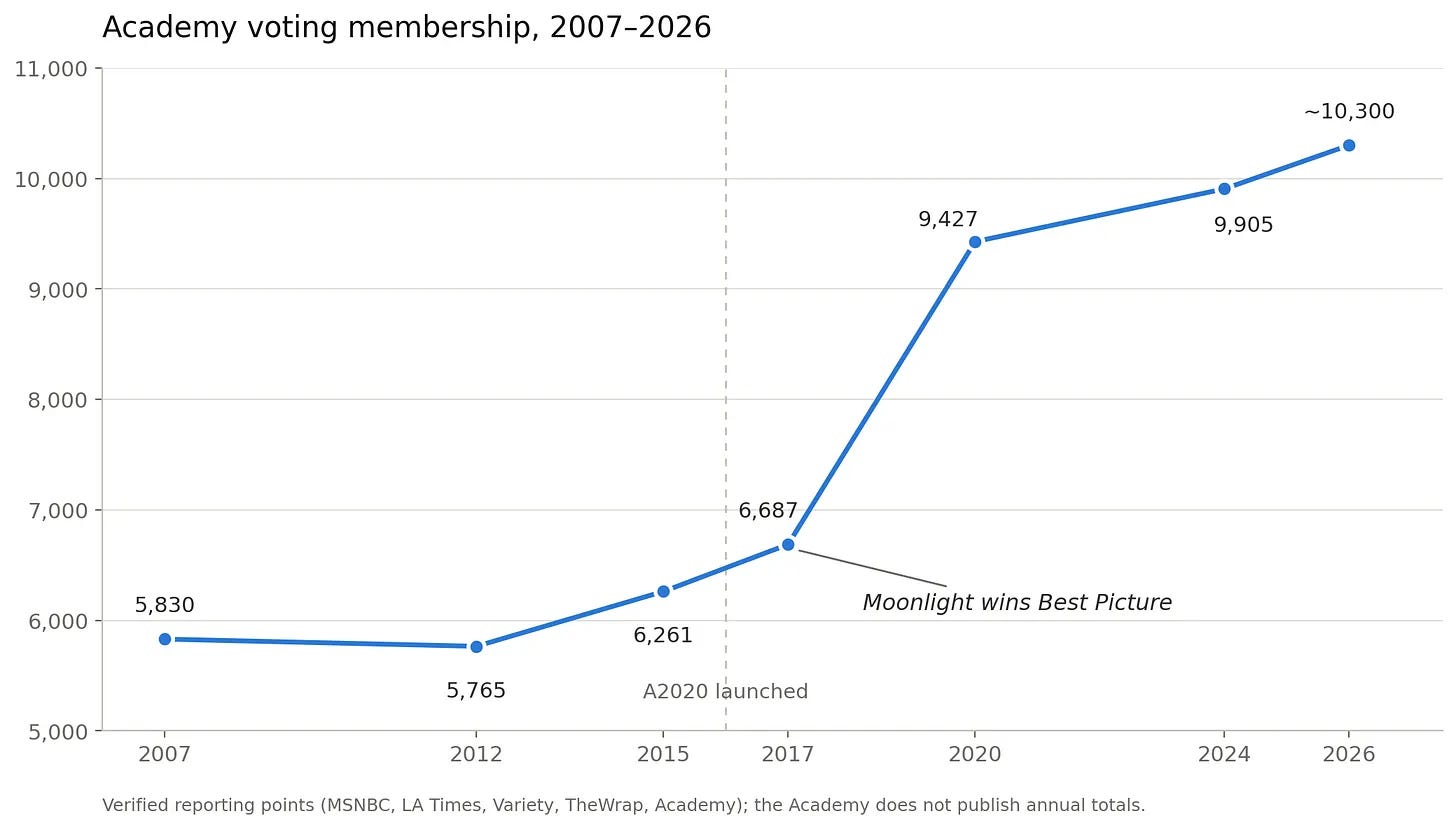
Finding 15: After trying to boot out older members to diversify, academy president Cheryl Boone Isaacs simply diluted them through her A2020 plan:
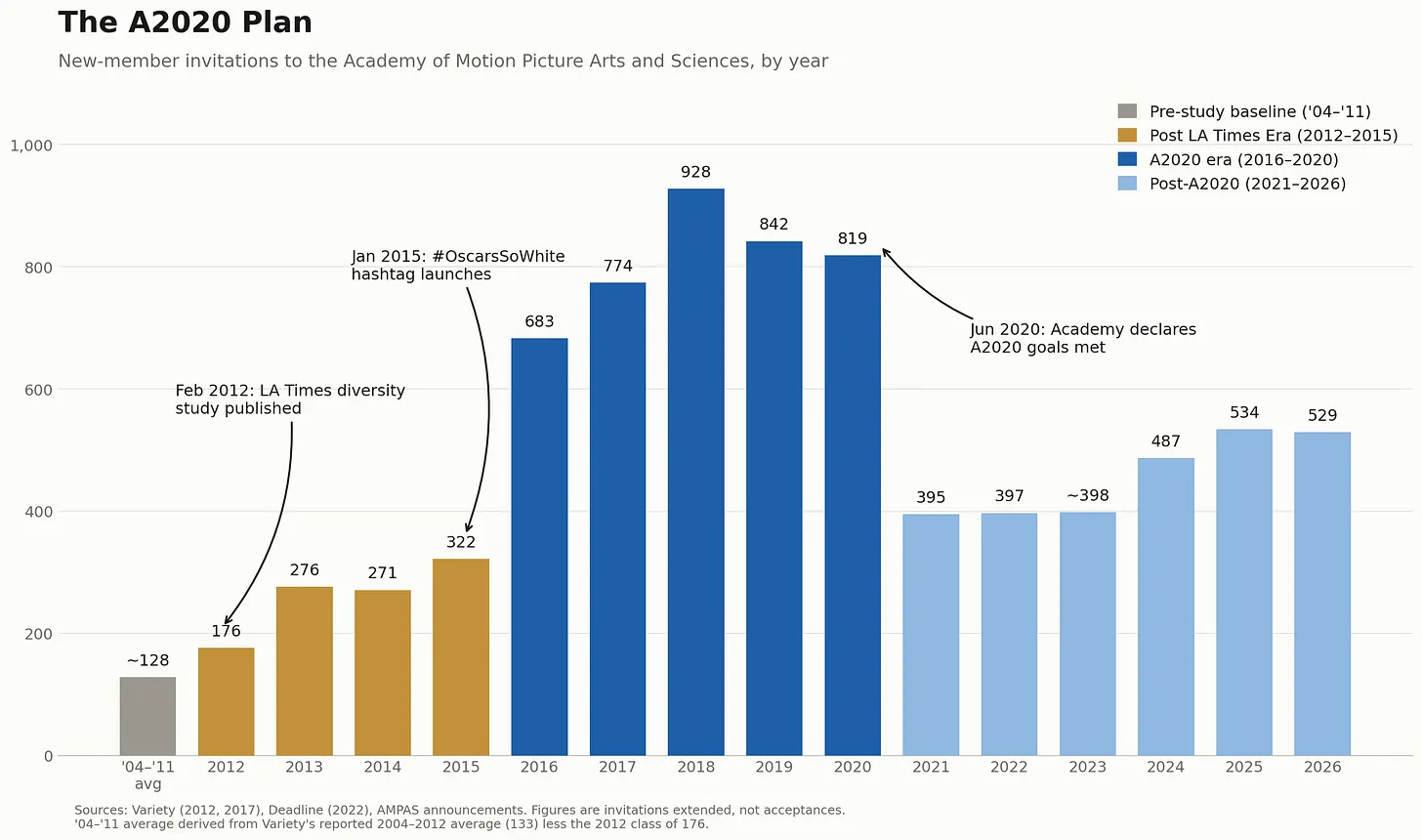
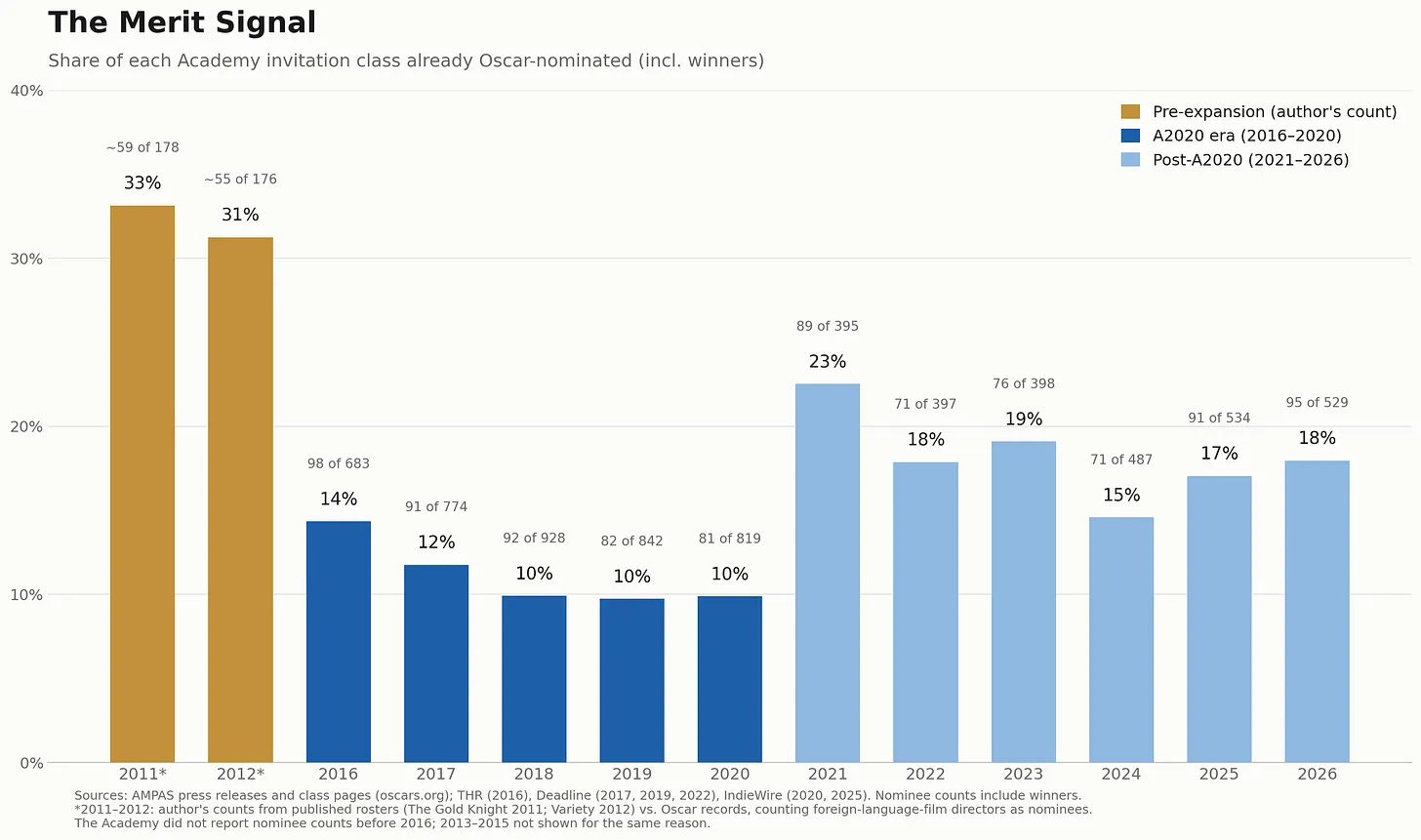
The traditional qualification, a nomination or win, was heavily diluted as a result:
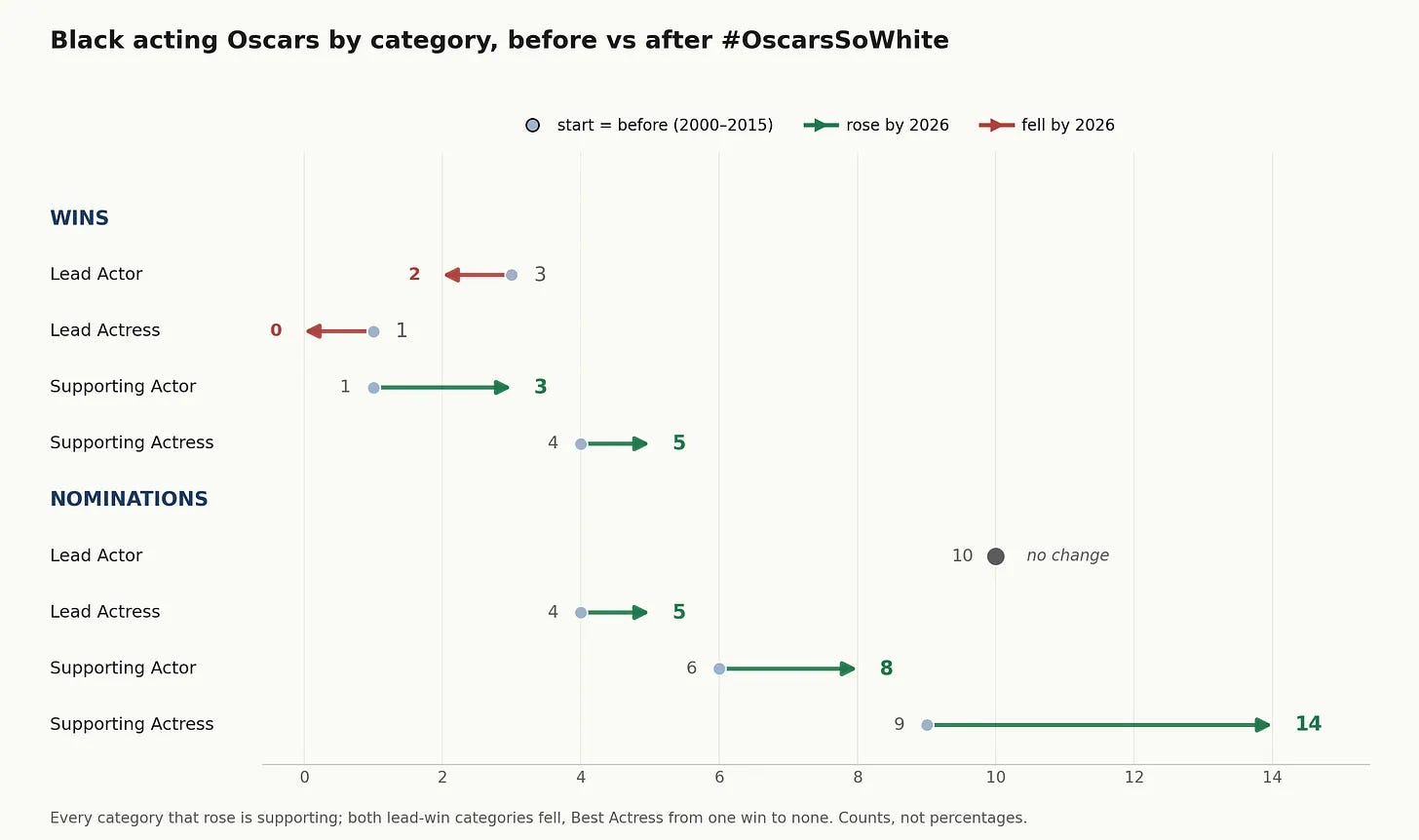
Finding 16: #OscarsSoWhite led to more supporting trophies and nominations for Black actors, but less lead trophies.
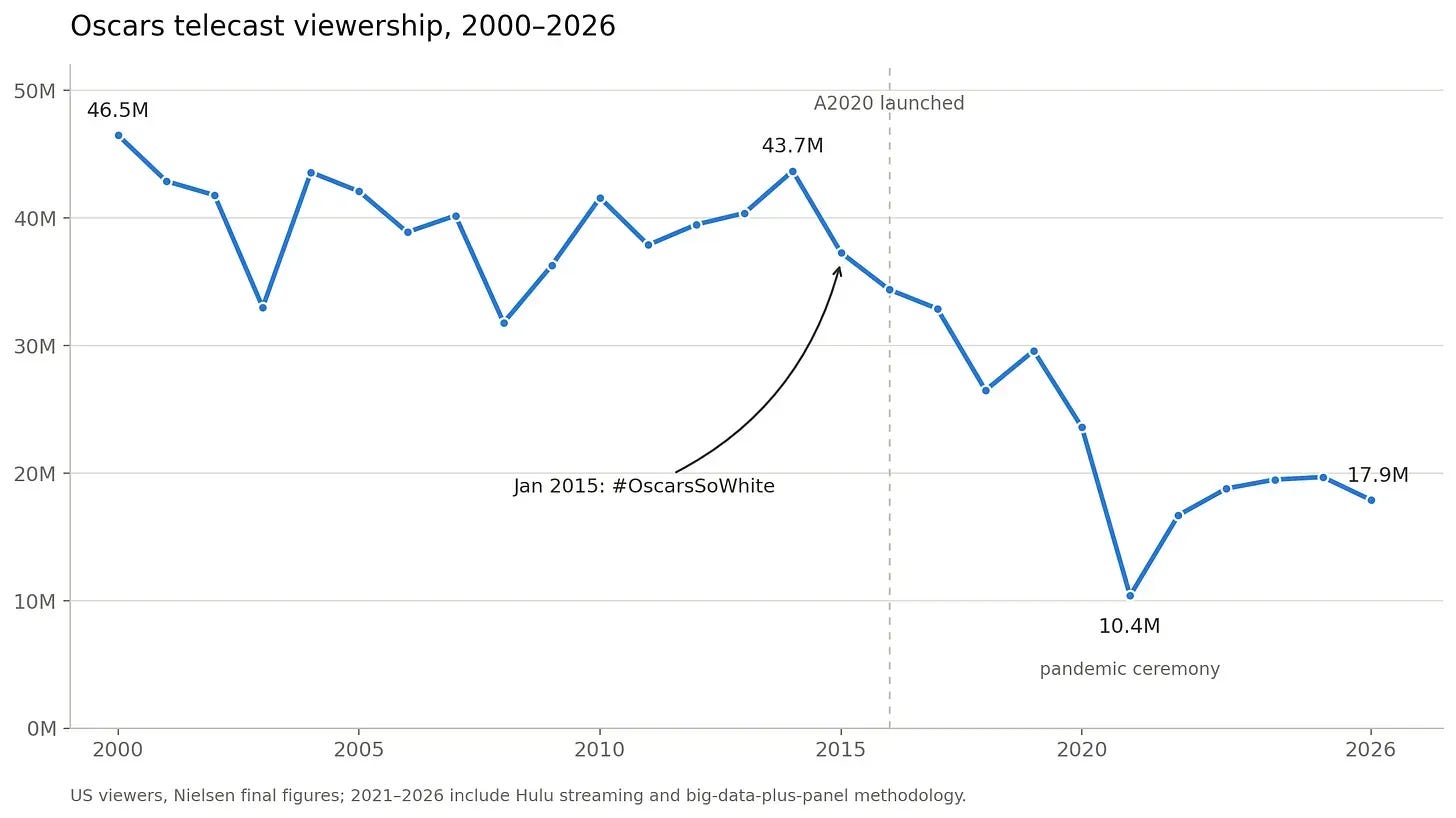
Finding 17: #OscarsSoWhite and the resulting A2020 program made the academy diversify very rapidly, which made it far more international, which not only did nothing to stop its ratings crash, but ushered in a new era of foreign language film nominees.
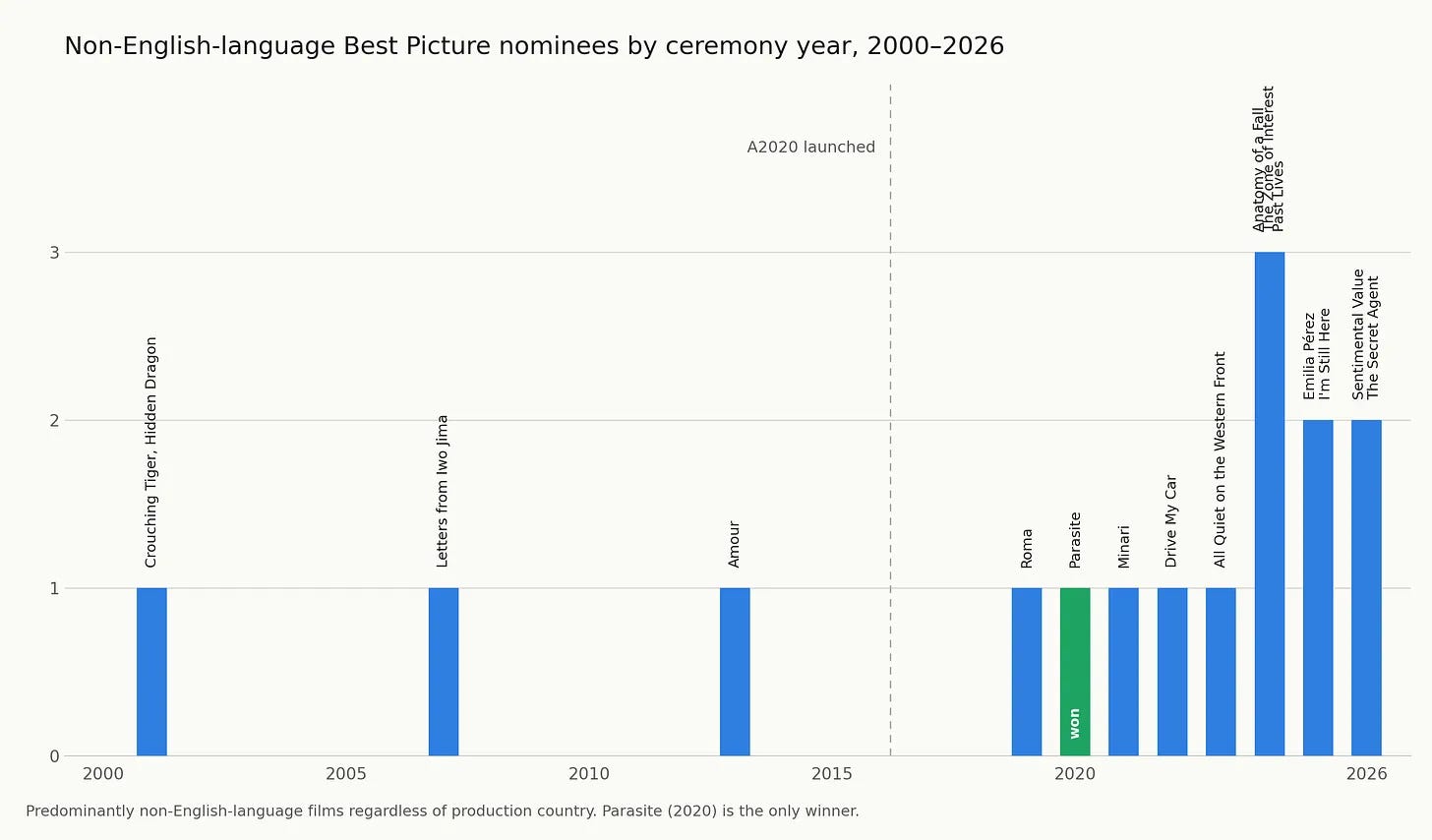
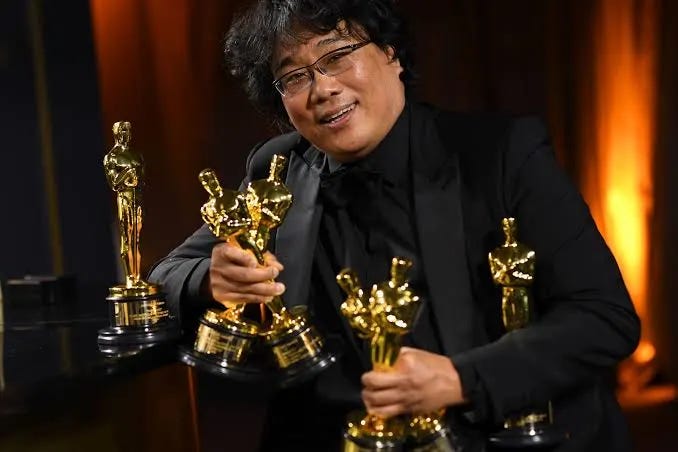
Finding 18: Bong Joon Ho and Parasite, the first non-english language Best Picture winner, may have thus been the greatest winner of #OscarsSoWhite.
From Obsession Doesn’t Prove The System Is Rigged Against Women:
Finding 19: The 2016 Slated finding that female directed movies get less distribution is… a lot more complicated than it seems. It was published based on the single five worst years for female directors this century 2010-2015), and uses an enormous, sub $25m budget category for its headline distribution finding. The range is large enough to include both 12 Years A Slave ($20m) and Tiny Furniture ($45k).
In the interest of scientific rigor, I have asked the lovely Stephen Follows to go back through and verify the data. My findings above are the defensible ones. There are some caveats however. I will publish more soon when I have Stephen’s followup piece!
From The Annenberg Ouroboros:
Finding 20: USC Annenberg’s Top 100 Female Director pipeline is extremely flawed. The proxy they use, Sundance Competition, is a small, weak proxy for commercial success. Stephen Follows’s follow up showed that television and screenwriting are much stronger feeders for top 100 directors.
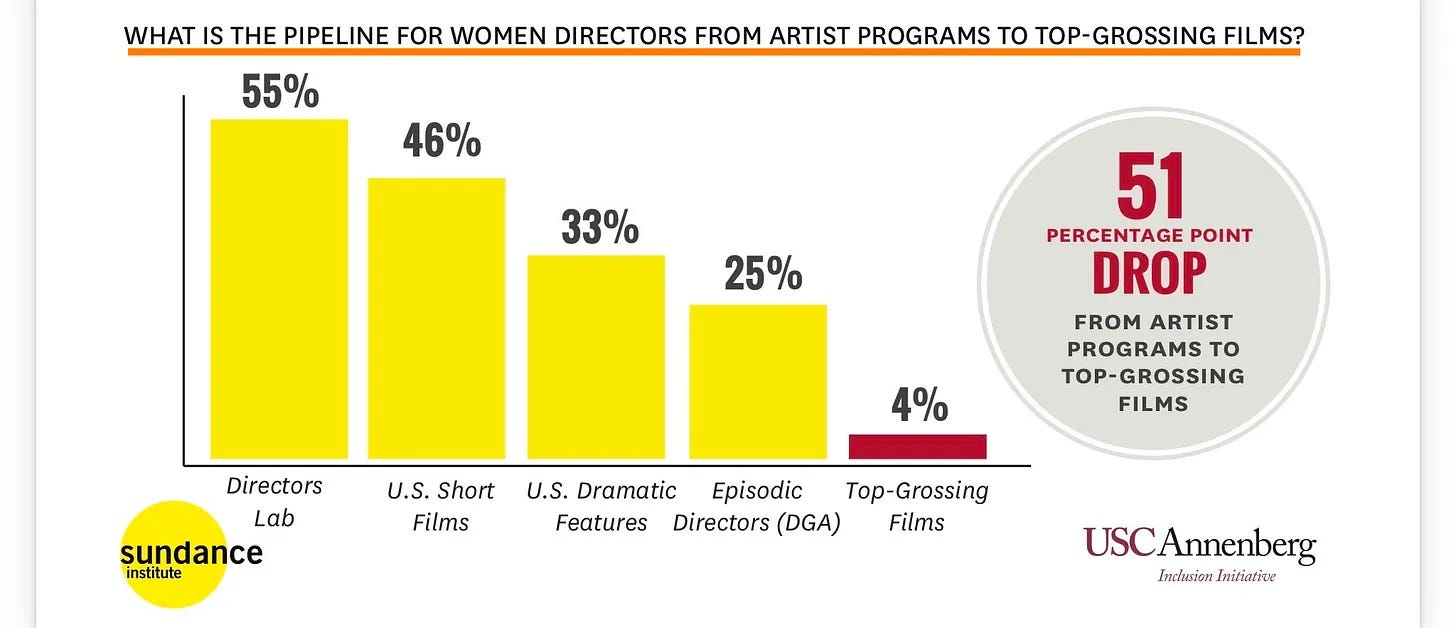
Stephen Follows’s chart:
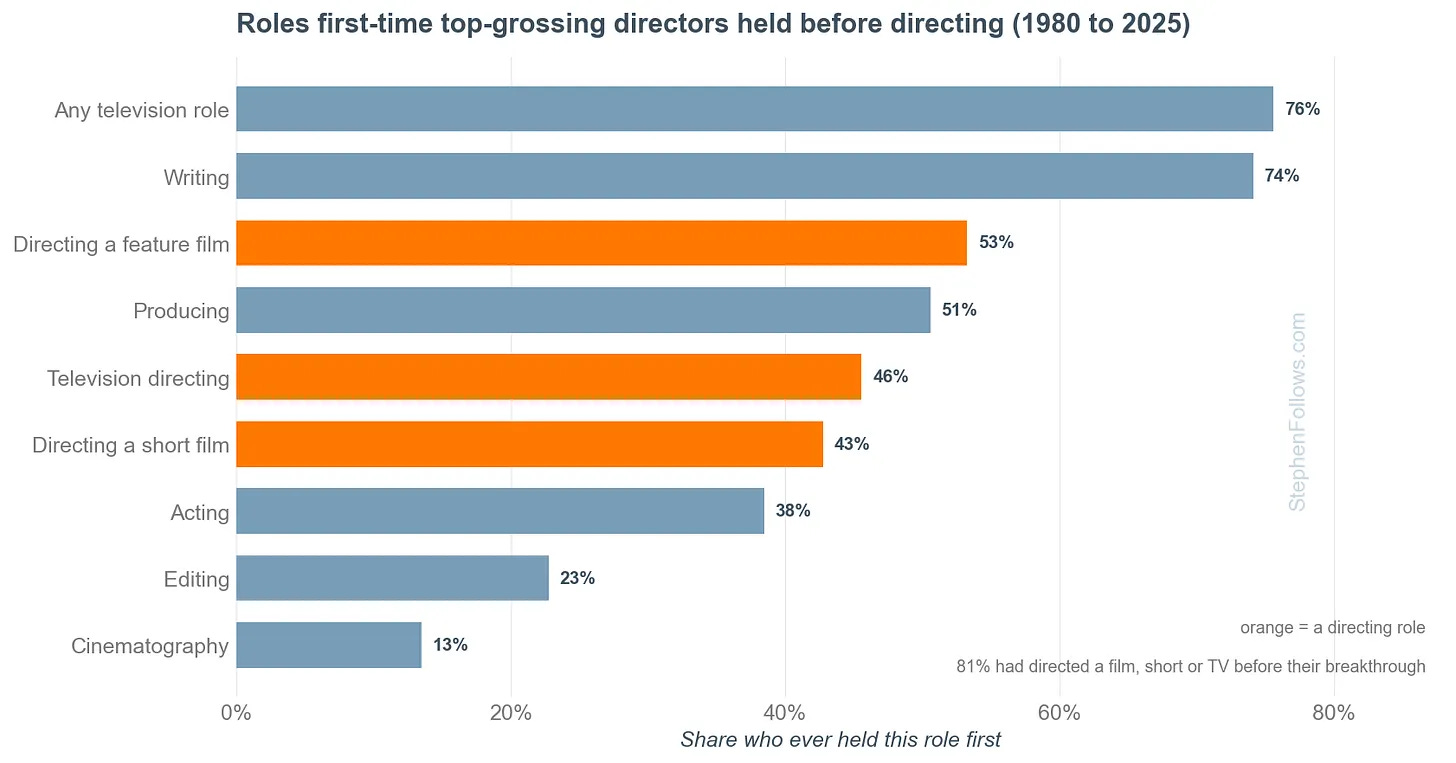
This matters, because if you’re a woman who wants to make big, popular entertainment, there are other, better paths to get there than Sundance competition, and you only get so many shots in a medium this expensive.
Finding 21: Sundance actively selects against commercial genres, which makes it a terrible pipeline for commercially-minded directors. And that’s fine, it’s an arts institute, which is why we shouldn’t be using it as a baseline for commercial instinct and success to begin with. The genres of the last ten years of Sundance competition:
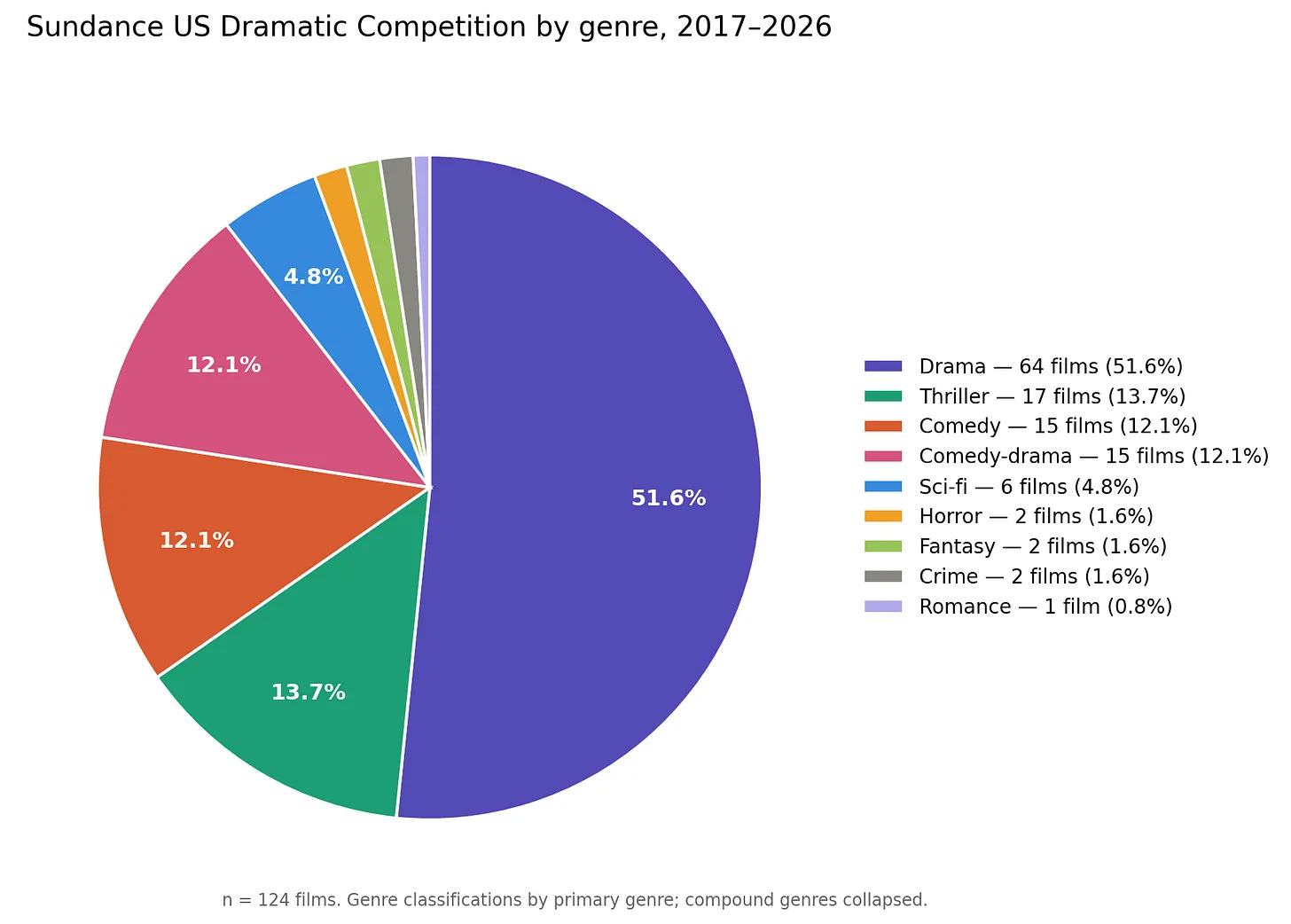
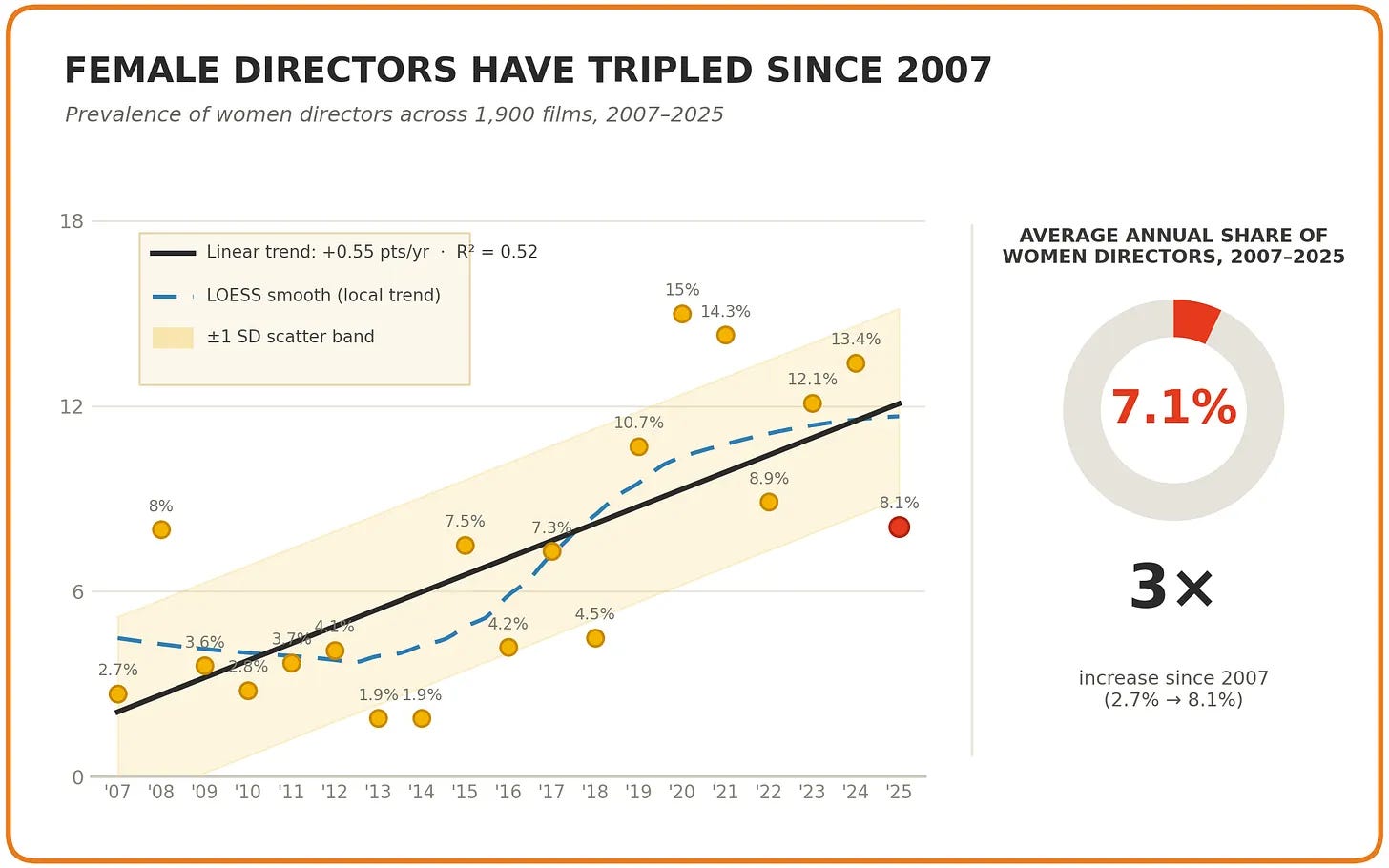
Finding 22: Unlike Annenberg’s headlines, female and underrepresented filmmakers have made significant progress in directing top 100 films since 2007, when they started measuring. The number of female directors tripled on a raw numbers basis and the number of underrepresented filmmakers almost doubled. Here’s my revised chart:
From Can We Make the Villain a White Guy?
Finding 23: Audiences aren’t bored with diverse characters, they’re bored with the forced inclusion of morally predictable diverse characters (i.e. only good), which limits the number of potential dramatic outcomes. It’s far more risky for writers and executives to face accusations of “isms” than it is for them to write dull, predictable diverse characters. Most seem to choose the latter.

From The Permanent Correction:
Finding 24: To achieve gender parity in dramatic competition, Sundance has been overselecting for female fiction filmmakers for over a decade, while their actual submission rate seems to have flatlined.
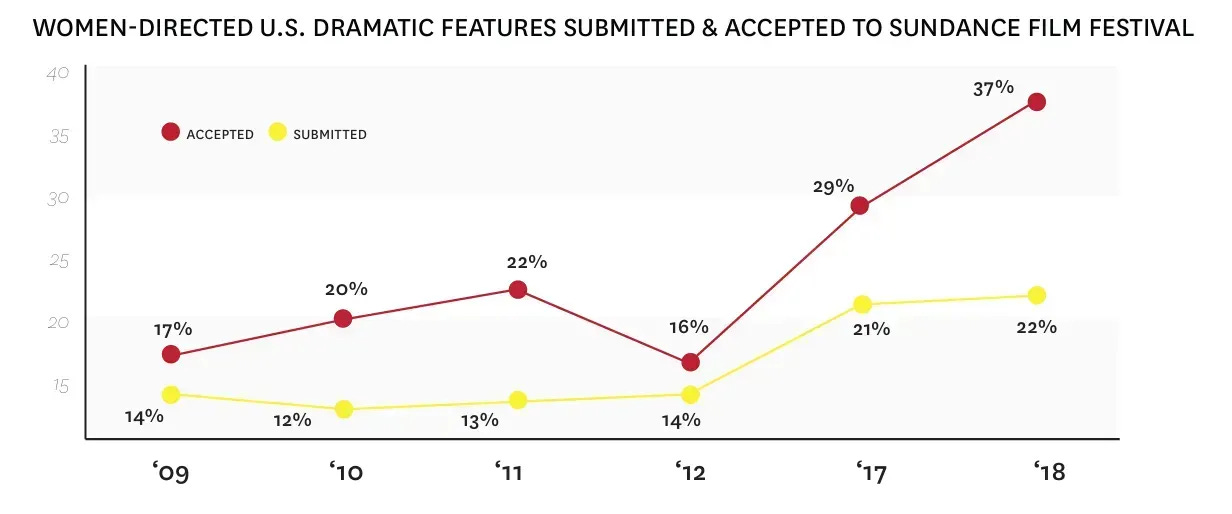
This is likely at least in part due to flawed studies like Annenberg and UCLA, which focus on the tail end of a hyper competitive pipeline, because it’s easy to measure, rather than doing cohort studies, which would be more difficult but likely be more valuable in understanding why the supply of female feature film directors has ceased to grow, where they’re dropping out and why.
Using the most accurate available data on genre-specific submission patterns, Sundance selected female directors for U.S. Dramatic Competition at over 6 times the rate of men in 2013, the first year it achieved gender parity in competition, and about 4.4 times in 2023. 2014 was the last year they programmed proportionally to submissions.
They seem to have simply changed the end of the broken pipeline instead of understanding how to fix it.
From Survival of the Richest: BIPOC Edition.
Finding 25: There were twice as many Asian female blockbuster directors in 2025 as there were white ones. Black and Latina directors were not represented at all.

The real story here demographically is this:
Asian women from the top earning subgroups are doing exceptionally well in blockbuster commercial filmmaking.
White women are doing worse.
Black, Latino and MENA women (depending on how you measure Armenians) are not represented at all.
Lumping everyone together into BIPOC simply obscures what’s actually happening.
Let’s look at the top female directors:
Nisha Ganatra (Freakier Friday) is of Indian descent, she came to Hollywood via Canada and has an MFA from NYU.
Celine Song (Materialists) is of Korean descent via Canada and has an MFA from Columbia.
Chloé Zhao (Hamnet) is from China and got an MFA from NYU.
Hikari (Rental Family) is originally Japanese and got an MFA from USC.
Maggie Kang (K Pop Demon Hunters) is South Korean and studied at Sheridan College in Canada
Domee Shi (Elio) is Chinese-Canadian and also went to Sheridan College.
All of them are in the top ten income groups from the Asian subcategory, and 2/3rds, all the live action directors, got MFAs from extremely expensive private film schools.
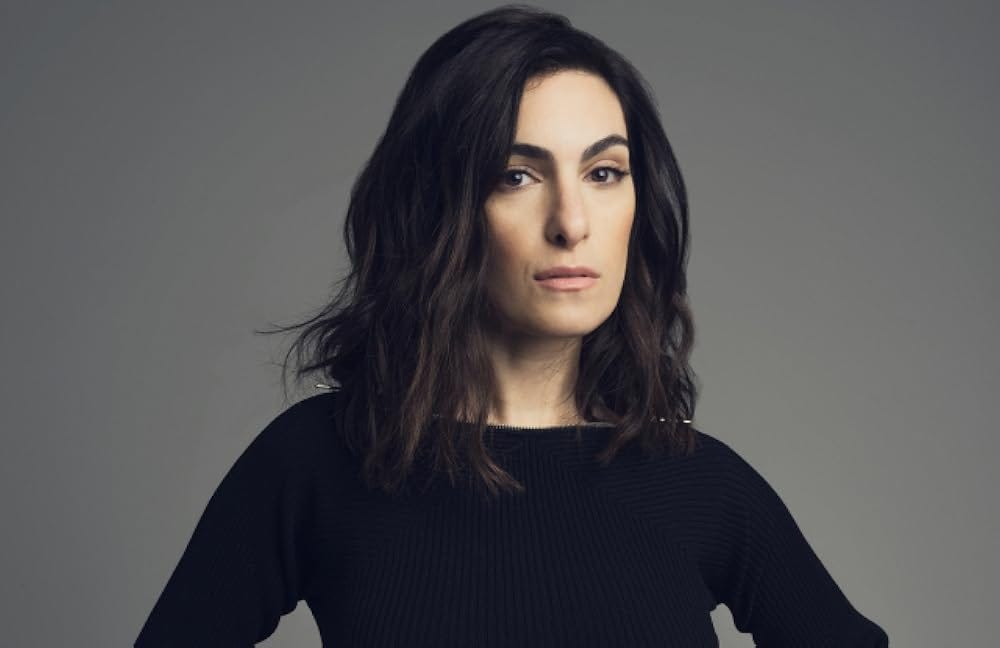
There are also three white women:
Madeline Sharafian (codirector on Elio) is Armenian-American with a BFA from Calarts. UCLA counts her as MENA, USC counts her as white.
Jennifer Kaytin Robinson (I Know What You Did Last Summer) is the only one of the 2025 top-grossing directors to not go to college at all (interesting that she selected into horror). She worked her way up through acting and screenwriting.
Emma Tammi (Five Nights at Freddy’s) went to Wesleyan, consistently one of the ten most expensive private schools in America, which has become a feeder for Hollywood, including alumni like Benh Zeitlin (Beasts of the Southern Wild) and Julius Onah (Captain America: Brave New World).
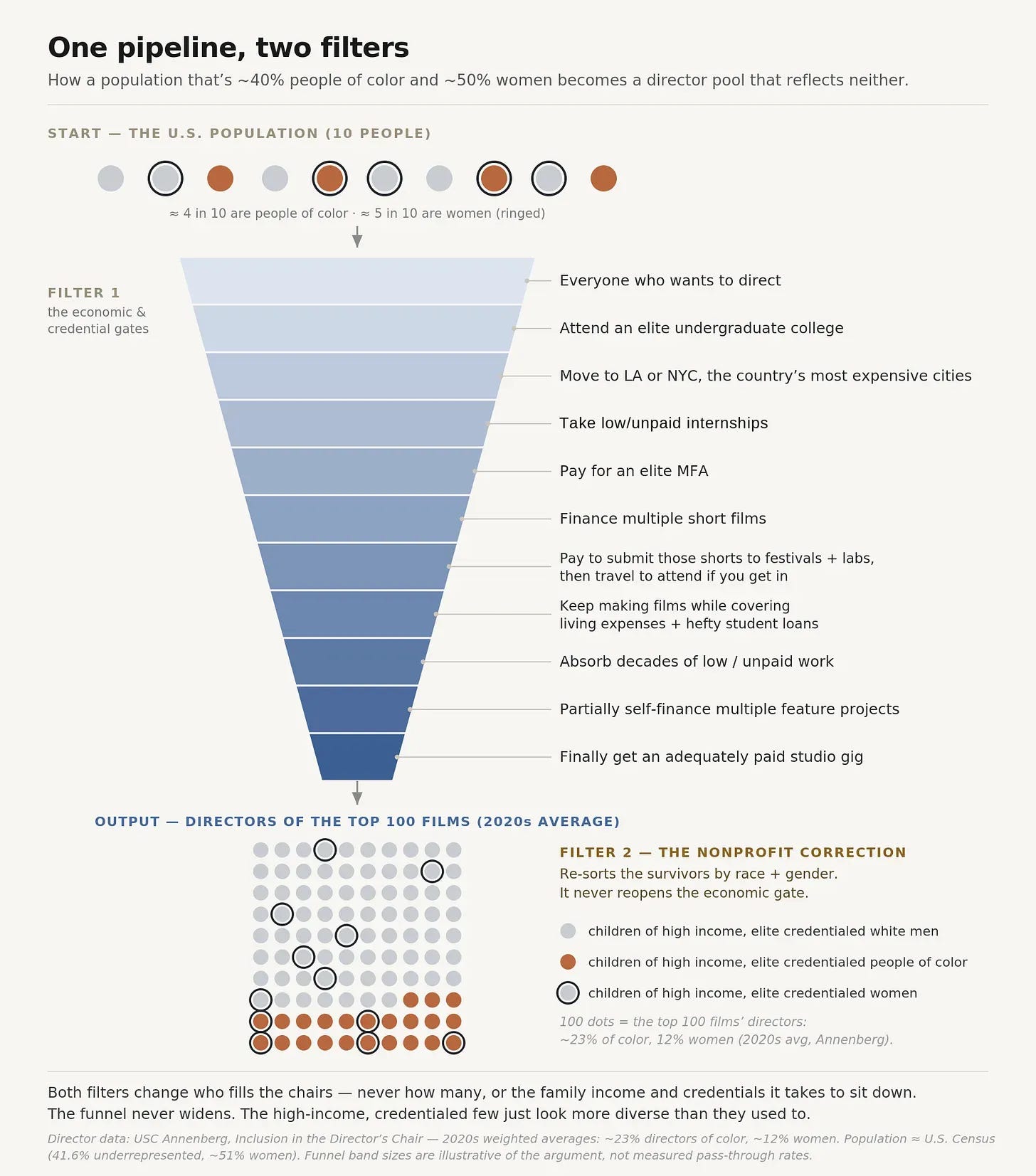
Finding 26: Using BIPOC As A Proxy for “marginalized” mostly benefits the most wealthy, credentialed elites in those groups, giving them an extra point on an already tipped scale.
The industry could come up with means to select for class, after all, it’s how financial aid runs, but it probably never will.
From Luxury Activists, Volume 1:
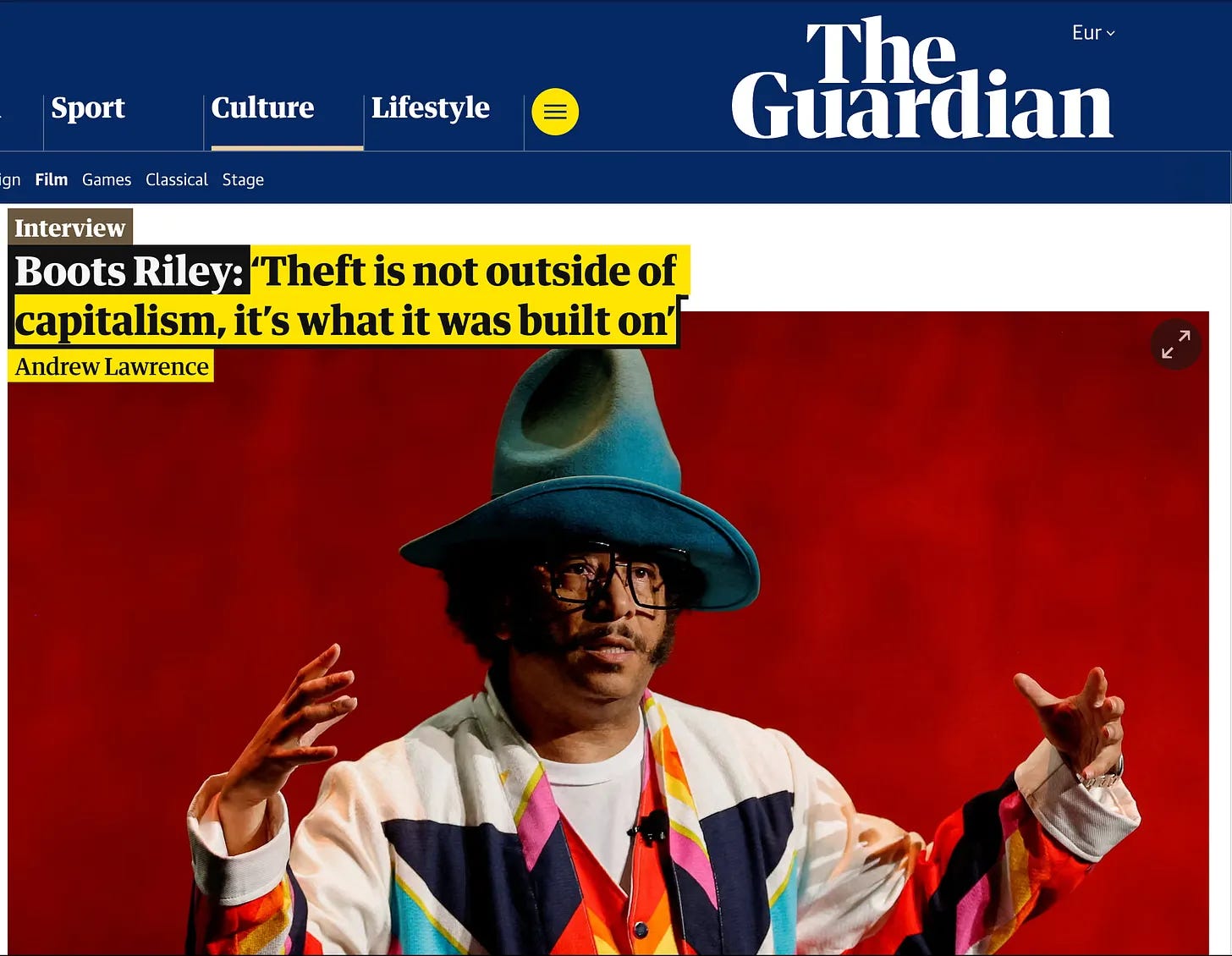
Finding 27: Communist Boots Riley took money from the daughter of Israel’s biggest donor to fund the development of I Love Boosters.
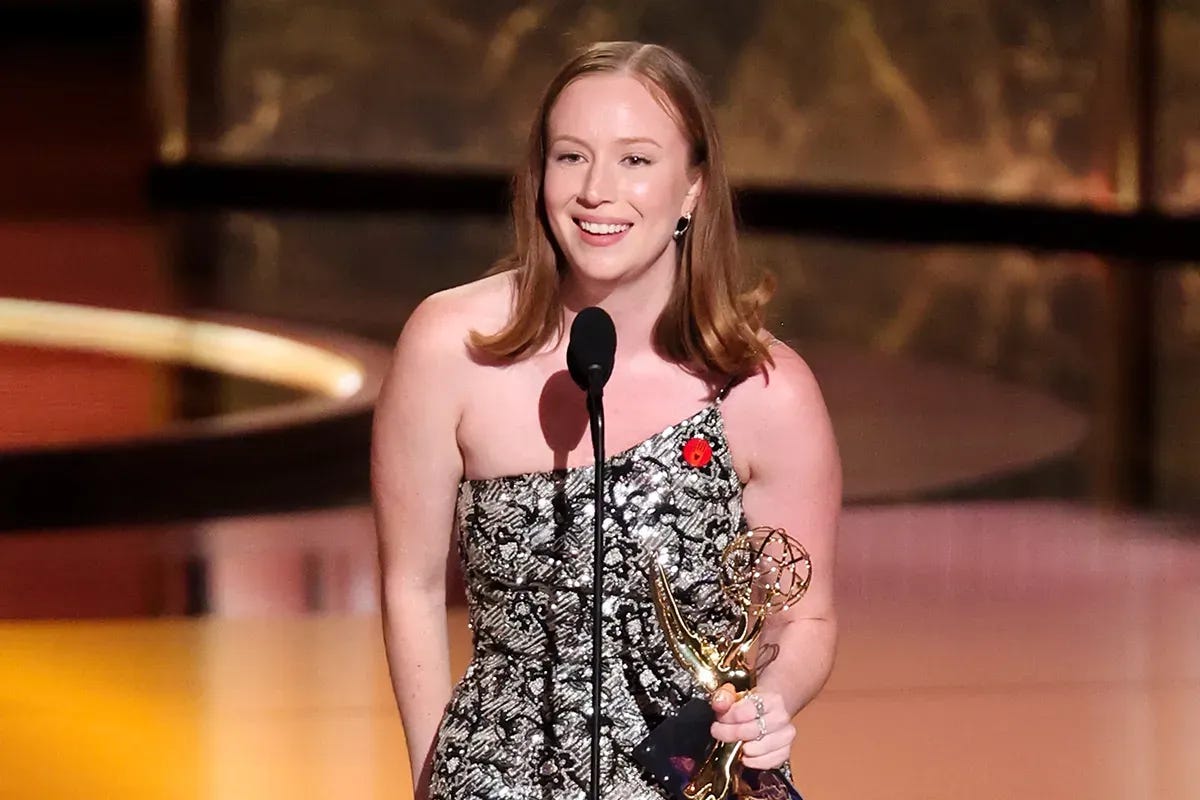
Finding 28: Pro Palestine activist Hannah Einbinder kept her salary from MUBI for Teenage Sex and Death At Camp Miasma. This was after MUBI was boycotted for receiving funding from an equity investor that also financed Kela, an Israeli military research startup. She agreed with them that she would say “Free Palestine” on the red carpet at Cannes.
Finding 29: A study by Age Without Limits, a nonprofit funded by Emma Thompson, claimed that films are more likely to star a talking animal or a man named Chris than an older woman. They neglected to show how much films starring older women underperform at the box office. The academics behind it massaged the data, excluding several famous actresses on the cusp of sixty to grab a headline like all these other “activist studies.”
In the five years just below the 60+ cutoff they used, you’d sweep in a deep roster of actresses still landing lead roles: Nicole Kidman (59), Salma Hayek (59), Julia Roberts (58), Patricia Arquette (58), Ashley Judd (58), Jennifer Aniston (57), Cate Blanchett (57), Renée Zellweger (57), Naomi Watts (57), Gillian Anderson (57), Lucy Liu (57), and Parker Posey (57), with Catherine Zeta-Jones about to join them.
By the study’s own logic, the second highest-grossing UK film of 2025, Bridget Jones: Mad About the Boy, didn’t count, because Renée Zellweger is 57, not 60.
Full breakdown here:
And finally…
Finding 30: Audiences LOVE talking animals. No evidence necessary.
And that’s all for my very first roundup folks! Stay tuned for more.